Why a Toolkit Approach Works Better Than a Single Strategy
Stress is not a single experience - it shifts in intensity, type, and context throughout daily life. A looming work deadline feels different from a sudden conflict or ongoing financial pressure. Because stressors vary, relying on one coping method often leaves gaps.
Research in stress management generally supports what psychologists call a multi-modal approach: combining physiological, cognitive, and behavioral strategies so you can match the technique to the moment. Think of it like a physical first-aid kit - you don't use a bandage for everything.
Building your personal toolkit starts with awareness. The Daily Mental Wellbeing Check-In is a useful starting point for noticing your stress patterns before they escalate. Once you recognize your triggers and early warning signs, you can choose responses more deliberately rather than reacting on autopilot.
77%
Adults who regularly experience physical stress symptoms
According to the American Psychological Association's Stress in America survey, a large majority of U.S. adults report physical symptoms linked to stress.
3-5 min
Time for controlled breathing to reduce acute stress response
Research on slow-paced breathing suggests measurable reductions in physiological arousal markers can occur within a few minutes of practice.
2x
Greater burnout risk with single-strategy coping
Studies in occupational health suggest that relying on avoidance or a single coping strategy is associated with significantly higher burnout rates than multi-modal approaches.
Breathing and Body-Based Techniques
When stress hits, the body's autonomic nervous system shifts into a sympathetic (fight-or-flight) state - heart rate rises, muscles tighten, and thinking narrows. Breathing exercises are one of the fastest evidence-informed ways to engage the opposing parasympathetic system, which promotes calm.
Diaphragmatic (Belly) Breathing
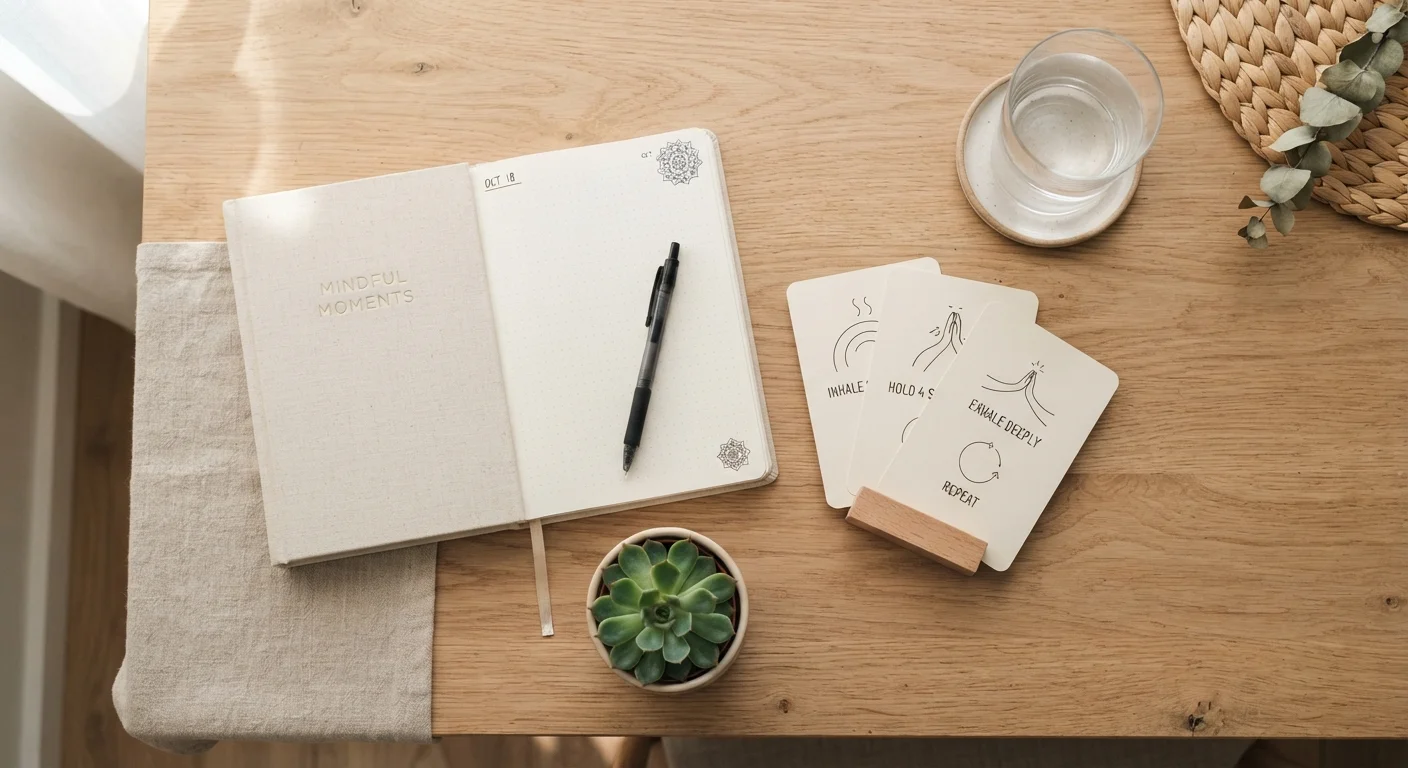
Breathe in slowly through the nose for about four counts, letting the abdomen rise rather than the chest. Hold briefly, then exhale slowly for six to eight counts. Repeating this for a few cycles can help reduce physiological arousal.
Box Breathing
Inhale, hold, exhale, and hold again - each for an equal count of four. This structured rhythm is used in high-pressure professions specifically because it is easy to remember and apply mid-situation.
Progressive Muscle Relaxation (PMR)
PMR involves systematically tensing and releasing muscle groups from feet to face, helping the body identify and release held tension. Several clinical reviews have found PMR useful for anxiety and stress-related symptoms as part of broader care plans.
Pair your chosen breathing technique with a physical cue - like placing a hand on your abdomen - so the action becomes an automatic anchor you can trigger anywhere, including in public.
Conditioned cues speed up stress-response activation; the physical gesture acts as a shortcut to the calming routine without requiring conscious effort in the moment.
Build your toolkit during a calm period, not in the middle of a crisis. Practice techniques when stress is low so they feel familiar and accessible when you actually need them.
Skill rehearsal under non-stressful conditions strengthens neural pathways, making the technique easier to access when the prefrontal cortex - responsible for deliberate thought - is partially inhibited by acute stress.
For readers interested in movement-based approaches, low-impact exercise options like walking and yoga also engage parasympathetic pathways over time.
Cognitive Reframing: Changing How You Interpret Stress
Cognitive reframing is a core skill in cognitive-behavioral therapy (CBT) that involves examining the thoughts surrounding a stressor and deliberately considering alternative interpretations. It does not mean denying that something is difficult - it means questioning whether your initial reading is the most accurate or helpful one.
Common Reframing Questions
- Is this thought a fact, or an assumption? Separating what you know from what you fear is a foundational step.
- What would I tell a close friend in this situation? Perspective-shifting through self-compassion often reveals more balanced views.
- What is within my control right now? Narrowing focus to actionable elements reduces the sense of overwhelm.
For a broader look at how psychologists approach thought-based coping, see the guide on emotional regulation skills.
Journaling can also reinforce reframing by externalizing thoughts so they are easier to examine. The evidence around this practice is explored in detail in what research says about journaling for emotional health.
Behavioral Anchors: Routines That Build Resilience
Some stress-response tools are not immediate interventions - they are habits that gradually raise your baseline resilience so that stress has less room to take hold. These behavioral anchors work in the background.
Sleep Consistency
Sleep deprivation measurably amplifies emotional reactivity. Maintaining a consistent sleep and wake schedule - even on weekends - supports the brain's capacity to regulate stress hormones and process emotional experiences.
Social Connection
A substantial body of research links strong social ties to better stress tolerance and emotional recovery. Even brief, meaningful interactions appear to buffer against the physiological effects of stress. Our companion article on social connection and emotional resilience explores this in more depth.
Digital Boundaries
Constant connectivity keeps the nervous system in a low-grade alert state. Setting defined periods of screen-free time - especially before bed - is a manageable way to reduce this background load.
If you use apps as part of your wellness routine, it is worth understanding their limits: see our balanced look at the trade-offs of using apps for mental wellbeing.
Knowing When to Seek Professional Support
A personal stress response toolkit is a valuable resource for managing everyday stress - but it has limits. If stress is persistent, severely affecting your functioning, sleep, relationships, or physical health, or if you are experiencing symptoms of anxiety or depression, these are signals that professional care is the appropriate next step.
A licensed mental health professional - such as a psychologist, licensed counselor, or therapist - can provide structured, evidence-based interventions tailored to your specific situation. Many of the techniques in this toolkit originate from clinical practice and can be deepened significantly with professional guidance.
This article is for general informational purposes only and is not a substitute for professional medical or mental health advice, diagnosis, or treatment. Always consult a qualified healthcare professional with any questions you have about your mental or physical health, or before making changes to your care.