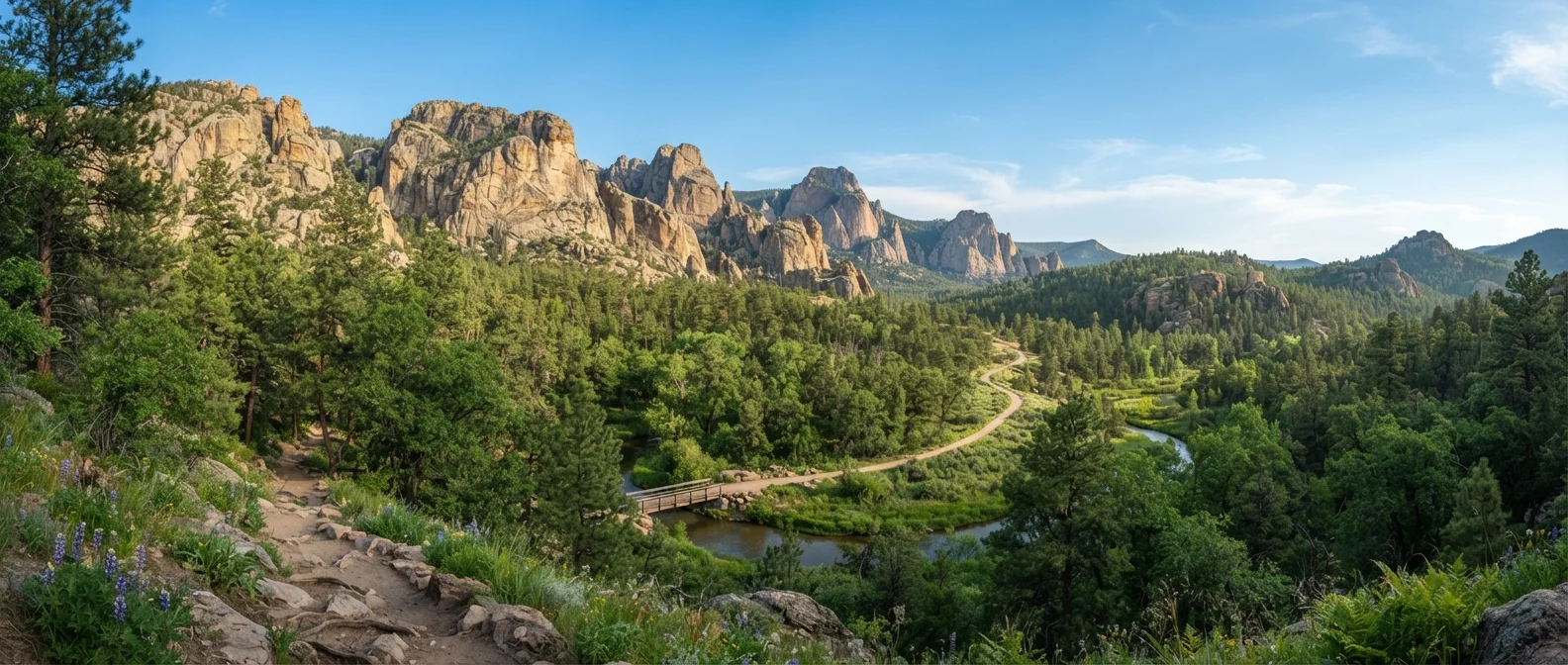
Why National Park Alternatives Are Worth Considering
America's most famous national parks — Yellowstone, Zion, Yosemite — draw tens of millions of visitors annually. That popularity comes with real consequences: timed entry permits months in advance, gridlocked access roads, saturated campgrounds, and entrance fees that climb with each revision cycle. For many travelers, the experience no longer matches the effort or expense involved.
The good news is that the US public lands system extends well beyond the National Park Service. National Forests, Bureau of Land Management (BLM) areas, state parks, National Recreation Areas, and National Monuments collectively cover hundreds of millions of acres — much of it with comparable geology, wildlife, and trail systems. Understanding how these designations differ, and what each costs to access, is the first step toward planning a trip that delivers on scenery without the logistical grind.
It's worth noting that "affordable" doesn't always mean "free of hidden costs." If you're driving long distances to reach a remote alternative, factor in fuel, lodging en route, and gear rental before assuming you're saving money. Our guide on the hidden costs of budget destinations covers exactly this kind of calculation.
Goblin Valley State Park, Utah (instead of Arches National Park)
Arches National Park has become so crowded that timed entry reservations are now required during peak months. Goblin Valley State Park, roughly 90 minutes south, offers equally surreal sandstone formations — thousands of mushroom-shaped hoodoos across an open valley — with a fraction of the visitor volume. Utah state park fees are generally lower than federal park entry, and camping is available on-site with advance reservation.
The hiking is accessible across ability levels, with the valley floor walkable by most visitors and several canyon trails available for those seeking more challenge. There are no arch formations here, but the alien landscape is visually striking in its own right and consistently photogenic at golden hour.
Goblin Valley delivers Arches-level strangeness at a lower fee and with far fewer visitors.
Chugach State Park, Alaska (instead of Denali National Park)
Denali is extraordinary, but access is tightly managed and travel costs to interior Alaska add up quickly. Chugach State Park, immediately east of Anchorage, covers nearly half a million acres of mountains, glaciers, and wildlife habitat — and it's accessible by city bus from downtown. Alaska residents and visitors alike use it for hiking, wildlife viewing, and backcountry skiing.
Entry is either free or requires only a vehicle parking fee depending on the trailhead. Trails range from easy waterfall walks to technical alpine routes. The proximity to Anchorage also lowers total trip cost significantly compared to organizing a Denali bus tour or backcountry permit.
Chugach offers genuine Alaskan wilderness within reach of an urban transit line.
Bankhead National Forest, Alabama (instead of Great Smoky Mountains)
Great Smoky Mountains is the most visited national park in the country, with no entrance fee but increasingly congested roads and trailheads. Bankhead National Forest in north Alabama receives a tiny fraction of those visitors while offering waterfalls, slot canyons, and sandstone bluffs that rival anything in the Smokies. Sipsey Wilderness within Bankhead is among the most biodiverse areas in the eastern US.
There is no entrance fee for Bankhead, and dispersed camping is permitted in many areas. The trail network is extensive but less developed, which means hikers should carry detailed maps and be comfortable with route-finding. Cell coverage is sparse throughout.
Bankhead's Sipsey Wilderness is one of the most biodiverse wild areas in the eastern US — with no entry fee.
Palo Duro Canyon State Park, Texas (instead of Grand Canyon)
Palo Duro Canyon is the second-largest canyon in the United States, stretching roughly 120 miles through the Texas Panhandle. It's often called the "Grand Canyon of Texas" — a comparison that undersells it, since the layered red and orange geology is genuinely dramatic in its own context. Texas state park fees are modest, and the park offers cabins, camping, and mountain biking trails in addition to hiking.
Unlike the Grand Canyon, inner-canyon access at Palo Duro doesn't require a multi-day permit or a lottery. Day hikers can reach the canyon floor easily, and the park is rarely overcrowded outside of major holidays. Amarillo, the nearest city, provides affordable lodging options.
Palo Duro Canyon offers inner-canyon access without a lottery, a permit, or Grand Canyon crowds.
Pictured Rocks National Lakeshore, Michigan (instead of Acadia National Park)
Acadia in Maine has seen surging demand, with vehicle reservation systems now required in peak season. Pictured Rocks National Lakeshore on Michigan's Upper Peninsula offers comparable coastal drama — 40 miles of sandstone cliffs, sea caves, waterfalls, and Lake Superior shoreline — without the bottleneck. The lakeshore is managed by the National Park Service but operates more like a recreation area, with most access points remaining free or low-cost.
Boat tours of the cliffs are available through private operators during summer months. Camping in the adjacent Hiawatha National Forest provides additional flexibility and is generally easier to book than Acadia's Blackwoods campground. The Upper Peninsula rewards visitors who are comfortable with variable Great Lakes weather.
Pictured Rocks delivers 40 miles of dramatic Lake Superior cliffs with far easier access than Acadia.
Enchanted Rock State Natural Area, Texas (instead of Joshua Tree National Park)
Joshua Tree draws rock climbers and desert enthusiasts from across the country, and its campsites sell out months in advance. Enchanted Rock, a massive pink granite dome in the Texas Hill Country, offers a comparable combination of striking geology, stargazing, and climbing routes. Texas state park day-use fees apply, and timed entry passes are required on busy weekends — but the booking window is shorter and competition is lower than at Joshua Tree.
The summit hike is short but steep, and the views across the Hill Country are expansive. The site also has documented significance for Indigenous peoples of the region, and interpretive signage provides historical context. For those exploring the broader Southwest on a budget, our piece on desert towns worth the drive highlights complementary stops nearby.
Enchanted Rock's granite summit offers Joshua Tree-caliber stargazing with a much shorter booking runway.
Getting the Most Out of These Destinations
A few practical considerations apply across all of these alternatives. First, entry fees and policies can change — always verify current fee structures directly with the managing agency before your trip. Second, dispersed camping rules on BLM and National Forest land vary by district; check with the local ranger station for fire restrictions, permit requirements, and designated zones.
Check for Fee-Free Days and Passes
The National Park Service designates several fee-free days each calendar year when entrance fees are waived at all federal sites. Additionally, the America the Beautiful annual pass covers entrance fees at most federally managed lands, including National Recreation Areas and National Monuments that are often overlooked. State parks typically operate separate pass systems — many states offer annual vehicle passes that pay for themselves after two or three visits.
Traveling in the shoulder season — typically late spring or early fall — compounds the advantage at lesser-known sites. Crowds drop further, temperatures are often more comfortable, and campsite availability improves substantially. Our breakdown of off-season travel trade-offs offers a balanced look at what you gain and give up by shifting your travel window.
Finally, keep in mind that these destinations tend to have fewer visitor services — limited food vendors, minimal cell coverage, and smaller ranger staffs. That's part of the appeal for many travelers, but it does require more self-sufficiency in planning. Come prepared, leave no trace, and you'll likely find the experience rivals anything behind a $35 entrance booth.