Why Consistent Observation Is Genuinely Useful
Veterinary visits give a snapshot; your daily life with your pet gives the full film. Because animals cannot describe symptoms and often instinctively mask discomfort, subtle changes in weight, coat, appetite, or behavior can be among the earliest detectable indicators that something has shifted. Owners who track these signals consistently - and report them clearly - give veterinarians a meaningful clinical advantage.
This is especially true for pets with chronic conditions, those in middle or senior life stages, and households managing pet care on a budget where early detection can reduce the cost and complexity of eventual treatment. For a practical look at managing those ongoing costs, see our guide to reducing recurring pet expenses.
Some Symptoms Should Not Be Monitored at Home
At-home observation is appropriate for gradual, mild, or ambiguous changes. Certain signs - difficulty breathing, sudden collapse, prolonged vomiting or diarrhea, suspected toxin ingestion, inability to urinate, or visible trauma - require immediate veterinary attention. Do not use a monitoring routine as a reason to delay care when urgent symptoms are present.
The following steps outline a practical, low-cost monitoring routine that any owner can build into a weekly habit. What you'll need before starting:
What you will need
Tools That Make Tracking Easier
You don't need specialized equipment. A few basic items - most of which you may already own - are sufficient to support a reliable monitoring practice.
Bathroom scale or pet scale
Used to track body weight week over week; a bathroom scale works by weighing yourself, then weighing yourself holding the pet, and subtracting.
Dedicated health log (notebook or app)
Records observations over time so you can spot gradual trends rather than relying on memory.
Small flashlight or penlight
Helps you inspect the mouth, ears, and eyes for visible changes in color, discharge, or irritation.
Fine-tooth comb or grooming brush
Used to part the coat and inspect skin condition, flakiness, lumps, and parasite activity.
Once your tools are gathered, follow the steps below to build your routine.
Establish a baseline during a healthy period
Before you can recognize change, you need a clear picture of what normal looks like for your pet. Spend one session recording your pet's current weight, body condition, coat quality, typical appetite, daily water intake (roughly), and general energy level. Ask your veterinarian to confirm this baseline at your next routine visit so you have a professionally verified starting point.
Weigh your pet on a consistent schedule
Choose one day each week (or every two weeks for healthy adult pets) and weigh your pet at the same time of day, before meals. Log the result. A gradual, unexplained loss or gain of more than 5-10% of body weight over a few weeks is worth discussing with your vet - it can be among the earliest detectable signals of metabolic, dental, or digestive issues.
Inspect the coat, skin, eyes, and ears
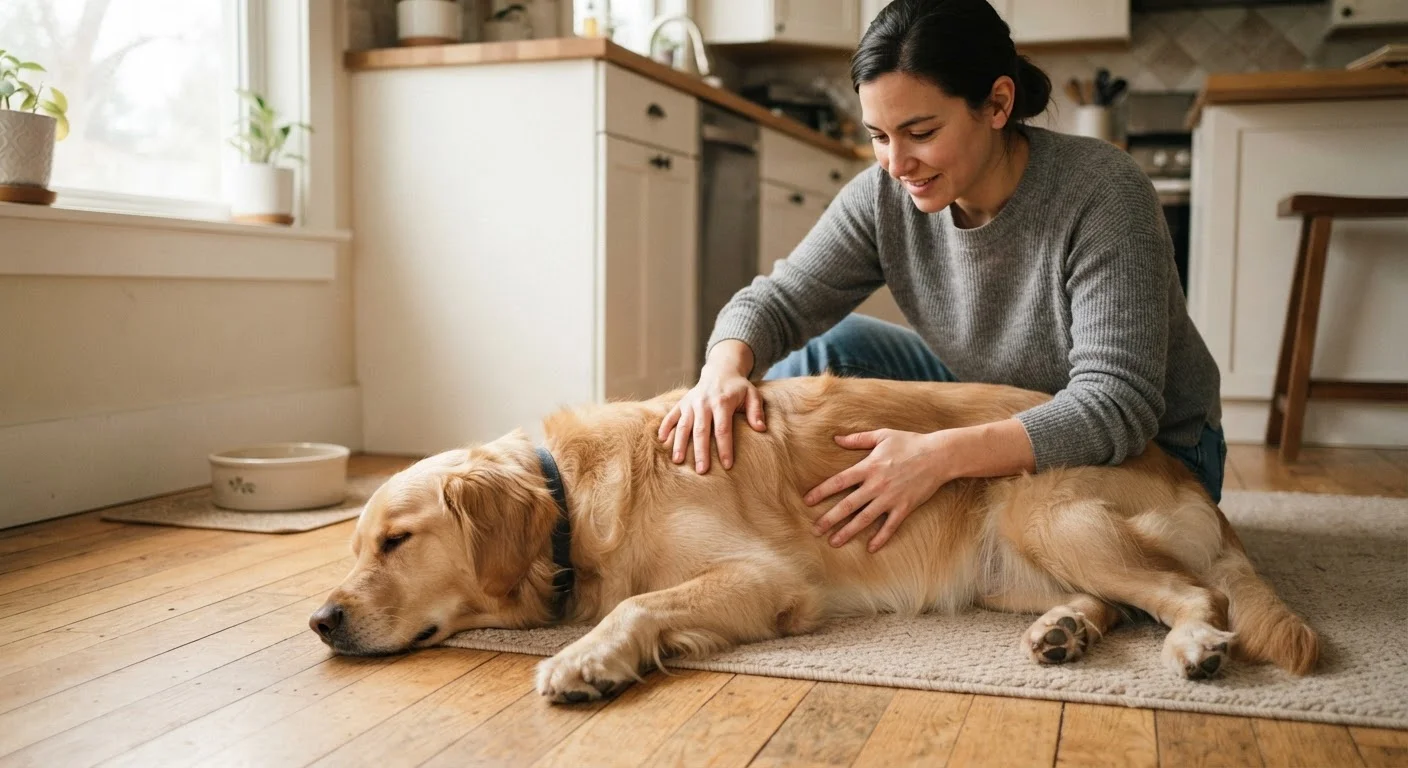
During a weekly handling session, run your hands along your pet's body from nose to tail. Note coat texture (dull, brittle, or patchy coat can indicate nutritional gaps or skin conditions), skin condition (flaking, redness, unusual lumps, or warmth), eye discharge (color and consistency), and ear odor or visible debris. Document what you find even if nothing seems wrong - this creates the record that makes abnormalities visible later.
For grooming context, see our article on what's safe to do at home versus what needs a professional - some skin and coat inspections benefit from professional handling.
Monitor appetite, water intake, and bathroom habits
Track whether your pet finishes meals consistently, shows unusual interest or disinterest in food, drinks noticeably more or less water than usual, or changes elimination frequency, color, or consistency. These patterns together form a functional picture of digestion and organ health. Increased thirst paired with increased urination, for example, is a combination veterinarians often want to know about promptly.
Observe behavior and energy level
Changes in how your pet moves, interacts, sleeps, or responds to stimuli are meaningful health data. Note any new reluctance to jump, climb stairs, or play; unusual vocalizations; increased hiding or clinginess; and sleep pattern shifts. A single off day is rarely cause for alarm, but a pattern that persists for three or more days warrants a call to your veterinarian.
Bring your log to every vet visit
Your observation record transforms a brief annual exam into a richer conversation. Before each appointment, review your notes and summarize any trends - even if each individual entry seemed unremarkable. Veterinarians can act on patterns you've documented far more effectively than on vague recollections. If something concerns you between visits, this guide on when to seek care versus monitor at home can help you decide whether to call sooner.
Consistency Matters More Than Precision
You don't need clinical-grade instruments to monitor your pet effectively. A consistent routine - same day, same method, same log format - produces the trend data that matters. Small, regular observations made reliably over time are more useful to a veterinarian than sporadic, detailed checks done only when something seems wrong.
This article is for general informational and educational purposes only and does not constitute veterinary or medical advice. Always consult a licensed veterinarian for guidance specific to your pet's health needs.