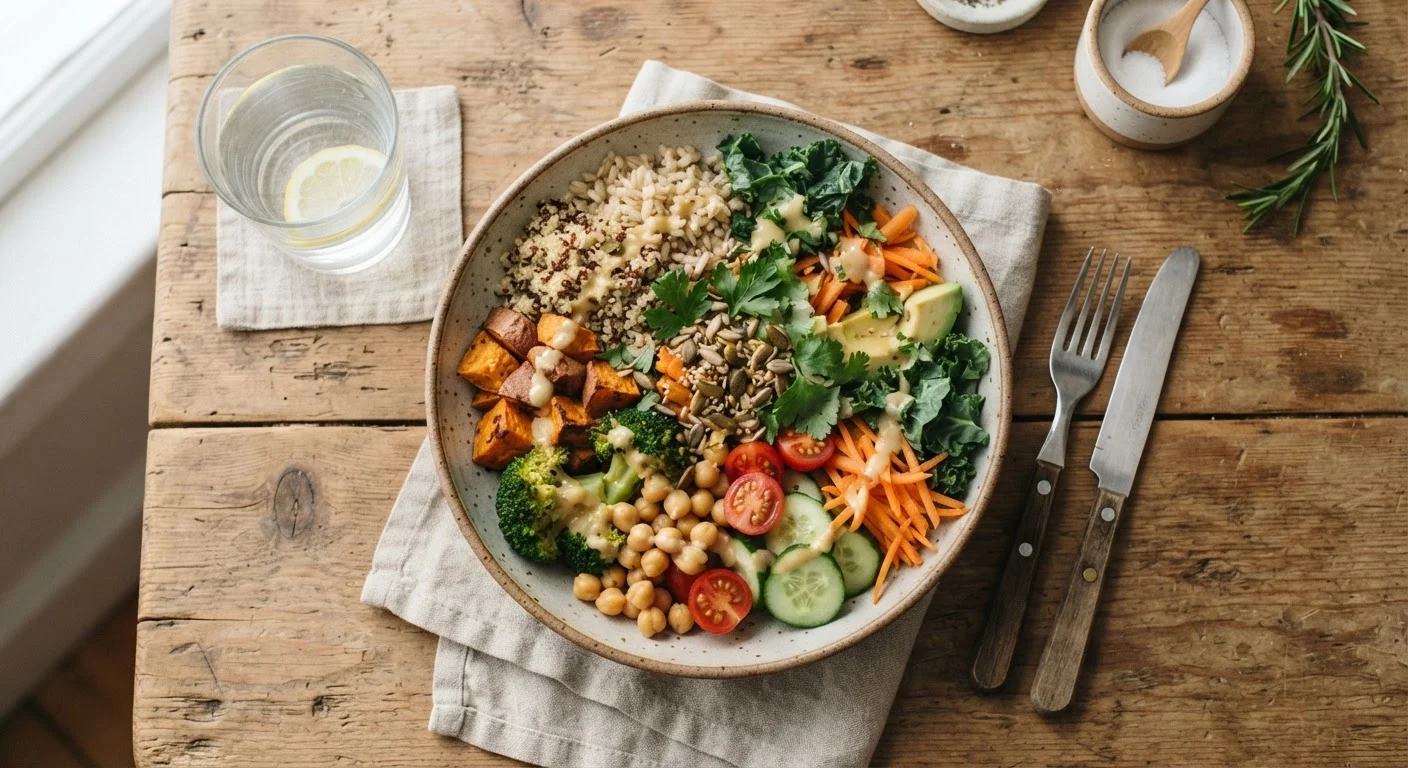
A nutrition check-in focuses on patterns over time, not single meals or perfect days.
Foundational habits - like eating vegetables, staying hydrated, and including protein - matter more than calorie counts.
Noticing how food makes you feel is a valid and useful part of evaluating your eating habits.
This checklist is for reflection and education, not a substitute for advice from a registered dietitian or doctor.
Small, consistent adjustments tend to be more sustainable than dramatic dietary overhauls.
Use this reflective checklist to evaluate whether your daily eating habits align with core nutrition principles — no calorie counting required.
Why a Nutrition Check-In Is Worth the Pause
Most of us don't eat badly on purpose - we eat on autopilot. Busy schedules, convenience, and habit quietly shape what lands on our plates day after day. Occasionally stepping back to reflect on those patterns can reveal small gaps worth addressing, or confirm that you're doing better than you thought.
This checklist isn't a diet plan or a calorie tracker. It's a set of honest questions drawn from core nutrition principles - the kind of foundational guidance that doesn't flip with every headline. For a useful perspective on why nutrition advice can seem contradictory, see our piece on where nutrition information goes wrong.
Work through these questions at your own pace. Mark what feels true for your typical week - not your best day or your worst. The goal is awareness, not judgment.
Food Variety and Vegetables
Eat at least two different vegetables on most days of the week.Must
Include a range of colors across your vegetables and fruits over the course of a week - different colors often signal different nutrients.Should
Try at least one food you don't typically eat in any given week to broaden the range of nutrients in your diet.Nice to have
Protein and Satiety
Include a protein source - such as legumes, eggs, fish, poultry, meat, dairy, or tofu - at most meals.Must
Notice whether meals keep you satisfied for a reasonable period; persistent hunger shortly after eating may signal insufficient protein or fiber.Should
Vary your protein sources across the week rather than relying on the same one every day.Nice to have
Whole Grains and Fiber
Choose whole grain versions of bread, rice, or pasta at least some of the time rather than always choosing refined options.Should
Include fiber-rich foods - such as beans, lentils, oats, fruits, or vegetables - regularly throughout the week.Must
Check whether your digestion generally feels comfortable and regular, as this can reflect adequate fiber and fluid intake.Should
Hydration
Drink water as your primary beverage throughout the day rather than relying mainly on sugary drinks or caffeinated beverages.Must
Notice signs of adequate hydration: pale yellow urine, absence of persistent thirst or headaches.Should
Carry a reusable water bottle to reduce barriers to drinking water consistently.Nice to have
Meal Regularity and Eating Context
Eat at reasonably consistent times on most days to support stable energy and reduce the likelihood of overeating later.Should
Try to eat without screens or significant distractions at least occasionally, which can help you notice hunger and fullness signals more accurately.Nice to have
Avoid skipping meals out of busyness in a way that leads to extreme hunger, which often drives less balanced food choices.Should
How Food Makes You Feel
Reflect on whether your energy levels are reasonably stable across the day or frequently crash after meals.Should
Notice any recurring physical symptoms - such as bloating, fatigue, or sluggishness - that might be worth discussing with a healthcare professional.Must
Consider whether your relationship with food feels generally comfortable, or whether eating causes significant stress or guilt - both are worth exploring with a professional.Must
What to Do With Your Answers
Once you've worked through the checklist, look for patterns rather than scores. A cluster of "not yet" answers in one group - say, hydration or food variety - gives you a clear, low-pressure starting point. You don't need to fix everything at once.
If you're curious how these principles translate into a practical meal, our guide on building a balanced plate walks through meal composition without rigid rules or calorie targets.
This Checklist Is Not a Clinical Assessment
The questions here reflect general nutrition principles and are intended for reflection and education only. They are not a diagnostic tool and do not account for individual health conditions, medications, allergies, or life stages such as pregnancy. If you have a specific health concern or medical condition, always consult a registered dietitian or qualified healthcare professional before making changes to your diet.
For lasting change, small habits tend to outperform big resets. Our companion article on habits that support consistent, balanced eating explores evidence-informed strategies for the long game. And if you've noticed that stress or sleep are affecting your eating, a daily mental wellbeing check-in can help you notice those connections too.
This article is for general informational and educational purposes only and is not a substitute for personalized medical or nutritional advice. If you have specific health concerns, dietary needs, or a medical condition, please consult a qualified healthcare professional or registered dietitian before making changes to your diet.
The content provided on our blog site traverses numerous categories, offering readers valuable and practical information. Readers can use the editorial team’s research and data to gain more insights into their topics of interest. However, they are requested not to treat the articles as conclusive. The website team cannot be held responsible for differences in data or inaccuracies found across other platforms. Please also note that the site might also miss out on various schemes and offers available that the readers may find more beneficial than the ones we cover.