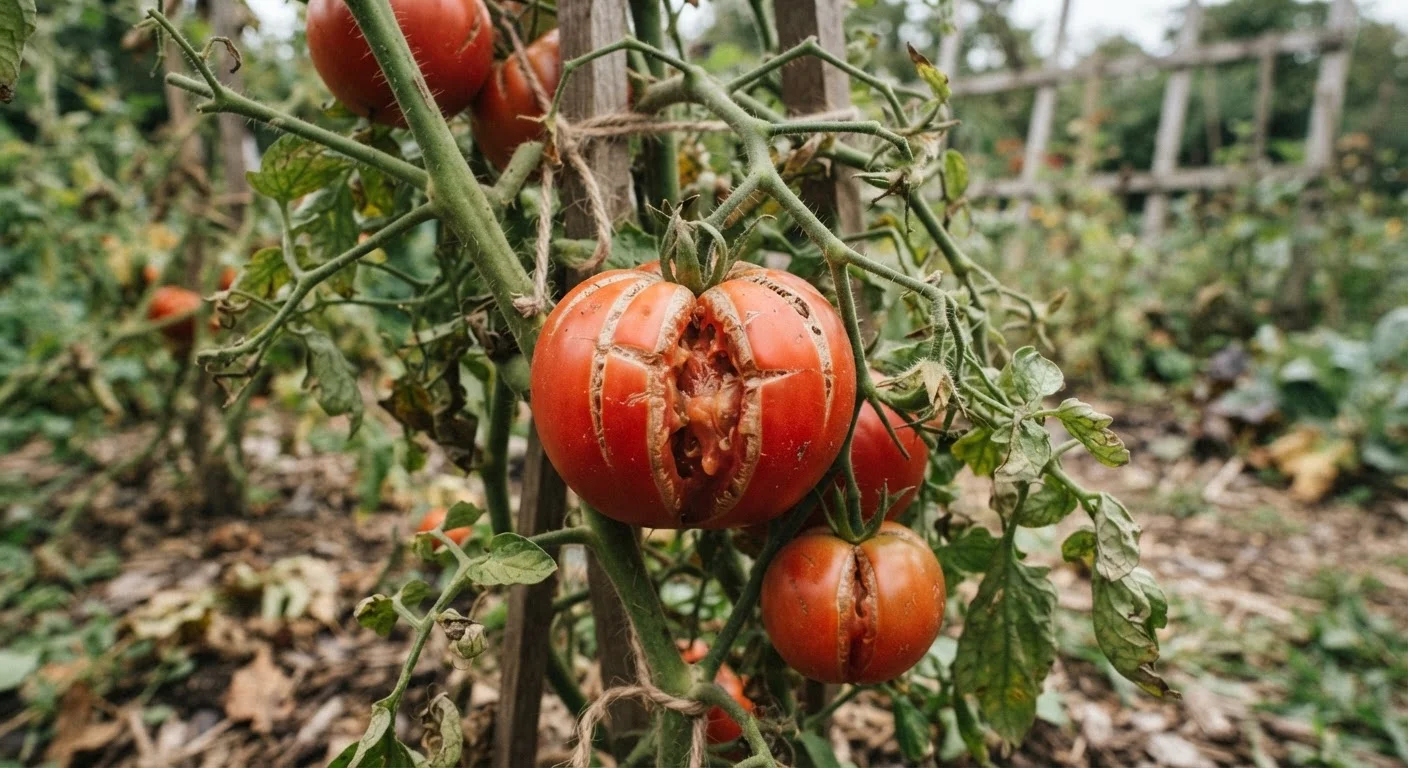
What's Actually Happening When Tomatoes Split
Tomato splitting - whether the cracks radiate outward from the stem (radial cracking) or ring the fruit horizontally (concentric cracking) - comes down to one core problem: the fruit's interior expands faster than its skin can stretch. This almost always traces back to sudden fluctuations in moisture availability.
When a tomato plant receives irregular water, the fruit pauses its development during dry periods. Then, when water floods in - whether from heavy irrigation or an unexpected rainstorm - the cells inside the fruit absorb it rapidly and swell. The skin, which has already begun to firm up, can't keep pace and tears.
Understanding this mechanism matters because it shifts the solution away from expensive interventions and toward simple, consistent management habits - the kind that cost very little but pay off across the whole growing season.
Splits Let Disease In Quickly
Once a tomato's skin cracks, the exposed flesh becomes an immediate entry point for mold, bacteria, and fruit flies. Cracked tomatoes should be harvested and used within a day or two, or discarded if infection has already set in. Do not leave split fruit on the vine - it can attract pests that damage neighboring fruit.
The Mistakes That Cause Most Splits - And How to Fix Them
Most tomato splitting is preventable once you recognize where the common errors happen. The mistakes below cover the full range of causes - from watering habits to harvest timing - and each one is correctable without major expense.
Watering on an irregular schedule - going days without water then soaking the garden all at once.
Why it happens: Many gardeners water reactively, only turning on the hose when plants look stressed or after forgetting for several days. This boom-and-bust cycle is exactly what causes splitting.
Skipping mulch around the base of tomato plants, leaving soil exposed to temperature swings and rapid moisture loss.
Why it happens: Mulching feels like an optional extra step, and gardeners working on a tight budget sometimes skip it to save on materials. Without mulch, soil dries out faster and absorbs water unevenly after rain.
Leaving tomatoes on the vine too long, waiting for perfect deep-red color before picking.
Why it happens: Home gardeners naturally want vine-ripened flavor, so they wait. But the longer fruit stays on the vine during unpredictable weather, the greater the splitting risk.
Choosing splitting-prone varieties without accounting for your local climate or rainfall patterns.
Why it happens: Gardeners often select tomato varieties based on taste, size, or appearance rather than skin thickness or split resistance, especially when buying starter plants without reading descriptions carefully.
Ignoring the impact of sudden temperature drops, which cause the fruit skin to contract while interior moisture remains high.
Why it happens: Most gardeners think of splitting as purely a watering problem and overlook how rapid temperature changes - such as a cold front following a hot spell - stress the fruit.
For a broader look at how watering decisions affect your entire garden, see common garden watering myths that may be undermining your plants in other ways too.
Simple Habits That Protect Your Harvest
Preventing splits doesn't require a sophisticated setup. The most effective approach combines three low-cost habits: consistent watering, good mulching, and attentive harvesting.
2-3 inches
Recommended mulch depth around tomato plants
University cooperative extension programs commonly recommend this depth to meaningfully reduce soil moisture fluctuation and moderate root-zone temperature.
1-1.5 inches
Weekly water target for tomatoes
Most regional vegetable gardening guidelines suggest this range as a baseline, adjusted upward during heat waves or periods of low rainfall.
A layer of mulch alone can reduce soil moisture evaporation by a significant margin, giving you a wider buffer between waterings. Paired with a basic watering schedule - whether by hand or with an inexpensive timer - these two steps address the majority of splitting risk before fruit even begins to ripen.
During stretches of heavy rain, check plants every day or two once fruit is approaching maturity. Picking slightly early is not a compromise - it's a practical strategy used by experienced growers who understand that the vine's job is largely done by the time color change begins. Your kitchen windowsill handles the rest.