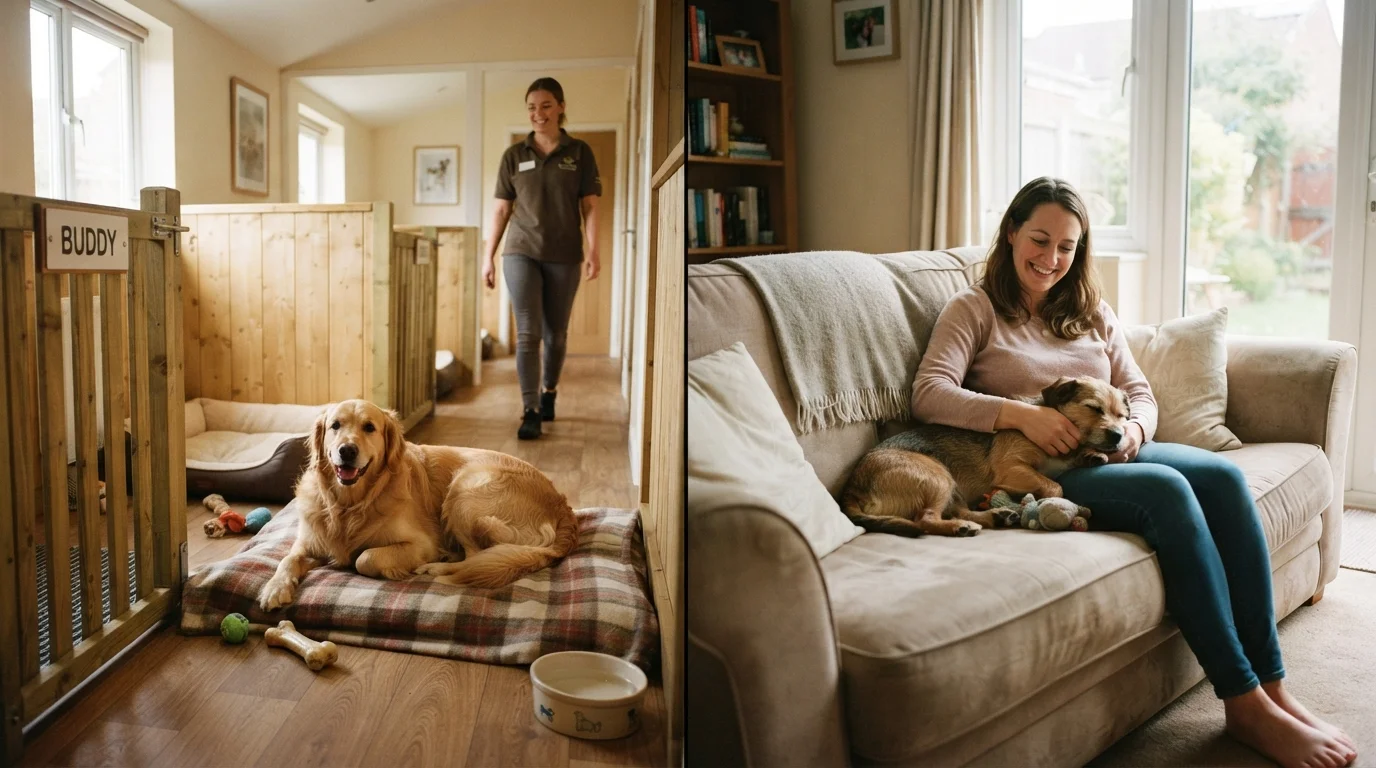
What Drives the Cost Difference
Pricing for both options varies more than most owners expect, and understanding the underlying drivers helps you compare apples to apples. For boarding facilities, the main cost levers are location (urban kennels cost more), the type of accommodation (standard run vs. private suite), included amenities (group play, individual walks, grooming), and whether the facility is a basic kennel or a full-service pet hotel. A standard dog kennel run in a mid-size US city might cost $30-$50 per night; a private suite with webcam access and daily enrichment activities can reach $75-$85 or higher.
For in-home pet sitters, pricing depends on the sitter's experience and certifications, the number of visits or overnight stays, whether your pet requires medication administration, and local demand. A drop-in visit (30-60 minutes) typically runs $20-$30; overnight stays where the sitter sleeps at your home generally range from $45-$75 per night in most markets. Platforms that connect owners to sitters add service fees that can raise the total by 10-20%.
It's worth noting that boarding and sitting costs are among the expenses that frequently catch new pet owners off guard when budgeting for the first time.
Comparing the Two Options Directly
Price alone rarely captures the full picture. The table below summarizes how boarding and in-home sitting compare across several practical dimensions.
| Pet Boarding | In-Home Pet Sitting | |
|---|---|---|
| Typical nightly cost (dog) | $30-$85+ | $45-$75 (overnight stay) |
| Pet stays in familiar environment | No - new facility | Yes - stays at home |
| Social interaction with other animals | Often available or included | Usually none unless arranged |
| Staffing and supervision | On-site staff, often 24-hour | One sitter; coverage varies |
| Medication administration | Available at some facilities (fee may apply) | Many sitters offer this; confirm experience |
| Best suited for | Social, healthy, vaccinated pets | Anxious, elderly, or multi-pet households |
| Holiday pricing | Surcharges common; book early | Surcharges common; $10-$25 extra/day |
A few nuances worth emphasizing: boarding facilities may charge separately for extras like nail trims, baths, or medication administration - costs that can accumulate on a week-long trip. In-home sitters may charge a holiday surcharge (often $10-$25 extra per day) during peak travel periods. Always request an itemized quote rather than relying on a base rate.
Your Pet's Needs Should Lead the Decision
Cost matters, but your pet's stress response, socialization history, and health status are equally important inputs. Dogs that are highly social and well-vaccinated often thrive in boarding environments with structured group play. Dogs that are anxious, reactive, or elderly frequently do better in the familiar surroundings of home with a reliable sitter maintaining their normal schedule.
Cats and small animals are generally lower-stress candidates for in-home care - they tend to be territorial and don't adapt well to new environments. A trusted sitter visiting once or twice daily is often both calmer for the cat and less expensive than boarding.
Do a Trial Run Before a Long Trip
If you're considering a new boarding facility or sitter, book a short one- or two-night stay before a longer absence. This lets your pet acclimate and lets you assess the provider's communication and reliability without the stakes of a week-long trip. Many owners find this trial reduces anxiety for both themselves and their pets, and it's a low-cost way to validate your choice.
Pets with chronic health conditions introduce another layer. Some boarding facilities - particularly those attached to or managed by veterinary practices - can administer medications and monitor conditions under professional oversight. For pets managing diabetes, post-surgical recovery, or seizure disorders, this structured environment may reduce medical risk even if it costs more per night. Consult your veterinarian about which environment makes sense given your pet's current health status. For a broader look at how health costs evolve, see how pet care costs shift across life stages.
Practical Steps Before Booking Either Option
Regardless of which route you choose, the vetting process for any care provider should be thorough. Here's a practical checklist:
- Ask for references from clients with pets similar to yours in breed, size, and temperament.
- Confirm vaccination requirements - reputable boarding facilities require current records for rabies, distemper, and bordetella (kennel cough); a good sitter should want to know the same.
- Discuss emergency protocols - what happens if your pet becomes ill or injured? Which veterinarian will they contact, and do you need to pre-authorize care?
- Request a meet-and-greet before committing, especially for boarding facilities where your dog will interact with other animals.
- Get all costs in writing, including add-ons and holiday surcharges, before your trip.
Managing care costs over time connects directly to broader budgeting strategy. The practical guide to pet care on a budget covers additional ways to balance quality and cost across your pet's full range of needs. And if you're thinking about how to handle unexpected vet bills that might arise during or after any care arrangement, comparing pet insurance against a dedicated savings fund is a useful next step.
This article is for general informational purposes only and does not constitute veterinary or financial advice. Consult a licensed veterinarian for guidance specific to your pet's health needs.