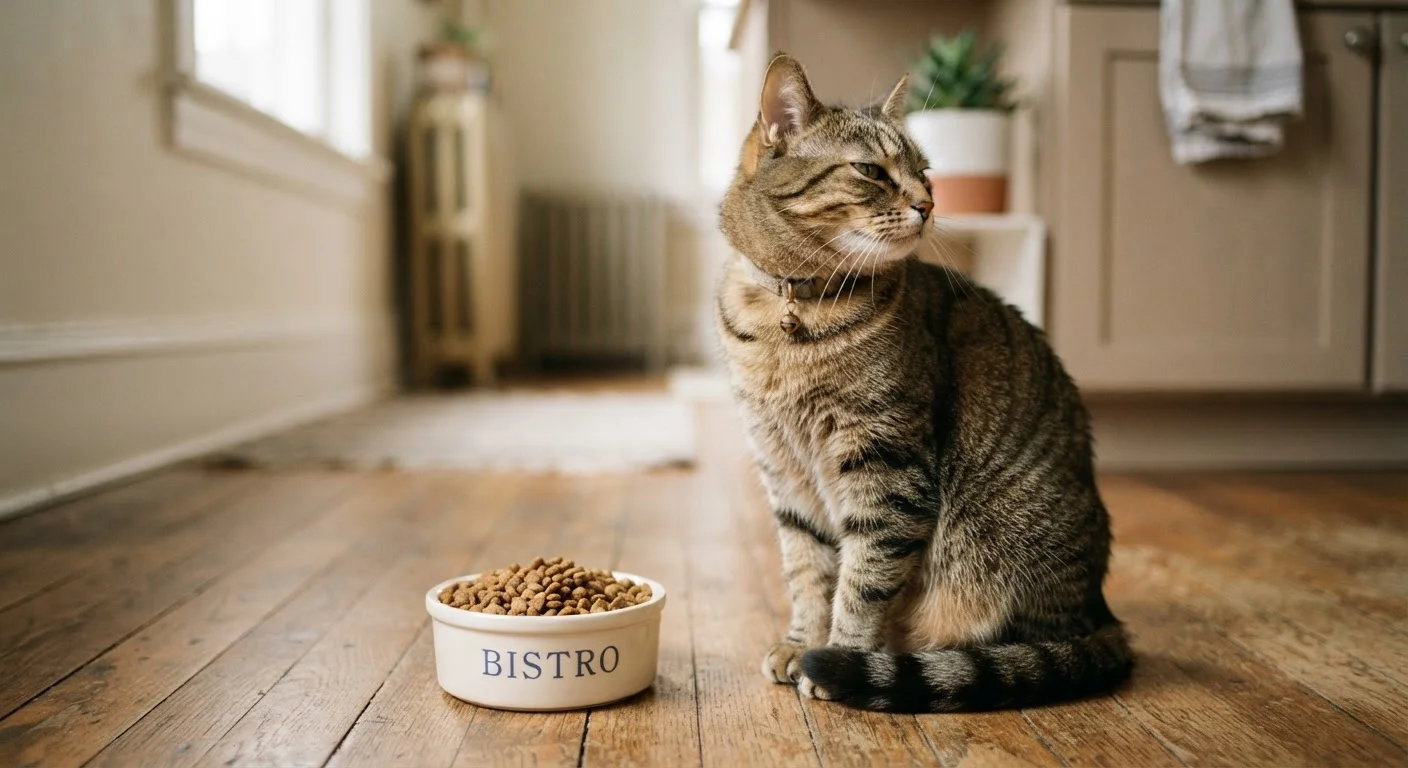
Why Cats Refuse Food - and Why It's Often Our Fault
Cat food refusal is one of the most common concerns pet owners raise, and it's frequently blamed on the cat. In reality, many of the triggers are environmental, habitual, or rooted in well-meaning but counterproductive feeding choices. Understanding what's actually driving the behavior is the first step toward solving it.
Cats are obligate carnivores with highly tuned sensory systems. Their acceptance of food is shaped by smell, texture, temperature, and even the physical experience of eating from a particular dish. For a broader foundation, our introduction to feeding cats well covers the nutritional basics every owner should know.
Switching foods abruptly when a cat refuses a meal.
Why it happens: Owners interpret refusal as a clear signal that the cat dislikes the food and needs something new immediately.
Serving food straight from the refrigerator.
Why it happens: Cold wet food is convenient to portion and store, and owners don't realize temperature matters to cats.
Placing the food bowl too close to the litter box or water dish.
Why it happens: Owners set up feeding stations based on convenience or space constraints, not feline behavioral preferences.
Free-feeding dry food around the clock, then expecting enthusiasm for scheduled meals.
Why it happens: Free-feeding seems convenient and humane, but it undermines a cat's natural appetite rhythms.
Using a bowl that causes whisker fatigue.
Why it happens: Most owners don't know that deep, narrow bowls press against a cat's highly sensitive whiskers, making eating uncomfortable.
Assuming food refusal is always behavioral, not medical.
Why it happens: Picky eating is so commonly associated with cats that owners often dismiss changes in appetite as personality rather than symptoms.
Building Feeding Habits That Actually Work
Correcting food refusal isn't usually about finding the perfect food - it's about creating conditions where a cat feels safe, comfortable, and appropriately hungry. Structured meal times, proper dish setup, and patience during food transitions address the majority of non-medical refusal cases.
When Refusal Becomes a Medical Emergency
A cat that stops eating entirely for more than 24-48 hours is at risk for hepatic lipidosis (fatty liver disease), a serious and potentially life-threatening condition. Do not wait it out or attempt home remedies. Contact your veterinarian promptly if your cat refuses all food for more than a day, particularly if they are overweight, stressed, or recently ill.
It's also worth reviewing assumptions about what cats need nutritionally. Many popular beliefs - about grain-free diets, raw feeding, or protein levels - don't hold up under scrutiny. Our piece on pet nutrition myths vets hear too often separates common misconceptions from evidence-based guidance.
If you're planning a diet change, use a checklist approach before starting. Our practical checklist for changing your pet's diet helps you assess readiness and avoid common missteps. For owners managing pet care costs, consistent feeding routines also reduce waste and unnecessary food cycling - reducing recurring pet expenses without compromising welfare outlines practical ways to keep costs down responsibly.
Don't Reinforce Refusal With Constant Upgrades
Switching to a more appealing food every time your cat walks away from the bowl can create a cycle of increasingly selective eating. Over time, this narrows a cat's food acceptance and makes transitioning to therapeutic diets - if ever medically needed - much harder. Consult your vet before making repeated food changes.
This article is for general informational purposes only and does not constitute veterinary or medical advice. Always consult a licensed veterinarian for concerns about your cat's health, appetite, or diet.