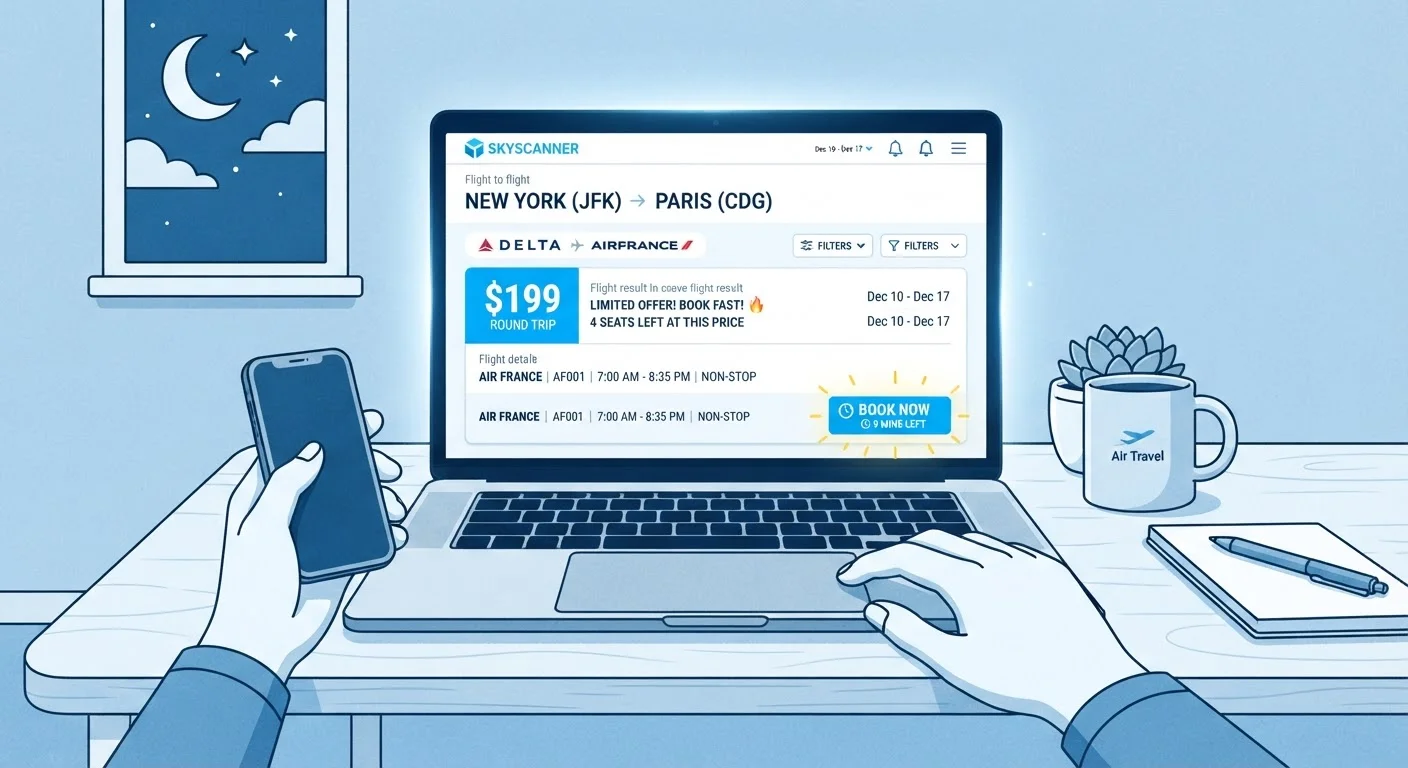
What Makes These Fares Different from Standard Discounts
Standard airfare discounts — advance purchase prices, loyalty member rates, off-peak pricing — are built into an airline's revenue model as expected and repeatable. Flash sales and error fares operate outside that normal structure, which is why they attract attention and require a different response from travelers.
A flash sale is a deliberate marketing decision. Airlines use them to fill seats on specific routes during slow booking periods, stimulate demand for new routes, or compete with a rival carrier's promotional push. The discounts can be meaningful — sometimes 30–60% below the typical published fare — but the seats available at that price are limited, and the booking window closes fast.
An error fare is something else entirely: a pricing mistake. These happen when an airline's fare-filing system, a third-party booking platform, or a currency conversion tool produces a price that was never intended. A transatlantic business class seat listed for $300, or a round-trip to Asia for $150, are classic examples. The fare may appear on one platform but not others, and it typically disappears within hours once someone flags it.
Understanding this distinction matters because your approach — and your risk exposure — is different for each. See our breakdown of common travel booking misconceptions for context on how airline pricing actually works.
2015
Year DOT reversed error fare honor requirement
The US Department of Transportation rescinded its rule requiring airlines to honor mistakenly published fares, shifting discretion back to carriers.
24–72 hrs
Typical flash sale booking window
Most airline flash sales remain open for one to three days, though seat-limited promotions can sell out well before the window closes.
30–60%
Typical discount range in flash sales
Flash sale discounts vary by route and carrier, but meaningful promotions commonly offer fares 30 to 60 percent below standard published prices on the same route.
The Reality of Error Fares: Risk, Honor Rates, and What to Do
Error fares generate significant excitement in deal-focused travel communities, and occasionally they deliver. But the risk profile is real and worth understanding before you act.
Since the DOT reversed its previous stance in 2015, US airlines are not obligated to honor fares published by mistake. Some airlines do honor them — often when the booking volume is too large to reverse cleanly, or when the reputational cost of cancellation outweighs the financial loss. Others cancel quietly and issue refunds within days. There is no consistent rule across carriers.
The practical guidance is straightforward: do not book non-refundable connecting travel, hotels, or other arrangements until your error fare ticket has been fully ticketed and confirmed (not just held). A booking reference number is not the same as a confirmed, ticketed itinerary. Check your email for an actual e-ticket number, which typically starts with the airline's three-digit code.
Wait for the E-Ticket Before Booking Hotels
A booking confirmation email is not the same as a ticketed itinerary. Before committing to non-refundable accommodation or connecting travel, look for an e-ticket number in your confirmation — typically a 13-digit numeric code. If you don't receive one within 24 hours, contact the airline directly. This single step prevents the most common financial mistake associated with error fare bookings.
It's also worth noting that error fares are not evenly distributed across booking platforms. They often appear on third-party aggregators before being corrected at the source, or vice versa. Checking the airline's own site alongside aggregators when you see an unusual price can help you quickly assess whether you're looking at a legitimate published fare or a data anomaly.
How to Position Yourself to Catch Genuine Deals
The travelers who consistently benefit from flash sales share a few common habits — none of which require monitoring every booking site around the clock.
Route-specific fare alerts do most of the work. Setting alerts for the airports you actually use, rather than broadly tracking all deals, means you're notified when something relevant appears. Most major fare comparison tools offer this functionality for free.
Flexibility on travel dates is arguably the highest-leverage factor. Flash sales frequently apply to specific date windows — mid-week departures, shoulder-season months, or off-peak holiday travel. Travelers who can adjust their schedule by a few days capture deals that rigid planners miss.
Having payment ready matters more than most readers expect. A flash sale seat allotment can sell out in under an hour. If you need to locate your card, verify your billing address, or navigate an unfamiliar checkout flow, you may miss the window. Saving payment details securely with one or two booking platforms you trust saves critical minutes.
For a broader look at how timing and flexibility affect airfare, our guide to locking in lower airfare covers booking windows and fare class basics in detail. If you're exploring how deals like these fit into a larger savings strategy, our reference guide to layered travel discounts explains what can realistically be combined.
Setting Realistic Expectations
Flash sales and error fares are not a reliable travel budgeting strategy. Treating them as a bonus when they align with existing travel plans — rather than building an itinerary around the hope of catching one — is the more grounded approach.
Even genuine flash sale fares come with limitations that affect their value: tickets are often non-refundable and non-changeable, blackout dates may exclude the specific travel window you need, and ancillary fees (baggage, seat selection) still apply and can erode the headline savings. Hidden fees and underestimated costs are a common reason travelers feel a deal didn't deliver the savings they expected.
The clearest value these opportunities offer is a reduced base fare on a trip you were already planning. If a flash sale drops the price on a route you monitor regularly, that's a genuine win. If an error fare happens to match a flexible upcoming travel window and you understand the cancellation risk, it may be worth a measured attempt. Neither scenario requires urgency-driven decisions or financial commitments beyond the ticket itself.
For travelers skeptical of deal-chasing in general, it's worth distinguishing between fare deals — which are grounded in airline pricing mechanics — and coupon or code-based promotions, which work differently. Our overview of how discount codes actually work separates the real from the overhyped.