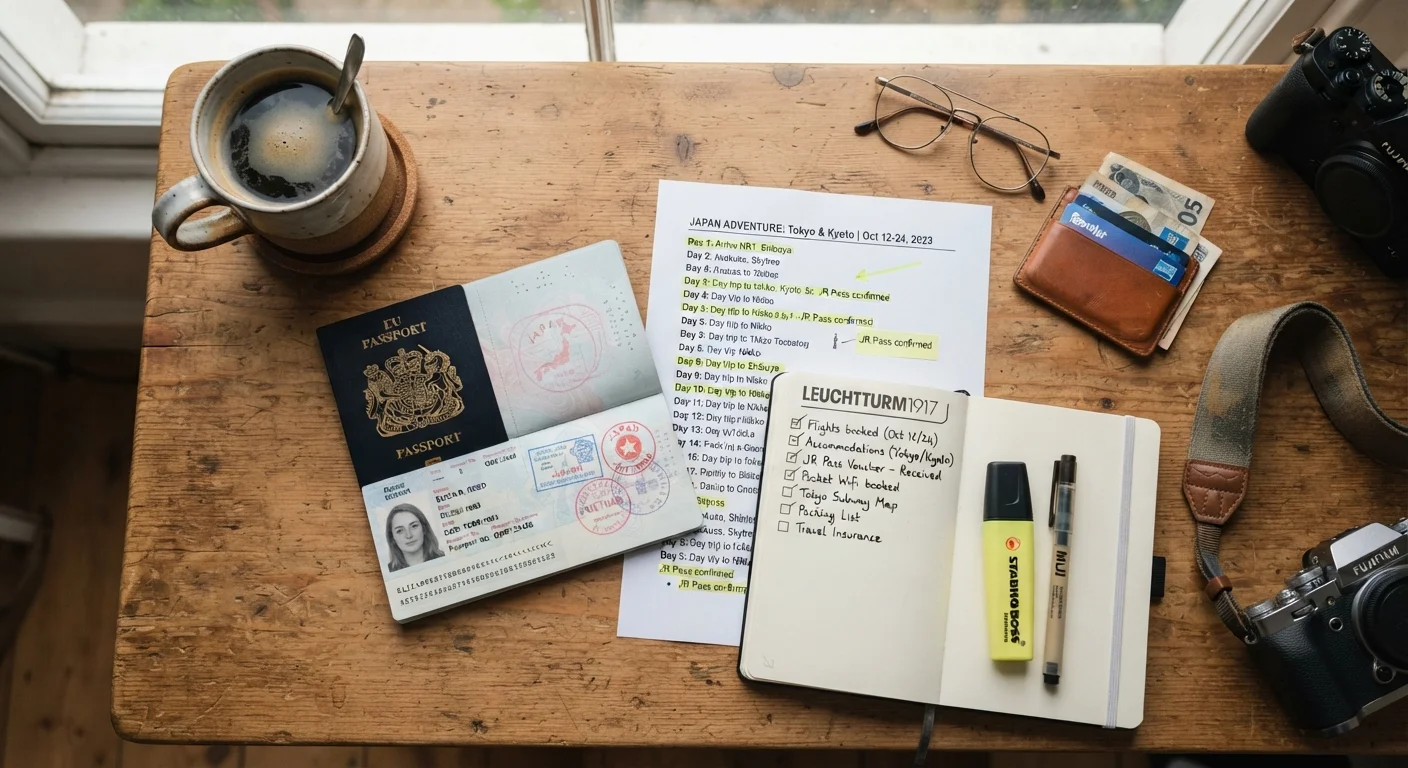
Why Pre-Trip Research Pays Off
Most trip planning errors aren't booking mistakes — they're research gaps. Travelers commit to flights and accommodations before verifying whether their passport is valid long enough, whether a visa-on-arrival is actually available to US citizens at their chosen port of entry, or whether the destination is in its rainy season during their travel window.
This checklist is structured to catch those gaps before they cost you money or flexibility. Work through it in order: entry and documents first, then safety and health, then logistics and costs. If you're planning a trip with others, see our group travel planning guide for coordination-specific considerations that go beyond this individual framework.
This checklist pairs well with the complete trip planning framework, which covers the full arc from destination selection through on-the-ground prep. Use that article for the big picture; use this checklist to pressure-test your research before you commit.
Documents & Entry Requirements
Health & Safety Advisories
Seasonal Conditions & Timing
Costs & Budget Realities
Logistics & Ground Transport
Travel Insurance Review
Tools and Resources to Run This Checklist
The sources below are referenced throughout the checklist. Bookmark them before you start — switching between tabs mid-research is where details get missed.
US State Department Travel Advisories
Provides current safety advisory levels and detailed country-specific guidance for US travelers.
CDC Traveler's Health
Lists destination-specific health notices, required vaccinations, and outbreak alerts.
US Passport & International Travel (travel.state.gov)
Official source for visa requirements, passport renewal, and entry rules by country.
STEP (Smart Traveler Enrollment Program)
Free State Department service that sends safety alerts and helps the embassy locate you in an emergency.
Your destination's official tourism authority website
Provides accurate information on entry requirements, local fees, and seasonal conditions directly from the source.
Your bank or credit card issuer's travel notifications portal
Allows you to set travel alerts, review foreign transaction fees, and confirm card acceptance abroad.
Costs and Insurance: The Details Travelers Skip
Budget research often stops at flight and hotel prices. The more consequential figures — airport departure taxes, tourist accommodation levies, dynamic currency conversion fees, and mandatory travel health insurance for certain visa categories — tend to surface only at the point of payment.
For a deeper look at how hidden costs affect destination affordability, the budget destination pre-trip checklist covers local cost benchmarking in more detail. If you're redeeming points or miles as part of your trip, also check the rewards flight pre-redemption checklist — award tickets carry their own set of pre-booking verifications.
Tourist Tax and Departure Fee Surprises
Some destinations charge accommodation taxes, city visitor fees, or airport departure taxes that are not included in your quoted booking price. These can range from a few dollars to over $50 per person in some cases. Always check the destination's official tourism or customs authority website for the current fee schedule before finalizing your budget.
Travel insurance deserves more scrutiny than most travelers give it. Policies vary significantly in what they cover — cancel-for-any-reason coverage, medical evacuation limits, and pre-existing condition exclusions are the three areas where coverage gaps most commonly cause financial harm. Read the summary of benefits carefully, not just the marketing description. This is general information only; consult the insurer and your own financial or legal adviser for guidance specific to your situation.
Verify Entry Rules With Official Sources Only
Entry requirements — including visa eligibility, vaccination proof, and passport validity rules — can change with little notice. Third-party travel blogs and even some booking platforms may display outdated information. Always confirm current requirements directly with the destination country's official immigration authority and the US State Department before booking or paying for anything.