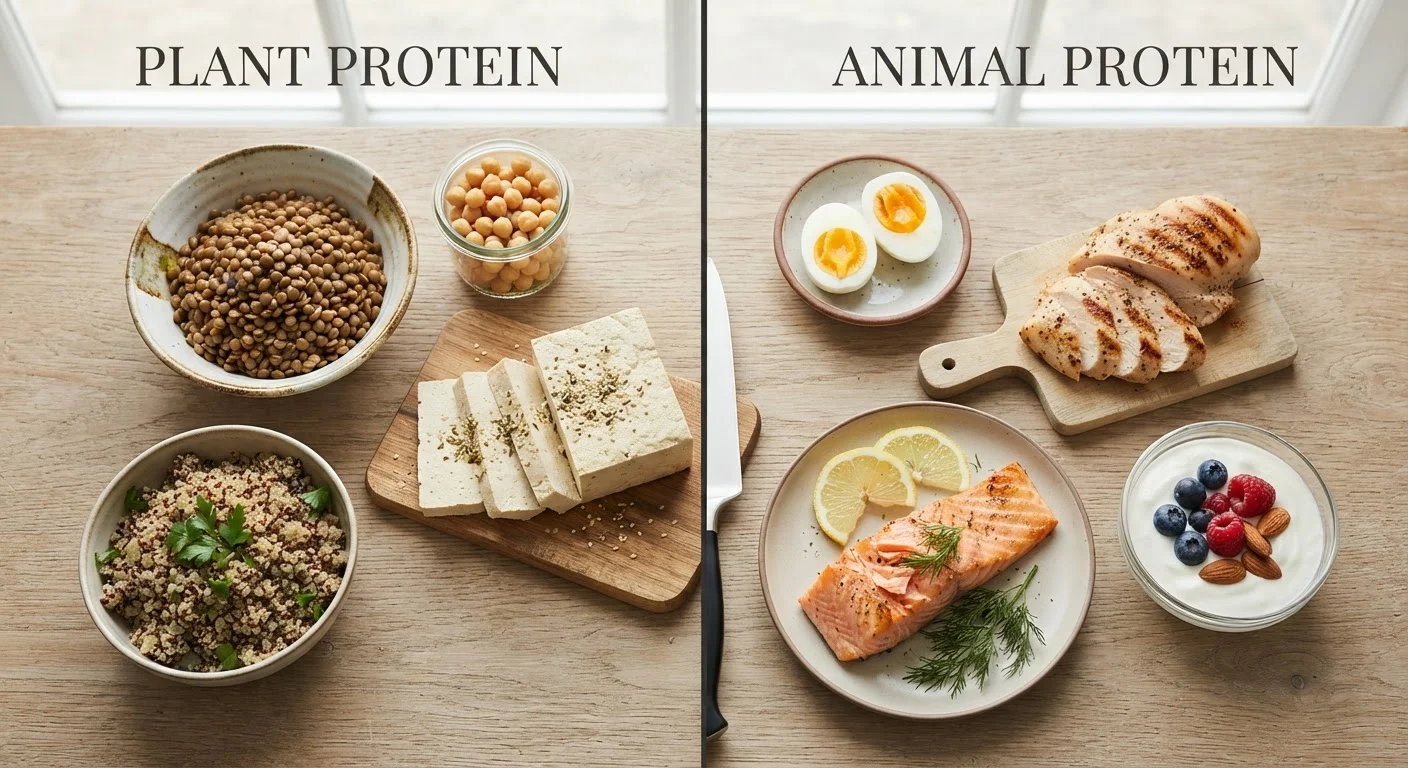
What Makes a Protein 'Complete' or 'Incomplete'?
Proteins are built from amino acids - small compounds the body uses to repair tissue, produce enzymes, and support countless biological functions. Of the 20 amino acids involved in human nutrition, nine are classified as essential, meaning the body cannot manufacture them and must obtain them through food.
Animal proteins - found in meat, poultry, fish, eggs, and dairy - are generally considered complete proteins because they contain all nine essential amino acids in proportions that closely mirror what human tissue needs. Plant proteins, by contrast, are often described as incomplete because most individual plant foods are low in at least one essential amino acid. For example, legumes tend to be low in methionine, while grains are typically low in lysine.
This doesn't mean plant proteins are inadequate. Eating a variety of plant foods throughout the day - say, rice alongside beans, or whole-grain bread with nut butter - allows the amino acids from different sources to complement each other. The body maintains a circulating pool of amino acids and does not require strict food combining at every single meal.
Bioavailability: How Well Does the Body Actually Use Each Type?
Bioavailability refers to the proportion of a nutrient the body can absorb and put to use. Animal proteins consistently score higher on measures like the DIAAS - the current gold-standard metric endorsed by the Food and Agriculture Organization of the United Nations for assessing protein quality.
40-80%
Typical digestibility range for plant proteins
The Food and Agriculture Organization notes that plant protein digestibility varies widely by food and preparation method, compared to roughly 90-99% for most animal proteins.
2-3×
Higher absorption rate of heme iron vs. non-heme iron
Research consistently shows heme iron from animal foods is absorbed at significantly higher rates than the non-heme iron found in plant foods, according to established nutritional biochemistry literature.
Several factors reduce the bioavailability of plant proteins. Antinutrients - naturally occurring compounds such as phytates, tannins, and trypsin inhibitors found in legumes, grains, and seeds - can bind to nutrients and interfere with digestion. The good news: cooking, soaking, sprouting, and fermenting plant foods significantly reduce antinutrient levels and improve digestibility.
Practical implication: plant-based eaters may benefit from consuming somewhat more total protein to account for lower average absorption rates, though precise requirements vary by individual and food choices. A registered dietitian can help tailor recommendations to specific circumstances.
Beyond Protein: What Else Comes Along for the Ride?
Protein is rarely consumed in isolation - it arrives packaged with other nutrients, and those co-passengers matter. Understanding the full nutritional picture of each source helps readers make context-appropriate choices.
| Plant Protein Sources | Animal Protein Sources | |
|---|---|---|
| Amino acid completeness | Usually incomplete (low in ≥1 essential AA) | Generally complete (all 9 essential AAs) |
| Bioavailability (DIAAS) | Moderate; reduced by antinutrients | High; efficiently absorbed and used |
| Dietary fiber | Present; supports gut health | Absent |
| Vitamin B12 | Not naturally present; supplement needed | Naturally abundant |
| Iron type | Non-heme; lower absorption rate | Heme iron; higher absorption rate |
| Omega-3 fatty acids | ALA form; less direct conversion | EPA/DHA in fatty fish; directly usable |
| Saturated fat content | Generally low | Varies; higher in red/processed meat |
| Phytonutrients | Rich in flavonoids, carotenoids, etc. | Minimal or absent |
Plant protein sources - lentils, chickpeas, edamame, quinoa, nuts, seeds - deliver dietary fiber, which animal foods contain none of. Fiber supports digestive health, helps regulate blood glucose levels, and is associated with cardiovascular health. Plant foods also supply a wide array of phytonutrients (plant-based compounds such as flavonoids and carotenoids) that have been studied for their role in reducing chronic disease risk.
Animal protein sources, meanwhile, provide nutrients that are difficult or impossible to obtain in meaningful amounts from plants alone. Vitamin B12, for instance, is found naturally only in animal products. Heme iron (from meat and fish) is absorbed at rates two to three times higher than the non-heme iron in plant foods. Omega-3 fatty acids in fatty fish, particularly EPA and DHA, differ structurally from the plant-derived ALA and are used more directly by the body. People following fully plant-based diets typically need to monitor these nutrients - and in some cases supplement - under the guidance of a healthcare provider.
For a broader look at how food processing affects overall nutritional quality across both categories, see our guide to whole foods vs. processed foods.
Putting It Together: Practical Considerations for Your Diet
The protein debate often gets framed as all-or-nothing, but the evidence suggests nuance matters more than labels. Here are grounded principles to keep in mind:
- Variety is the common thread. Whether omnivore or plant-based, eating diverse protein sources generally produces better nutritional outcomes than relying on any single food.
- Food quality within each category varies widely. A grilled piece of salmon and a hot dog are both animal proteins, but their nutritional profiles are vastly different. The same applies to plant foods.
- Life stage and health status matter. Protein needs differ for growing children, pregnant or breastfeeding individuals, older adults (who may need more protein to maintain muscle mass), and people managing chronic conditions. General information cannot substitute for personalized guidance.
- Sustainability and ethics are legitimate considerations. Many people factor environmental impact and animal welfare into protein choices. These are valid dimensions of decision-making, though they fall outside the scope of nutritional comparison alone.
Improving Plant Protein Absorption
Soaking legumes overnight, sprouting grains and seeds, and fermenting foods like tempeh all help reduce antinutrients and improve the digestibility of plant proteins. Pairing non-heme iron sources with vitamin C-rich foods (such as bell peppers or citrus) can also meaningfully boost iron absorption from plant meals.
This article is for general informational and educational purposes only and is not a substitute for professional medical or dietary advice. Speak with a qualified healthcare provider or registered dietitian before making significant changes to your diet.