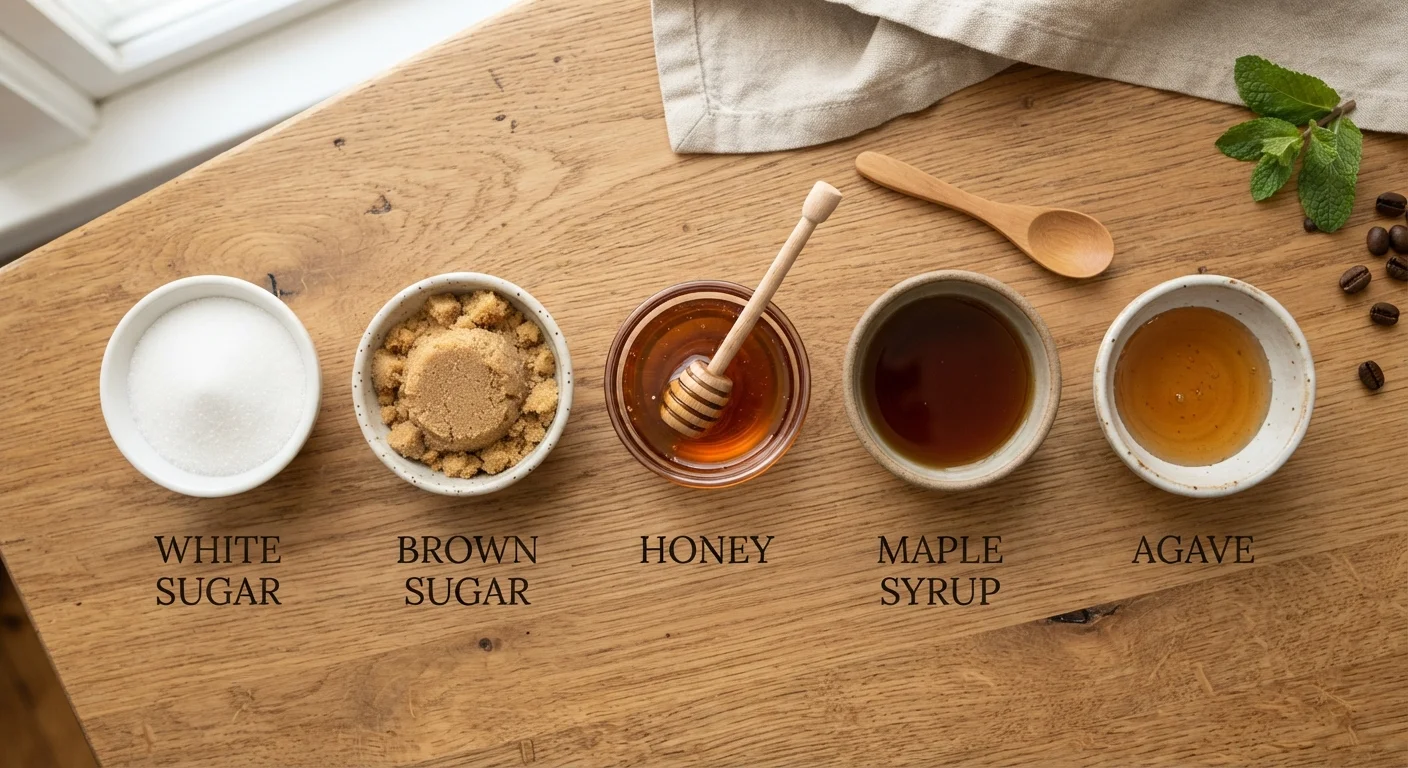
Why Added Sugars Are Hard to Spot
If you've ever scanned an ingredient list looking for "sugar" and walked away confident a product was low in it, you may have missed dozens of other names that mean essentially the same thing. Food manufacturers use a wide variety of sweeteners - each with its own chemical name - and they all count as added sugars under current U.S. nutrition labeling rules.
Added sugars are different from sugars that occur naturally in whole foods like fruit (fructose) or dairy (lactose). Naturally occurring sugars come packaged with fiber, protein, and other nutrients that influence how the body processes them. Added sugars, by contrast, are incorporated into foods during processing or preparation, and they contribute calories without meaningful nutritional benefit.
The U.S. Food and Drug Administration (FDA) now requires that "Added Sugars" appear as a separate line on the Nutrition Facts panel, expressed both in grams and as a percentage of the Daily Value. That makes the label itself a useful starting point - but the ingredient list reveals the full picture of which sweeteners are actually present. For a broader guide to reading labels, see our nutrition label explainer.
| Number of Names for Added Sugar | 60+ (Commonly cited across nutrition research and FDA guidance documentation) |
| FDA Daily Value for Added Sugars | 50 grams (per 2,000-calorie diet) (U.S. FDA Nutrition Facts label requirements) |
| Dietary Guidelines Recommendation | Less than 10% of daily calories (Dietary Guidelines for Americans, 2020-2025) |
| Ingredient List Order Rule | Listed by descending weight (FDA food labeling regulations (21 CFR 101.4)) |
| Label Requirement Since | 2020 (large manufacturers) (FDA updated Nutrition Facts label rule) |
Common Names for Added Sugars
Regulatory guidance and nutrition researchers have identified more than 60 names that indicate added sugar on ingredient lists. Knowing the major categories helps you recognize them quickly.
Added Sugars
Sugars and syrups that are added to foods or beverages during processing or preparation, distinct from sugars naturally present in whole foods like fruit and milk.
Naturally Occurring Sugars
Sugars found inherently in whole, unprocessed foods - such as fructose in fruit or lactose in milk - that arrive alongside fiber, protein, and other nutrients.
Daily Value (DV)
A reference amount set by the FDA used on Nutrition Facts labels to indicate how much a nutrient in a serving of food contributes to a typical daily diet based on a 2,000-calorie reference.
Fruit Juice Concentrate
Fruit juice from which most of the water has been removed, often used as a sweetener. Despite its fruit origin, it is classified as an added sugar when incorporated into processed foods.
High-Fructose Corn Syrup (HFCS)
A liquid sweetener derived from corn starch in which some glucose has been converted to fructose. Widely used in processed foods and beverages, and counted as an added sugar.
Sucrose
Common table sugar, a disaccharide made up of one glucose molecule and one fructose molecule bonded together. It is the most widely recognized added sugar.
Syrups
- High-fructose corn syrup (HFCS)
- Corn syrup
- Brown rice syrup
- Malt syrup
- Maple syrup
- Agave nectar
- Molasses
Words Ending in "-ose"
- Sucrose (table sugar)
- Fructose
- Glucose
- Dextrose
- Maltose
- Lactose (when added, not naturally present)
"Natural" or Minimally Processed Sweeteners
- Honey
- Coconut sugar
- Raw cane sugar
- Turbinado sugar
- Date sugar or date paste
- Fruit juice concentrate
Despite their natural origins, these last examples are still classified as added sugars because they are incorporated into food during manufacturing and behave similarly in the body once consumed.
What Current Dietary Guidance Says
The Dietary Guidelines for Americans recommends limiting added sugars to less than 10% of total daily calories for adults and children over age two. For a 2,000-calorie diet, that translates to roughly 50 grams - or about 12 teaspoons - per day. The American Heart Association suggests even lower targets, particularly for certain population groups, though individual needs vary.
"Natural" Doesn't Mean Low in Sugar
Sweeteners like honey, coconut sugar, and maple syrup are often marketed as healthier alternatives, but nutritionally they are still classified as added sugars. While they may contain trace minerals, the quantities are too small to be nutritionally significant. The body processes these sugars in ways that are broadly similar to table sugar, so their health impact at comparable amounts is not meaningfully different.
It's worth noting that these are population-level guidelines intended to support general health - they are not personalized prescriptions. If you have a specific health condition, are pregnant, or are managing a child's nutrition, consult a registered dietitian or your healthcare provider for guidance tailored to your circumstances.
One practical strategy is to look at where a given ingredient falls in the list. Ingredients are listed in descending order by weight, so if a sweetener appears among the first three ingredients, the product is likely high in added sugar overall. Multiple sweeteners listed separately can also add up significantly, even when each one appears mid-list.
This article is for general informational and educational purposes only and does not constitute medical or dietary advice. Always consult a qualified healthcare professional before making significant changes to your diet.