The Fiber Gap in the American Diet
Dietary fiber is consistently identified by nutrition researchers as one of the most under-consumed nutrients in the United States. Government dietary surveys suggest the average American adult takes in roughly 15 grams of fiber per day - approximately half the amount that health guidelines recommend. Researchers sometimes call this discrepancy the "fiber gap."
This shortfall isn't a niche concern. Fiber intake is linked to several markers of long-term health, and consistently low intake has been associated with higher rates of digestive issues, elevated cholesterol, blood sugar irregularities, and other conditions. Understanding what fiber is and where it comes from is a practical first step toward closing that gap.
~15g
Average daily fiber intake in the US
Dietary surveys cited by the USDA and Dietary Guidelines Advisory Committee consistently place average American fiber consumption around 15 grams per day.
25-38g
Recommended daily fiber intake for adults
The Dietary Guidelines for Americans recommend approximately 25g/day for adult women and 38g/day for adult men, based on a 14g-per-1,000-calorie target.
~5%
US adults meeting fiber recommendations
Research published in nutrition journals estimates that fewer than 1 in 20 American adults consistently meets recommended daily fiber intake from food sources alone.
What Fiber Actually Does in Your Body
Because fiber resists digestion, it travels through the stomach and small intestine relatively unchanged, reaching the large intestine (colon) intact. This is where much of its activity happens.
- Soluble fiber dissolves in water to form a viscous gel in the digestive tract. This slows digestion, which can help moderate blood sugar spikes after meals and reduce LDL ("bad") cholesterol by binding to bile acids. Oats, barley, apples, and legumes are good sources.
- Insoluble fiber adds bulk to stool and accelerates movement through the colon, reducing constipation and supporting regularity. Whole wheat products, many vegetables, and nuts are common sources.
Soluble fiber also serves as a food source for beneficial gut bacteria - a process called fermentation. These bacteria produce short-chain fatty acids that appear to support colon health and immune function, though this area of research is still developing. For a broader look at how nutrition claims hold up under scrutiny, see common nutrition myths the research challenges.
“Dietary fiber is perhaps the single most important nutrient for gut health, and yet it is the nutrient most consistently lacking in Western diets. The evidence connecting adequate fiber intake to reduced chronic disease risk is among the most robust in nutritional epidemiology.”
— Dr. David Katz, Physician and researcher in preventive medicine and nutrition
Reliable Food Sources of Dietary Fiber
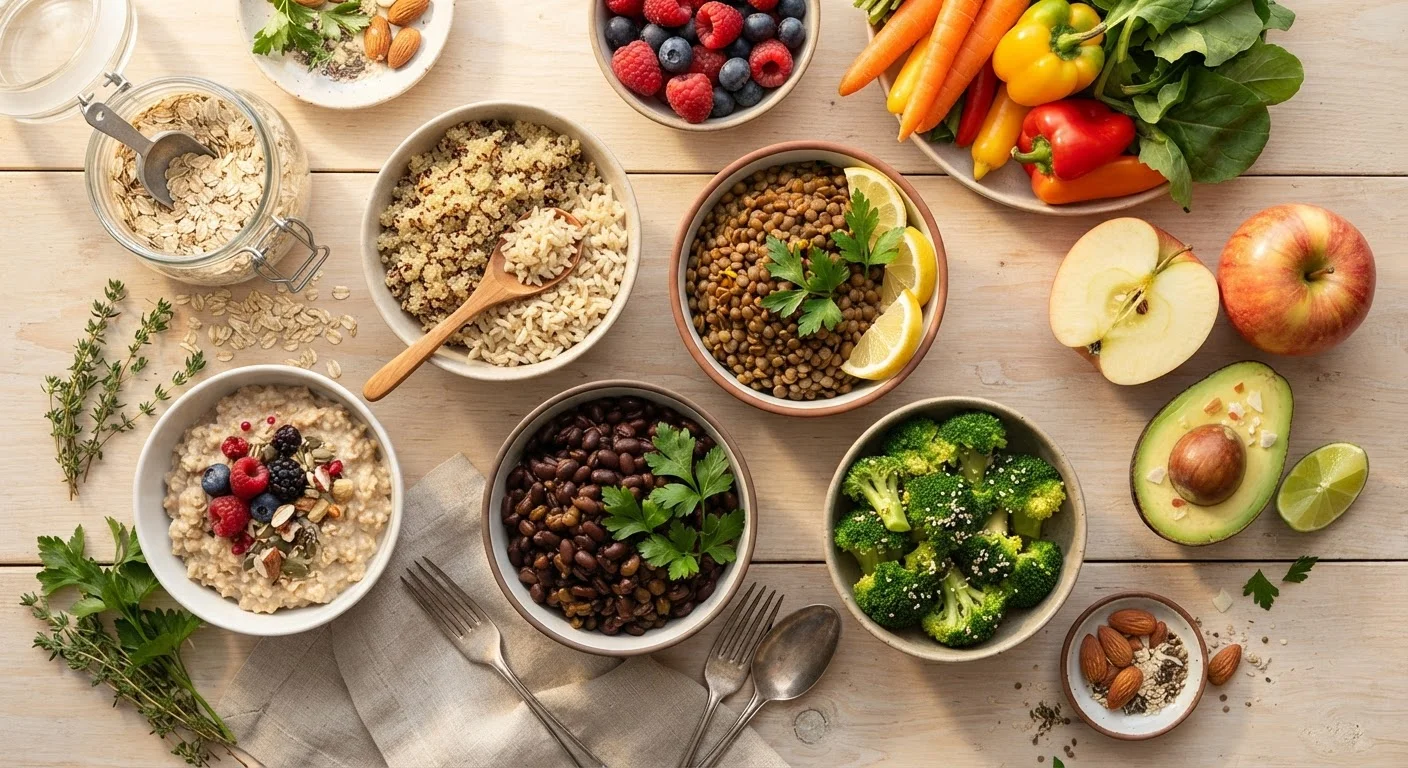
Fiber is found exclusively in plant foods. Meat, fish, dairy, and eggs contain no fiber. The most fiber-dense foods in the typical American diet include:
- Legumes
- Lentils, chickpeas, black beans, and split peas offer 8-15 grams per cooked cup - among the highest concentrations of any food category.
- Whole grains
- Oats, barley, bulgur wheat, and whole-grain bread provide both soluble and insoluble fiber. Refined grains (white bread, white rice) lose most of their fiber during processing.
- Vegetables
- Broccoli, Brussels sprouts, artichokes, peas, and sweet potatoes are particularly fiber-rich compared to most other vegetables.
- Fruits
- Raspberries, pears, apples (with skin), and avocados are among the higher-fiber fruit options.
- Nuts and seeds
- Chia seeds, flaxseeds, and almonds add meaningful fiber alongside healthy fats.
Build Fiber Into Every Meal
Aiming for at least one fiber-rich food at every meal - a whole grain, a legume, a vegetable, or a piece of fruit - distributes fiber intake throughout the day. This approach tends to feel less overwhelming than trying to eat a single high-fiber meal and also reduces digestive discomfort compared to consuming most of your fiber at once.
How to Increase Fiber Without the Side Effects
Adding fiber too quickly is a common reason people give up - gas, bloating, and abdominal discomfort are real but generally avoidable responses. The digestive system adapts, but it needs time.
A practical approach is to increase fiber-containing foods gradually over several weeks rather than overhauling the diet all at once. Drinking adequate water throughout the day is equally important, as fiber absorbs water to function properly. Without sufficient hydration, increasing fiber intake can worsen constipation rather than relieve it.
Simple shifts - choosing whole grain bread over white, adding a handful of beans to a salad, snacking on fruit with the skin on - can meaningfully increase daily fiber without requiring major dietary changes. If you're evaluating dietary advice from various sources, where nutrition information commonly goes wrong offers useful context on how to assess competing claims.
This article is for general informational and educational purposes only and is not a substitute for professional medical or dietary advice. Consult a qualified healthcare provider for guidance specific to your individual health needs.