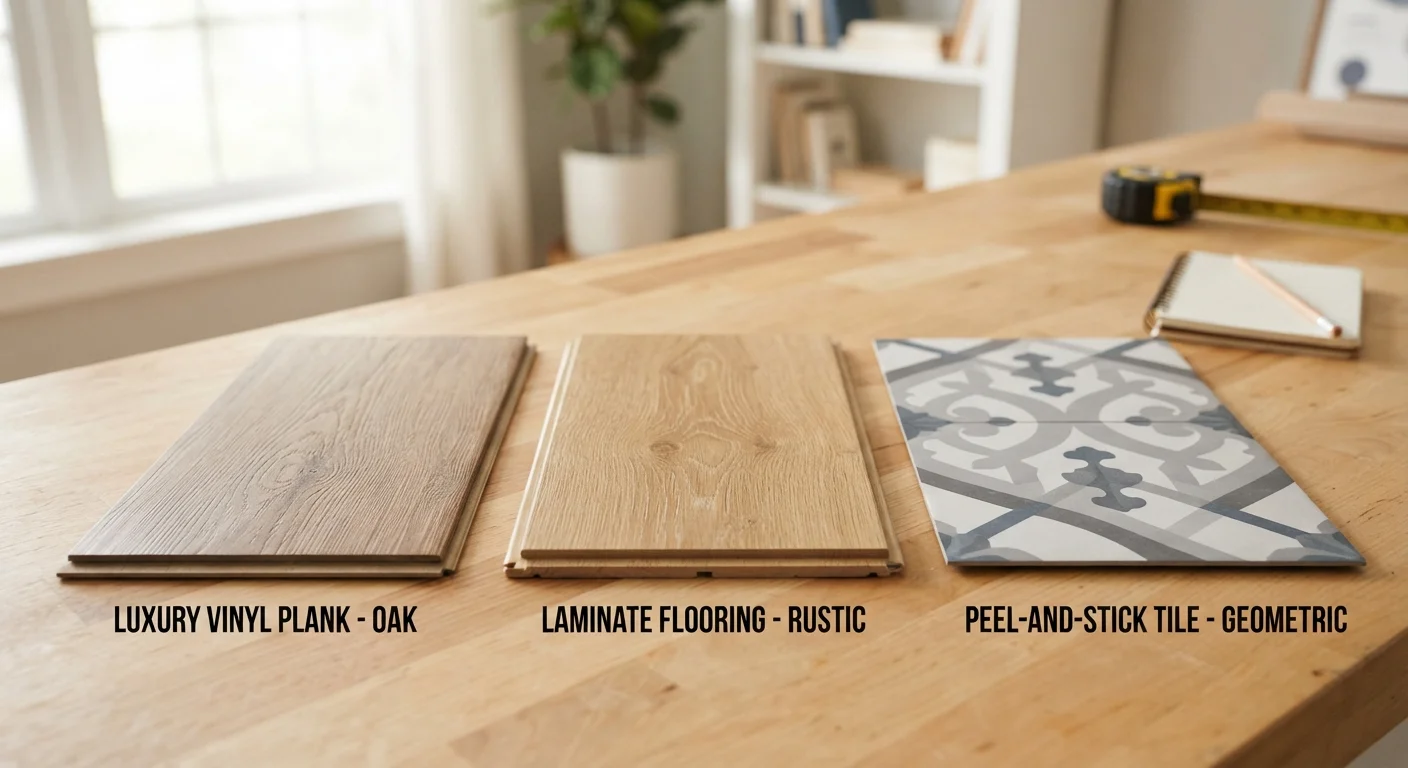
Understanding Your Options at a Glance
Budget flooring has improved dramatically in quality and variety. Three options dominate the DIY-friendly, low-cost category: luxury vinyl plank (LVP), laminate, and peel-and-stick tile. Each uses different materials, installation methods, and performs differently under everyday household conditions.
Vinyl plank is a fully synthetic product composed of multiple PVC layers, giving it a waterproof core. Laminate consists of a wood-fiber core topped with a photographic print layer and a protective coating - it mimics hardwood convincingly but is not waterproof. Peel-and-stick tile (also called self-adhesive tile) is the thinnest of the three and relies on a factory-applied adhesive backing for installation.
| Vinyl Plank | Laminate | Peel-and-Stick Tile | |
|---|---|---|---|
| Typical material cost (per sq ft) | $1.50-$4+ | $1-$3 | Under $1-$2 |
| Waterproof | Yes (full core) | No | Surface only |
| Installation method | Click-lock floating | Click-lock floating | Peel-and-press adhesive |
| Underlayment needed | Sometimes | Usually required | No |
| DIY skill level | Beginner-Intermediate | Beginner-Intermediate | Beginner |
| Expected lifespan | 15-25 years | 10-20 years | 3-7 years |
| Best rooms | Any room, inc. wet areas | Dry living spaces | Low-traffic, dry spaces |
| Scratch resistance | Good (12+ mil wear layer) | Good (AC3-AC4) | Fair |
Cost Per Square Foot: What to Budget
Material costs vary by quality tier within each category. As a general range, peel-and-stick tile tends to run under $1 to about $2 per square foot at the lower end, making it the least expensive upfront. Laminate typically falls in the $1-$3 per square foot range for entry-level products. Vinyl plank often starts around $1.50 and can reach $4 or more for thicker, higher-quality versions.
Installation costs can be eliminated entirely if you go the DIY route - a meaningful saving on larger rooms. However, factor in underlayment (required for most laminate and some vinyl plank installations), transition strips, and any subfloor repair materials. These add-ons can push the true project cost 20-30% above material prices alone.
Always Buy 10% Extra Material
Cutting waste, pattern offsets, and the occasional mis-cut mean you'll need more flooring than your room's exact square footage. A 10% overage buffer is a standard rule of thumb. Purchasing extra from the same production run also ensures color consistency if you need to patch or replace a section later.
Durability and Moisture Resistance
Vinyl plank's waterproof core makes it the clear choice for kitchens, bathrooms, laundry rooms, and basements. Water that sits on laminate can seep through seams and swell the wood-fiber core - a common failure point. Peel-and-stick tile can resist surface moisture, but the adhesive is vulnerable to humidity and temperature swings, which may cause edges to lift over time.
For scratch resistance, laminate with a high AC (abrasion class) rating - look for AC3 or AC4 - performs well in moderate-to-heavy traffic areas. Vinyl plank with a wear layer of 12 mil or thicker also holds up well. Peel-and-stick tile is generally the least durable and is better suited to low-traffic spaces like a laundry room or guest bathroom.
Installation: Skill Level and Surface Requirements
All three options are marketed as DIY-friendly, but each has real preparation requirements that affect the final result.
- Vinyl plank uses a floating click-lock system on most products. Planks interlock without glue or nails. The subfloor must be flat (within 3/16 inch over 10 feet), clean, and dry. It can go over many existing floors.
- Laminate also floats as a click-lock system and requires a foam or cork underlayment for sound dampening. It is sensitive to height changes at doorways and transitions, and expansion gaps around the perimeter are essential to prevent buckling.
- Peel-and-stick tile is the fastest to install - peel the backing and press down. However, it demands an exceptionally smooth, clean surface. Any imperfections telegraph through the thin material, and inadequate prep is the leading cause of early adhesive failure.
For reference, installing tile with mortar and grout involves considerably more steps and tools - see our overview of the full tile installation process for a sense of how these budget options compare in complexity.
Which Room Fits Which Floor?
Matching the flooring type to the room's conditions is the most important decision a budget-minded homeowner can make. Installing the wrong product in the wrong space is a costly mistake regardless of how affordable the material was.
- Bathrooms and kitchens: Vinyl plank only. Laminate and peel-and-stick tile carry meaningful risk in consistently wet environments.
- Living rooms and bedrooms: Laminate or vinyl plank both work well. Laminate's thicker profile and realistic wood texture may feel more substantial underfoot.
- Basements: Vinyl plank is the safest choice due to potential moisture from below. Avoid laminate unless the slab is confirmed dry and a vapor barrier is in place.
- Low-traffic utility spaces or rentals: Peel-and-stick tile is a practical, low-commitment solution where longevity is less critical.