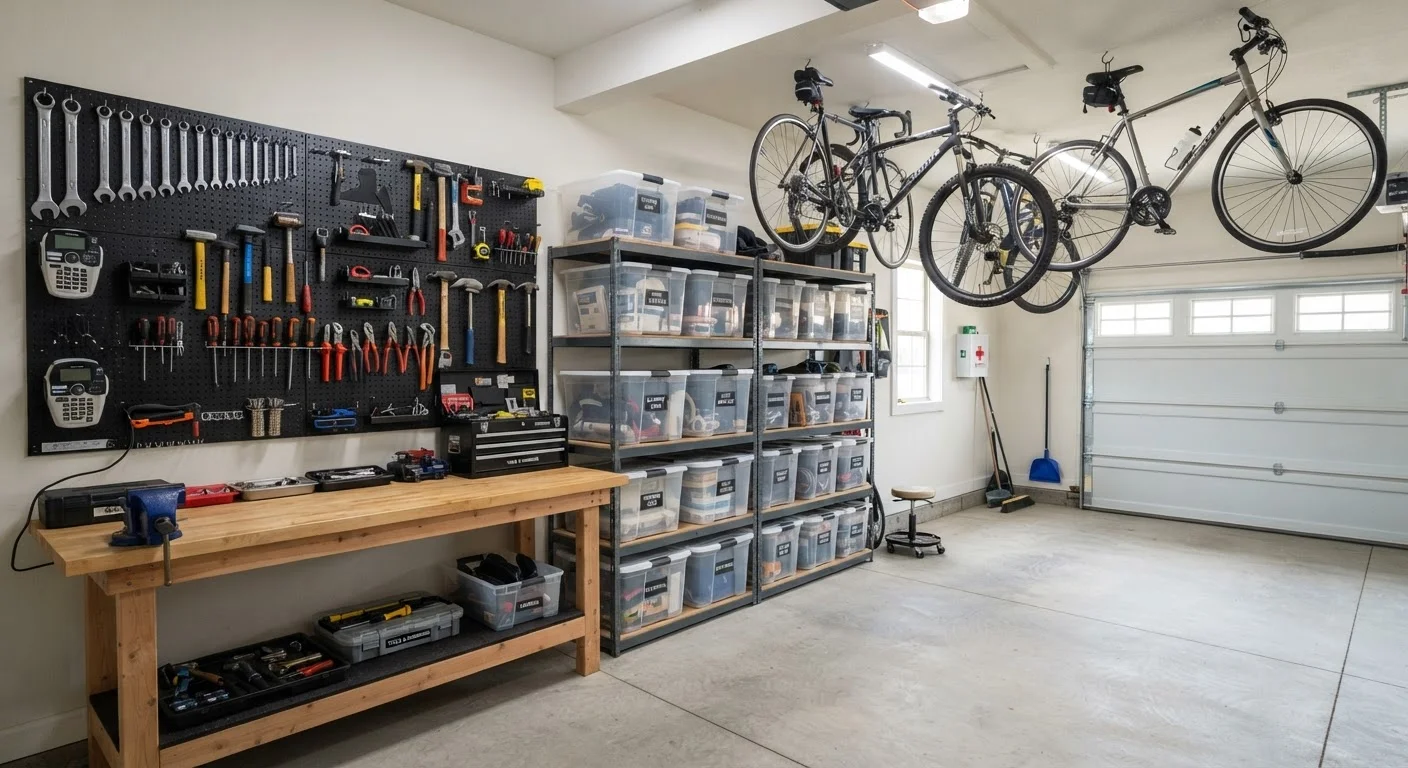
Why Garages Become Catch-Alls
Garages occupy a unique position in the home: they're large, enclosed, and just far enough from living spaces that items placed there feel «out of the way.» That psychological distance makes them natural dumping grounds. A ladder goes in «temporarily,» holiday bins pile up in the corner, and within a season, the car no longer fits.
The real problem isn't volume - most garages have ample space. It's the absence of a defined system. Without clear zones and storage structures, items land wherever there's an opening, which quickly fills every available inch. The fix doesn't require a major renovation or significant spending. It requires a process.
What you will need
Before diving into the steps, gather the tools you'll need and set aside adequate time. Rushing a garage sort typically results in items going back in roughly the same disorder they came out of.
Tape measure
Measure wall lengths, ceiling height, and shelf depths to plan storage layout accurately.
Stud finder
Locate wall studs before mounting shelves, pegboards, or overhead racks safely.
Drill and drill bits
Install wall anchors, pegboard hooks, and shelf brackets into studs.
Level
Ensure shelves and mounted systems are installed straight and even.
Plastic storage bins with lids
Group and contain categorized items while protecting them from dust and moisture.
Pegboard panel
Mount on walls to hang tools, cords, and small equipment within easy reach.
Ceiling-mounted bike hooks
Suspend bicycles from the ceiling to free up significant floor space.
Building a System That Actually Holds
The steps below move from clearing to categorizing to structuring - a sequence that matters. Skipping straight to buying shelving before you know what you own is one of the most common (and costly) mistakes homeowners make.
Clear everything out of the garage
Pull every item out onto the driveway or yard. This gives you a true picture of what you own and lets you see the full floor, wall, and ceiling space you're working with. It also makes sweeping or hosing down the floor much easier before you begin rebuilding the system.
Sort items into categories
Group everything into broad categories: hand tools, power tools, automotive supplies, lawn and garden equipment, sporting goods, seasonal décor, camping gear, and anything else that surfaces. Within each category, separate items into three piles: keep, donate or sell, and discard. Be honest - items you haven't used in two or more years are strong candidates for removal.
Assign zones based on use frequency
Divide your garage into access zones before placing a single item back inside. Items used weekly - like tools or sports gear - belong at eye level or easily reachable wall space. Seasonal items go on higher shelves or in overhead storage. Rarely used belongings (holiday decorations, camping gear used once a year) can go in the deepest, least accessible corners or ceiling-mounted platforms.
This zone-based thinking is the core of a functional garage. For more on how rotating seasonal items in and out of reach can keep your whole home more functional, that principle applies directly here.
Install wall and vertical storage
Walls are your biggest untapped asset. A standard two-car garage typically has 200-400 square feet of wall surface that goes largely unused. Mount freestanding shelving units along back and side walls, anchor pegboards for tools, and add hooks for bikes, ladders, and extension cords. Always drill into studs when mounting anything that will bear significant weight.
If your floor space feels limited, thinking vertically can dramatically change how much you can store without expanding the footprint.
Bin, label, and load items back in by zone
Place like items together in clearly labeled bins before loading them onto shelves. Transparent bins allow quick visual scanning; opaque bins work well when paired with large, readable labels. Stack heavier bins on lower shelves and lighter ones up high. Avoid overfilling - bins you can't close or lift safely become a problem quickly.
[tip_callout]Establish a maintenance routine
A garage organization system only holds if items consistently return to their designated spots. Post a simple zone map inside a cabinet door or on a wall so every household member knows where things live. Plan a brief quarterly review - perhaps when seasons change - to catch items that have drifted out of place before the garage creeps back to chaos.
Don't Skip the Declutter First
Buying bins and shelving before sorting your belongings almost always leads to overspending and an underwhelming result. Any item you organize without first deciding whether to keep it will take up space - and money - indefinitely. The edit phase is the foundation of the entire project.
Once your system is in place, the behavioral side of staying organized matters just as much as the physical setup. The habits that support an organized home are often more durable than any hardware solution. Budget roughly $50-$150 for basic bins, hooks, and a pegboard if you don't already own shelving - many hardware items can be sourced secondhand at significant savings. This project doesn't need to be expensive to be effective.
Overhead and Wall Mounting Requires Caution
Ceiling and wall-mounted storage must be anchored into studs or solid structural framing - not just drywall. Improperly anchored overhead storage holding heavy items poses a serious safety risk. If you're unsure about load-bearing capacity or how to locate studs, consult a licensed contractor before proceeding.