What DIY Pet Grooming Actually Involves
Grooming covers a wide range of tasks - from daily brushing to medicated baths, haircuts, nail grinding, ear flushing, and anal gland expression. Not all of these carry equal risk, and understanding where the line sits is the first step toward making smart decisions for your pet's wellbeing and your budget.
For value-conscious pet owners, grooming is one of the more visible recurring expenses. Professional sessions can range from under $40 for a basic bath-and-brush on a small dog to well over $100 for a full groom on a large or double-coated breed. Doing even half of that at home can represent meaningful savings over a year - but only if performed correctly. This article is general educational information; always consult your veterinarian before attempting a new grooming task, particularly if your pet has health conditions or a history of anxiety. For broader cost management strategies, see our practical guide to pet care on a budget.
Tasks That Are Generally Safe to Do at Home
Several grooming tasks have a low margin for serious error and are well-suited to home practice once an owner has learned proper technique - ideally demonstrated by a veterinarian or professional groomer first.
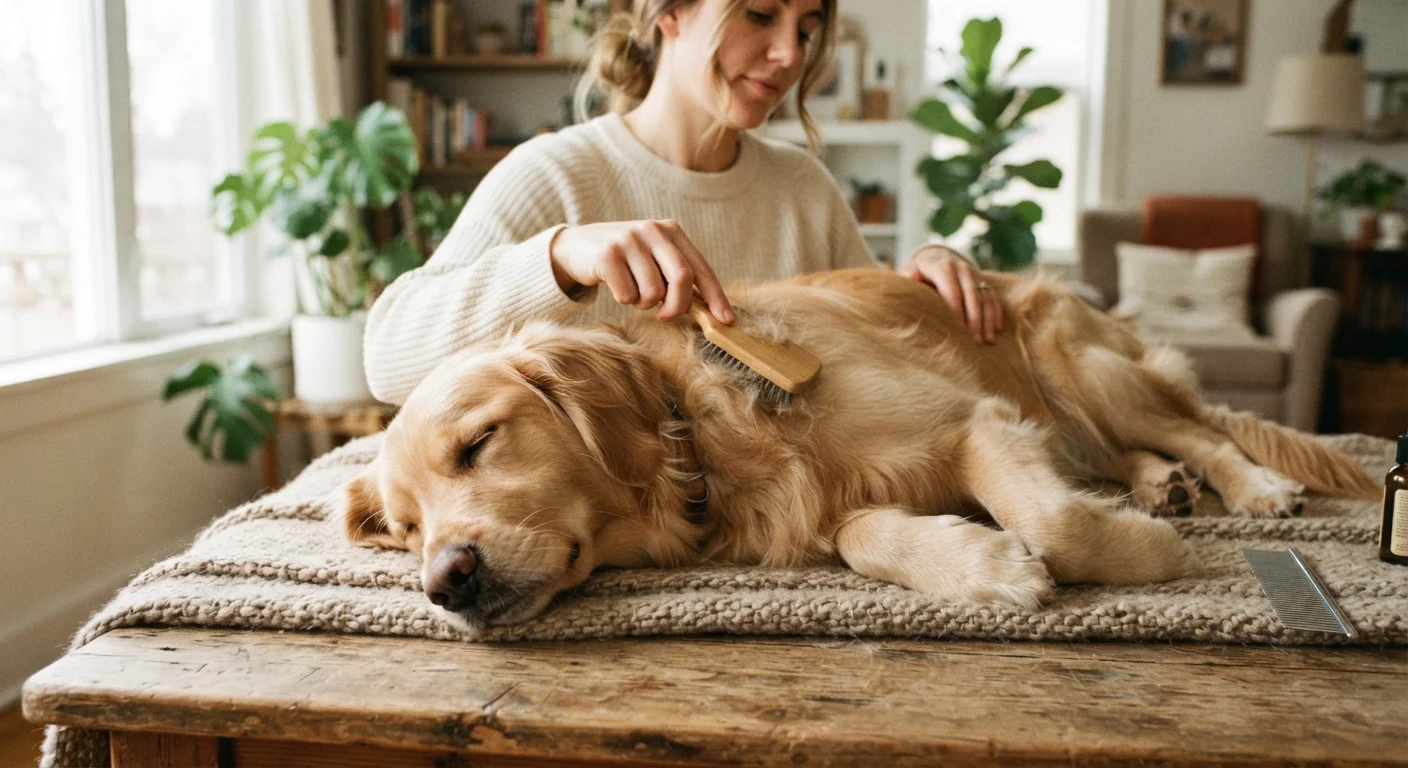
- Brushing and detangling: Regular brushing prevents mats, reduces shedding, and is a good opportunity to check for lumps, skin irritation, or parasites. Most pets tolerate it well when introduced gradually. Use a brush type appropriate for your pet's coat (slicker, bristle, or undercoat rake).
- Basic bathing: Bathing with a pet-appropriate shampoo is manageable at home. Use lukewarm water, protect the ears from moisture, and rinse thoroughly - residual shampoo can cause skin irritation.
- Ear cleaning (outer canal only): Gently wiping visible debris from the outer ear flap with a vet-approved solution is generally safe. Never insert cotton swabs or any object into the ear canal.
- Paw and pad care: Wiping paws after outdoor walks and checking between toes for debris, cracking, or foreign objects is simple, low-risk maintenance.
Reduces recurring professional grooming costs over time
Owners who consistently handle brushing, bathing, and light maintenance at home can meaningfully reduce how often professional sessions are needed, cutting annual grooming costs for many breeds.
Strengthens the bond between owner and pet
Regular, calm handling for grooming builds familiarity and trust, which can make veterinary exams and professional grooming sessions less stressful for the animal.
Enables early detection of health changes
Hands-on grooming gives owners consistent visibility into skin condition, coat changes, lumps, and parasites - signs that might otherwise go unnoticed between vet visits.
Flexible scheduling on the owner's timeline
Home grooming eliminates appointment wait times and allows maintenance to happen as frequently as the pet's coat and condition require, rather than on a fixed salon calendar.
Tracking coat condition during grooming sessions also aligns naturally with at-home health monitoring practices your vet may already recommend.
Tasks Better Left to Trained Professionals
Some grooming tasks involve anatomy where mistakes cause real harm - lacerations, infections, severe stress responses, or conditions that require veterinary follow-up.
Risk of injury from incorrect technique
Nail quicking, clipper burns, and ear canal injury are common consequences of grooming tasks performed without proper training. Some injuries require veterinary treatment that exceeds the cost of professional grooming.
Upfront equipment costs can be significant
Quality clippers, breed-appropriate brushes, pet shampoo, and nail tools represent a real investment. For owners with one small pet on a simple coat, the payback period may be longer than expected.
Anxious or resistant pets make home grooming unsafe
Pets that struggle, bite, or freeze during grooming are at elevated risk of injury - both to themselves and to the owner. Professional groomers have restraint training and experience managing difficult animals safely.
Misses professional health observations
Experienced groomers often identify early signs of ear infections, skin conditions, and coat abnormalities. Skipping professional visits entirely removes a layer of informal health monitoring.
Complex coats require professional skill to maintain properly
Breeds with double coats, curly coats, or fast-growing hair (such as Poodle mixes or Shih Tzus) require specific techniques. Improper home cutting can cause matting, uneven growth, or - in rare cases - permanent coat damage.
- Nail trimming on anxious or dark-nailed pets: Cutting into the quick (the blood vessel inside the nail) causes pain and bleeding. On pets with dark nails, the quick is invisible. Professionals use technique and lighting to minimize this risk, and groomers are trained to handle pets that resist handling.
- Full haircuts and breed-specific trims: Incorrect clipping can cause clipper burn, uneven cuts that mat faster, or accidental skin nicks. Double-coated breeds (like Huskies or Samoyeds) require specialized technique - improper shaving can damage the coat permanently.
- Anal gland expression: This should only be done by a veterinarian or trained groomer, and only when clinically indicated. Incorrect expression can rupture glands or introduce infection. If your pet is scooting frequently, consult your vet - this may signal a health issue rather than a grooming need. See our guide on when to seek veterinary care for related red flags.
- Ear flushing or deep cleaning: Flushing the ear canal requires veterinary assessment first to rule out a ruptured eardrum. Performed incorrectly, it can worsen infections or cause lasting damage.
$30-$90+
Typical cost per professional grooming session
The American Pet Products Association notes grooming services are among the top recurring pet care expenses, with costs varying widely by breed size and coat complexity.
~$100-$200
Estimated upfront cost of basic home grooming tools
A starter kit including quality clippers, a breed-appropriate brush, nail trimmers, and shampoo typically runs between $100-$200 depending on pet size and coat type.
Making the Hybrid Model Work for Your Budget
For most owners, the practical answer isn't all-or-nothing. A hybrid approach - handling low-risk maintenance at home while scheduling professional appointments for complex tasks - balances cost management with pet safety.
Start-up tool costs matter: a quality brush, pet-safe shampoo, and nail clippers represent an upfront investment that pays off over time, but only if used regularly and correctly. If your pet has an anxiety-prone temperament or a coat type that requires frequent professional attention, the calculus shifts - and forcing difficult grooming sessions at home can erode your pet's trust and increase stress over time.
Before adding grooming tasks to your routine, ask your veterinarian to demonstrate technique at your next wellness visit. Many will walk you through brushing, ear checks, and basic nail trim technique at no additional charge. This is also a good moment to flag any skin, coat, or ear concerns you've noticed during home grooming - a reminder of why consistent at-home observation is valuable regardless of who handles the grooming itself. For more ideas on trimming recurring expenses without compromising your pet's welfare, explore strategies for reducing recurring pet costs.
This article is for general informational purposes only and does not constitute veterinary advice. Always consult a licensed veterinarian before making changes to your pet's care routine, particularly if your pet has existing health conditions.