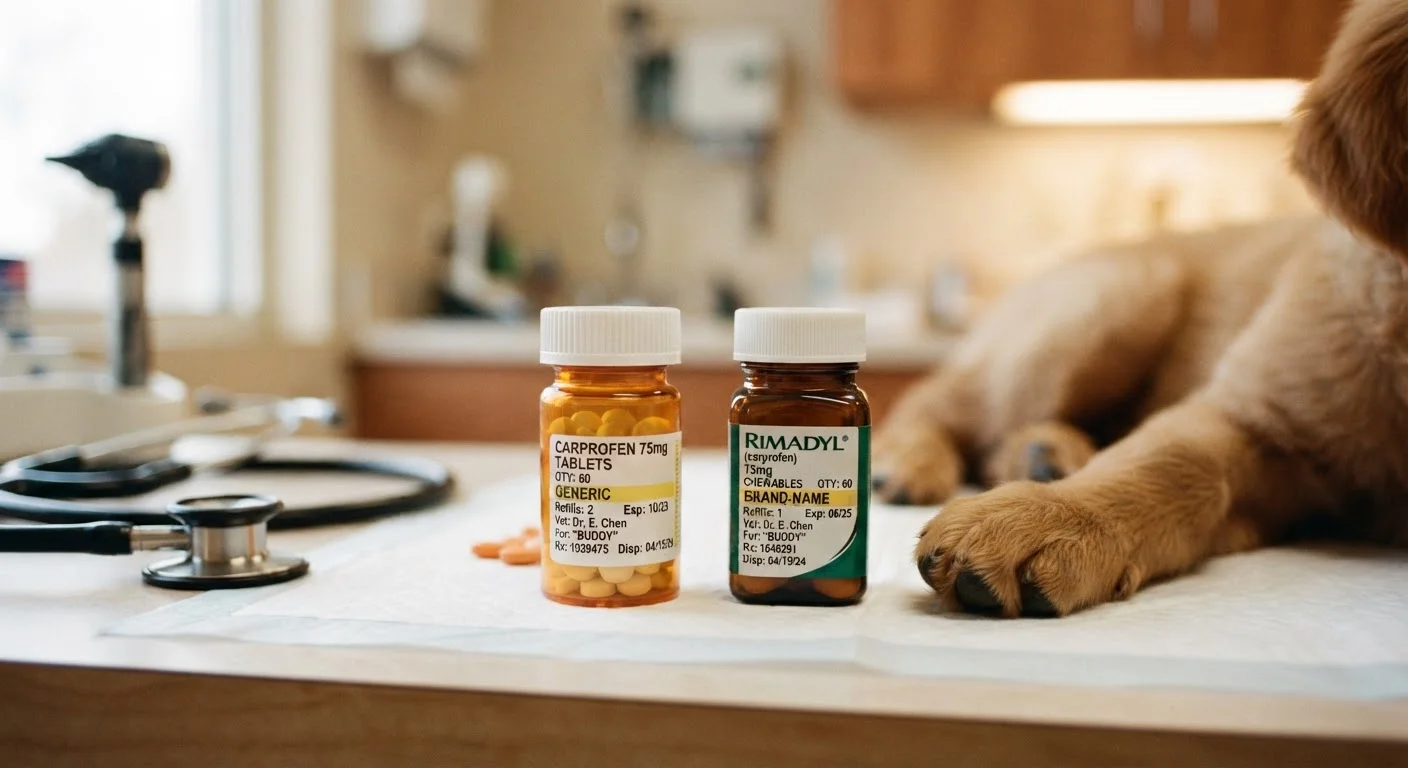
What Makes a Generic Drug 'Generic'?
A generic medication contains the same active ingredient as its brand-name counterpart, at the same strength and in the same dosage form (tablet, liquid, injection). In the United States, the FDA requires that approved generic drugs demonstrate bioequivalence - meaning the drug is absorbed into the body at a rate and extent that is not meaningfully different from the original. This standard applies to veterinary generics approved through the FDA's Center for Veterinary Medicine, just as it does for human drugs.
What generics are not required to replicate are inactive ingredients - binders, fillers, flavorings, and coatings. These differences rarely affect outcomes but can matter in edge cases, such as a pet with a known sensitivity to a specific filler. When in doubt, your veterinarian is the right person to assess whether a formulation difference is clinically significant for your animal.
It's also worth noting that not every brand-name veterinary drug has an FDA-approved generic. Some medications are still under patent protection; others simply haven't had a manufacturer pursue a generic application. Asking your vet whether a generic exists is always a reasonable first step.
The Pros: Why Generics Deserve Consideration
For pet owners managing the cost of long-term or recurring prescriptions, generics can offer real financial relief. The savings arise because generic manufacturers don't bear the original research and development costs - they're formulating a drug whose chemistry is already established and publicly documented after patent expiry.
Lower cost for the same active ingredient
Generic drugs typically cost less than their brand-name equivalents because manufacturers don't recoup R&D expenses. For pets on daily long-term medications, this can add up to meaningful annual savings.
FDA bioequivalence standard provides regulatory assurance
Approved veterinary generics must meet the same bioequivalence criteria as human generics, providing a scientific basis - not just a price tag - for considering them equivalent in therapeutic effect.
Wider availability through human pharmacies
Some veterinary drugs are chemically identical to human medications and can be filled at retail or mail-order pharmacies, potentially broadening access and reducing dispensing costs.
Supports long-term medication adherence
When cost is a barrier, some owners reduce or skip doses. Lower-cost generics may help owners maintain a full, consistent dosing schedule - which is important for chronic disease management.
Beyond cost, the regulatory equivalence standard provides a meaningful assurance of quality. An FDA-approved generic isn't simply a cheaper imitation - it has passed a defined scientific bar. For conditions requiring daily or ongoing medication, such as hypothyroidism in dogs or hyperthyroidism in cats, this can make a measurable difference to a household budget without compromising care. See our common pet care cost myths for more on where savings are - and aren't - realistic.
The Cons: Important Caveats to Discuss With Your Vet
Generics are not automatically appropriate in every situation. Several legitimate factors can make a brand-name drug the safer or more practical choice for a specific patient.
No approved generic exists for every drug
Patent protection and limited market interest mean many veterinary drugs have no FDA-approved generic alternative, leaving brand-name as the only regulated option.
Inactive ingredient differences may matter for some pets
While rarely clinically significant, different fillers or flavorings in generics can occasionally cause issues for animals with specific sensitivities or allergies - worth discussing with your vet.
Narrow therapeutic index drugs require extra caution
Medications like phenobarbital (used for seizures) or thyroid drugs have a small margin between effective and toxic doses. Switching formulations may warrant re-testing blood levels to confirm the pet remains in a safe range.
Compounded generics are not FDA-approved equivalents
Custom compounded medications - though sometimes necessary - don't go through bioequivalence review. Quality and concentration can vary between compounding pharmacies, making veterinary oversight especially important.
Switching mid-treatment can complicate monitoring
Changing formulations during ongoing treatment may require additional vet visits or lab tests to verify that the pet's response remains stable, potentially offsetting some cost savings.
Compounded medications - custom formulations prepared by a compounding pharmacy, often in a flavor or form a pet will accept - occupy a separate category. Compounded drugs are not FDA-approved generics and don't go through the same equivalence review. They may be necessary when no approved formulation is suitable, but they carry their own quality variability considerations. This is another area where your vet's guidance is essential, not optional.
Having a Productive Conversation With Your Veterinarian
The most useful thing a pet owner can do is raise the question openly rather than making a unilateral switch. Ask your vet: Is there an FDA-approved generic for this medication? Would it be appropriate for my pet's specific condition and health history? Many vets are experienced in navigating this question and can guide you toward options that preserve both safety and your budget.
Filling Veterinary Prescriptions at Human Pharmacies
Some medications prescribed for pets are identical to human drugs - common examples include certain antibiotics, thyroid medications, and anti-anxiety drugs. With a written prescription from your veterinarian, these can legally be filled at retail or mail-order pharmacies. Prices at human pharmacies can differ substantially from veterinary clinic dispensing fees, so it's worth asking your vet for a written prescription and comparing costs. Always confirm the medication, strength, and dosage instructions match exactly.
If cost is a concern, it's also worth exploring whether your pet's prescription can be filled at a human pharmacy - some veterinary drugs are identical to human medications and may be substantially cheaper when sourced that way, with your vet's prescription in hand. This is a factual, established practice, not a workaround. Managing prescription costs is one piece of a broader picture; our overview of how pet insurance works and when pet supplements are warranted can help you see where other dollars go. For more context on the generic versus brand-name question more broadly, see our companion piece at what pet owners should know about generic medications.
This article is for general informational purposes only and does not constitute veterinary or medical advice. Always consult a licensed veterinarian before making changes to your pet's medication regimen.