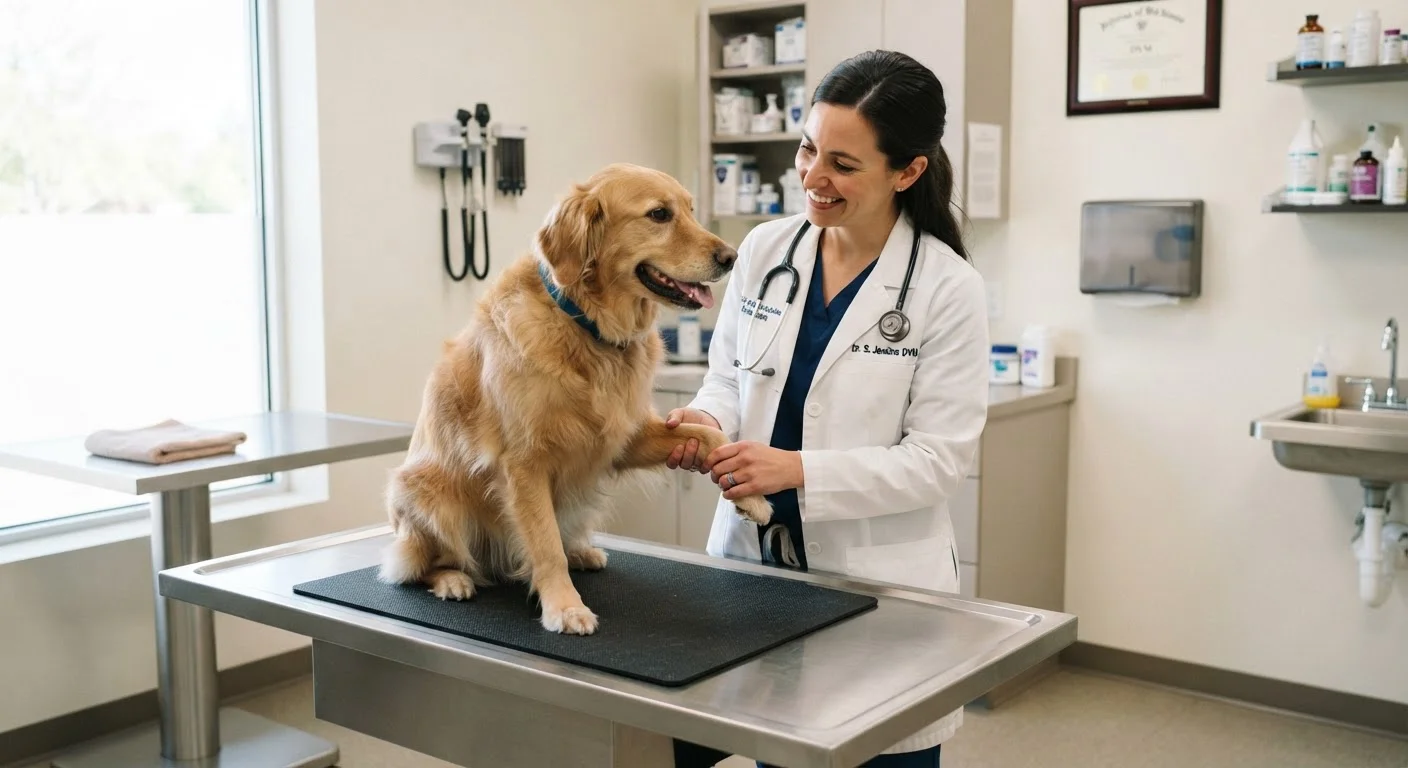
The Nose-to-Tail Physical Examination
The hands-on physical exam is the centerpiece of every wellness visit. Starting at the head, the veterinarian checks the eyes for clarity, discharge, or pressure abnormalities. The ears are examined for infection, mites, or inflammation. The mouth receives close attention - dental disease is one of the most common and underappreciated conditions in pets, and its early stages are painless and invisible to most owners.
Moving down the body, the vet palpates lymph nodes in the neck, armpits, and groin to detect swelling that might suggest infection or immune system activity. The heart and lungs are auscultated (listened to with a stethoscope) for murmurs, irregular rhythms, or abnormal breath sounds. The abdomen is gently felt for organ size, unusual masses, or signs of discomfort. Skin and coat condition tell the vet a great deal about nutrition, allergies, and parasite load. Finally, joints are assessed for range of motion and pain responses, and basic neurological reflexes may be tested.
~70%
Pets over 3 with dental disease signs
The American Veterinary Medical Association notes that most dogs and cats show evidence of periodontal disease by age three, yet it is often asymptomatic in early stages.
1 in 7
Dogs testing heartworm positive in endemic regions
Heartworm incidence varies significantly by region; the American Heartworm Society tracks prevalence data showing higher rates in southern and Gulf Coast states.
2x
Vet visit frequency for senior pets
Most veterinary guidelines recommend twice-yearly checkups for pets considered senior (generally age 7 and older), compared to annual visits for younger adults.
Weight, Nutrition, and Lifestyle Review
Your pet's weight is recorded and compared against previous visits to track trends. A single weight measurement is less meaningful than a pattern over time - gradual gain or unexplained loss can signal metabolic, hormonal, or digestive issues well before other symptoms emerge.
The vet will ask about your pet's current diet, feeding schedule, and portion sizes. This is not a judgment - it's a clinical data point. Body condition score (BCS), a standardized scale from 1 to 9 used to assess fat and muscle coverage, gives a more nuanced picture than weight alone. For guidance on feeding pets well within a budget, see our pet nutrition hub.
Behavioral questions - changes in activity level, sleep, thirst, urination, or appetite - are part of this section too. Owners often notice subtle shifts months before they connect them to health. Sharing those observations during the wellness visit gives the vet important diagnostic context.
Vaccines, Parasite Prevention, and Diagnostic Screening
Wellness visits are the natural checkpoint for keeping core vaccinations current. Depending on your pet's age, lifestyle, and regional disease risks, the vet will recommend which vaccines are due and which can be deferred or titered (tested for existing immunity). Rabies, distemper combinations, and parvovirus vaccines are considered core for dogs; rabies and FVRCP are core for cats.
Parasite prevention - flea, tick, and heartworm control - is reviewed and adjusted if needed. The vet may request a heartworm blood test before prescribing or continuing preventive medication. A fecal exam to check for intestinal parasites is often recommended annually, particularly for pets with outdoor access.
Prepare a Symptom Log Before the Visit
Keep brief notes in your phone about any changes you've noticed - shifts in water intake, appetite, energy, litter box habits, or behavior - even if they seem minor. Vets can draw meaningful diagnostic conclusions from patterns that feel insignificant to owners. A 60-second note taken at home can make a real difference in the quality of your pet's assessment.
Diagnostic screening such as bloodwork, urinalysis, or thyroid testing is frequently recommended as a complement to the physical exam, especially for pets over seven years old. These tests assess organ function and metabolic health at a level no physical exam alone can reach. They add cost, but they also extend the early-detection window significantly. To understand how these upfront costs compare to treating preventable illness, see our overview on preventive care versus emergency vet bills.
What Happens After the Exam
At the end of the visit, the vet summarizes findings, flags anything to monitor, and may recommend follow-up tests, a dental cleaning under anesthesia, a weight recheck, or a specialist referral. This is the right moment to ask about anything you've noticed at home - the visit is a dialogue, not a one-way assessment.
Knowing when something warrants a vet trip between annual visits is equally important. Our article on signs your pet needs a vet visit outlines which symptoms call for prompt attention versus watchful waiting. And for a broader picture of how routine care fits into your overall spending, the annual pet care expense checklist can help you track and plan more effectively.
This article provides general educational information about veterinary wellness exams and is not a substitute for professional veterinary advice. Always consult a licensed veterinarian for guidance specific to your pet's health needs.