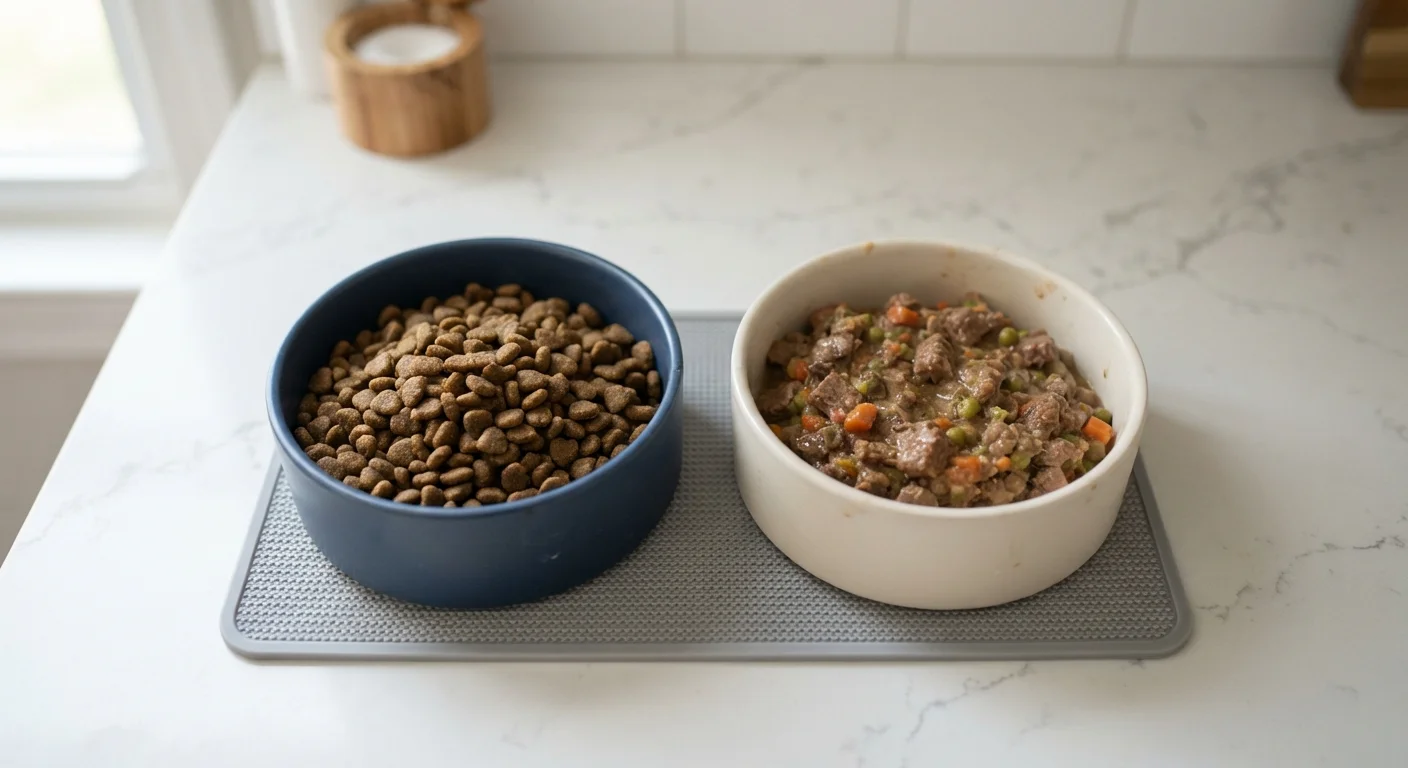
How Dry and Wet Pet Foods Are Made
Dry kibble is produced through a process called extrusion - ingredients are cooked under high heat and pressure, then shaped into small pieces and dried to remove most moisture. The result is a product with roughly 6-10% moisture content that stays shelf-stable for months. Wet food, by contrast, is processed at lower temperatures, sealed in cans or pouches, and retains 70-80% moisture. That fundamental difference in water content drives nearly every practical distinction between the two formats.
Both formats can meet complete and balanced nutritional standards, but the way nutrients are delivered differs meaningfully. Wet food tends to be higher in animal protein and fat on a calorie-for-calorie basis when you account for its water content. Dry food concentrates its nutrients per gram of food, making calorie density easier to estimate - useful for portion control. For a deeper look at how to interpret nutritional claims on packaging, see our guide on reading pet food labels.
Nutrition, Hydration, and Health Implications
One of the most clinically significant differences between the two formats is hydration. Cats evolved as desert animals and have a naturally low thirst drive, meaning they often do not drink enough water when eating dry food alone. Veterinary nutritionists frequently note that chronic mild dehydration in cats may contribute to urinary tract issues and kidney stress over time. Wet food, because it delivers water directly with each meal, can help bridge this gap - though it is not a substitute for fresh water being available at all times.
| Criterion | Dry Kibble | Wet Food |
|---|---|---|
| Moisture content | 6-10% | 70-80% |
| Shelf life (unopened) | 12-18 months typical | 2-5 years (canned) |
| Cost per day | Lower for most pets | Higher per serving |
| Palatability | Moderate | Generally higher |
| Hydration support | Minimal | Significant |
| Dental abrasion | Mild (some formulas) | Negligible |
| Portioning ease | Simple, by cup or weight | Requires refrigeration after opening |
| Protein density (dry matter basis) | Varies widely | Often higher |
For dogs, hydration from food is less critical because dogs tend to drink more readily, but wet food can still be beneficial during illness, recovery, or in hot climates. Pets with kidney disease, diabetes, or certain digestive conditions may also benefit from the higher moisture content - always follow your veterinarian's guidance for medically complex situations.
On the dental side, the common belief that kibble significantly cleans teeth is only partially supported by evidence. While some textured kibbles do provide mild abrasive action, no dry food replaces dedicated dental hygiene. Wet food does not contribute to dental cleaning, and some formulations with higher carbohydrate content may leave residue on teeth. For both formats, regular tooth brushing and veterinary dental check-ups remain the standard of care.
70-80%
Moisture content in typical wet pet food
Compared to just 6-10% in dry kibble, this difference has direct implications for urinary and kidney health, especially in cats.
~60%
Cats with low voluntary water intake on dry-only diets
Veterinary nutrition literature consistently notes that cats on exclusive dry diets often consume substantially less total water than those fed wet food.
3-4x
Approximate cost difference per calorie
Wet food can cost three to four times more per calorie than dry kibble when calculated on an equivalent energy basis, according to general veterinary nutrition guidance.
Cost, Convenience, and Practical Feeding Strategies
Dry kibble wins on cost and convenience for most households. A pound of quality dry food typically provides far more servings than an equivalent weight of wet food, and it requires no refrigeration once opened (within reason - most manufacturers recommend sealing and using within a set timeframe). Wet food, once opened, must be refrigerated and used within 24-48 hours, which can mean more waste and higher per-day expense.
That said, cost comparisons should account for caloric density. Because wet food contains so much water, you may feed larger volumes to meet your pet's daily caloric needs, which narrows the price gap somewhat. Owners of small dogs or cats with modest caloric requirements sometimes find that a mixed approach - dry kibble as the base with a small amount of wet food added - delivers hydration and palatability benefits without dramatically increasing costs. This is also a useful strategy for coaxing picky eaters.
If you're considering a broader shift in how you feed your pet, the diet-change checklist is a helpful starting point before making any transition. Storage and household logistics also matter - for multi-pet households on a budget, managing pet care costs efficiently often means standardizing on kibble with targeted wet food use for specific health needs.
This article is for general informational purposes only and does not constitute veterinary or medical advice. Always consult a licensed veterinarian before making changes to your pet's diet, especially if your pet has an existing health condition.