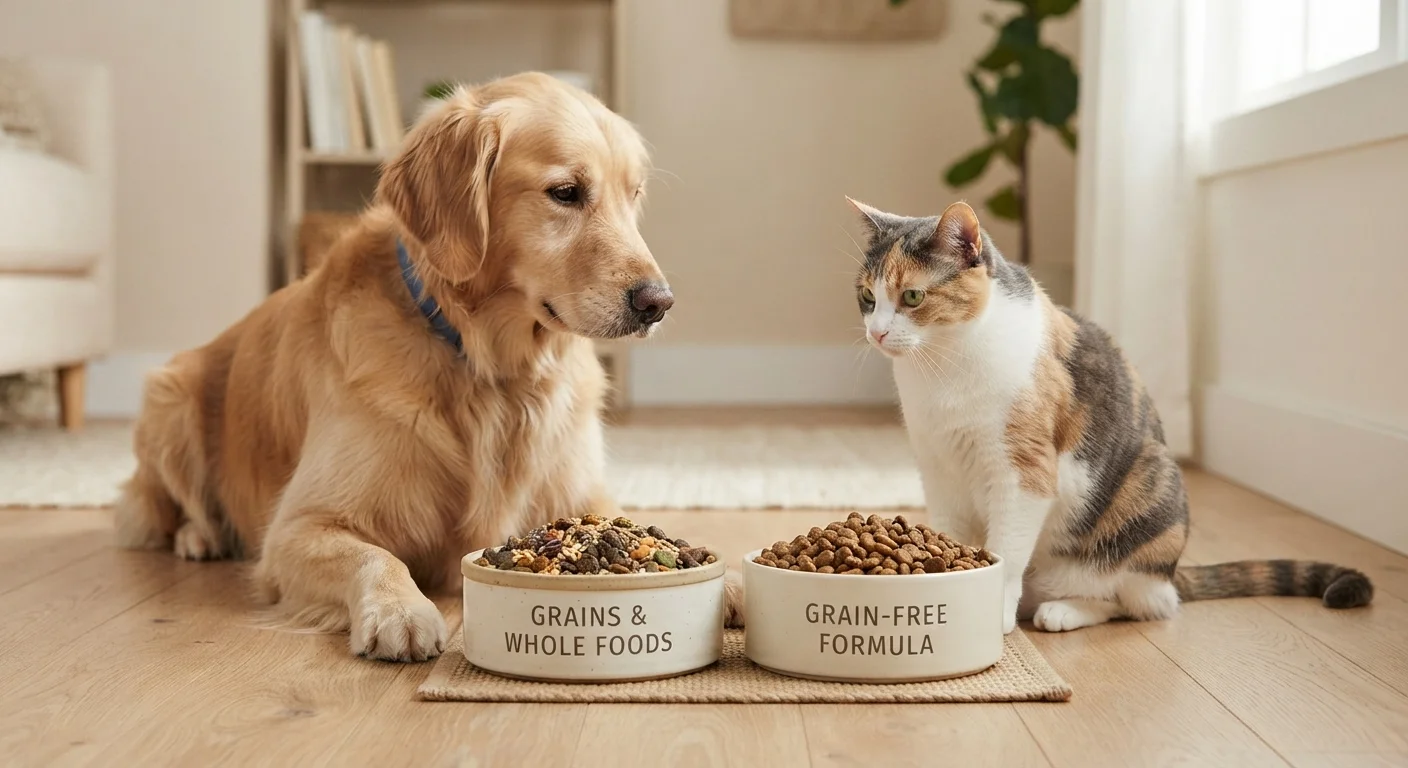
Why Grain-Free Diets Gained Popularity
Grain-free pet foods surged in popularity during the 2010s, largely driven by parallel trends in human nutrition - particularly the rise of gluten-free and low-carb eating patterns. Marketing positioned grains as unnecessary fillers or potential allergens, and many owners made the logical inference that what applied to their own diets might apply to their pets.
In reality, most dogs and cats have no clinical reason to avoid grains. True grain allergies do exist, but they are far less common than marketing language implies. More frequently, pets with food sensitivities react to specific animal proteins rather than grains. This distinction matters because it affects both which diet is appropriate and how much a family should expect to spend. For a broader look at how nutrition beliefs get distorted, see persistent nutrition myths that research has challenged.
The FDA Investigation Into Dilated Cardiomyopathy
In 2018, the U.S. Food and Drug Administration (FDA) announced it was investigating a potential link between grain-free diets and dilated cardiomyopathy (DCM) - a serious heart condition - in dogs. The agency noted that a disproportionate share of reported DCM cases involved dogs eating grain-free foods that relied heavily on legumes, lentils, and potatoes as carbohydrate sources.
Critically, the FDA has not established causation. The investigation identified an association - a pattern worth examining - but the underlying mechanism remains unclear. Hypotheses have included low taurine availability, interactions between specific ingredients, or the displacement of nutrients by legume-heavy formulas. Research is ongoing, and no single ingredient has been definitively identified as the culprit.
| Grain-Free Diet | Grain-Inclusive Diet | |
|---|---|---|
| Typical cost | Generally higher per serving | Typically more affordable |
| DCM research concern | Under ongoing FDA investigation | Not flagged in FDA investigation |
| Appropriate for grain allergies | Yes, when confirmed by a vet | Not suitable if allergy confirmed |
| Nutritional completeness | Varies by formula; check AAFCO statement | Varies by formula; check AAFCO statement |
| Ingredient substitutes for grains | Legumes, potatoes, peas | Rice, oats, barley, corn |
| Supported by veterinary consensus | For specific medical cases only | Generally supported for healthy pets |
The practical implication: dog owners feeding grain-free diets, particularly to breeds already predisposed to heart disease, are advised to discuss the question with their veterinarian rather than dismiss or overreact to the findings. It also connects to the importance of understanding what vets actually observe about pet diets in clinical practice.
Grains, Carbohydrates, and What Pets Actually Need
Dogs are omnivores with a demonstrated ability to digest starch - a trait that evolved alongside human agriculture. Cats are obligate carnivores with a lower carbohydrate requirement overall, but this does not mean grains are toxic to them. The question is less whether grains are present and more whether the overall diet is nutritionally complete and appropriate for the species.
How to Read a Pet Food Label
Before switching diets, check for an AAFCO nutritional adequacy statement on the packaging - it indicates whether the food meets established minimum nutrient standards. See our guide to reading pet food labels for a full walkthrough of what each section means.
Grains such as rice, oats, and barley contribute digestible energy, fiber, and trace nutrients. When a grain-free formula replaces these with high quantities of legumes or potatoes, the resulting nutrient profile is not automatically superior - it is simply different, and the long-term implications of those substitutions are still being studied.
~1%
Pets with true food allergies
Veterinary dermatology literature estimates food allergies affect a small minority of pets, with grains rarely identified as the primary trigger.
560+
DCM cases reported to the FDA
The FDA's investigation into diet-associated DCM received over 560 case reports between 2014 and 2019, the majority involving dogs fed grain-free diets.
When Grain-Free May Be Appropriate
There are legitimate scenarios where a grain-free diet is the right choice. If a veterinarian has identified a confirmed grain sensitivity through an elimination diet trial - a controlled process where ingredients are systematically removed and reintroduced - then avoiding grains is a medically supported decision. Similarly, some pets with inflammatory bowel conditions benefit from simplified ingredient lists, which certain grain-free formulas provide.
Outside of a confirmed diagnosis, however, the choice to go grain-free is driven more by preference than evidence. For families managing pet food costs, this distinction is material: grain-free formulas frequently carry a price premium without a demonstrated universal benefit. Homemade pet food vs. commercial options explores another avenue owners sometimes consider when reassessing their pet's diet.
Don't Conflate Marketing With Medical Advice
Grain-free labeling is a marketing category, not a clinical recommendation. A diet described as 'natural' or 'ancestral' does not automatically meet your pet's nutritional needs. Always verify AAFCO compliance and consult your veterinarian before making significant dietary changes.
Making an Informed Decision for Your Pet
The grain-free debate underscores a broader principle: pet nutrition decisions benefit from individualization and professional input. A healthy three-year-old mixed-breed dog has different needs than a senior golden retriever with a family history of cardiac issues. No single diet category fits every animal.
When evaluating any food, grain-free or otherwise, useful checkpoints include: confirming an AAFCO nutritional adequacy statement, understanding which life stage the food is formulated for, and discussing any breed-specific considerations with your veterinarian. For help navigating ingredient lists and label claims, see how to decode a pet food label.
Value-conscious owners can find nutritionally complete grain-inclusive options across a wide range of price points. The goal is a diet that supports your pet's health over a lifetime - not one that reflects a passing trend.
This article is for general informational purposes only and does not constitute veterinary or medical advice. Always consult a licensed veterinarian before making significant changes to your pet's diet, especially if your pet has an existing health condition.