Why Portion Size Matters More Than Most Owners Realize
Overfeeding is quiet, gradual, and remarkably easy to do. An extra handful of kibble here, a few extra treats there - over months, the caloric surplus accumulates into noticeable weight gain. According to the Association for Pet Obesity Prevention, a substantial portion of US dogs and cats are classified as overweight or obese, a condition linked to shorter lifespans, joint disease, diabetes, and heart problems.
The frustrating part is that most overfeeding happens with good intentions. Pet owners often interpret food as affection, and a pet's enthusiasm at mealtimes can feel like evidence that more is better. But a pet's appetite is not a reliable guide to how much they actually need. Understanding the science of serving sizes is the first step toward genuinely protecting your pet's long-term health - and it often reduces food costs at the same time.
~59%
US dogs classified as overweight or obese
According to the Association for Pet Obesity Prevention's clinical surveys of veterinary patients.
~61%
US cats classified as overweight or obese
From the same Association for Pet Obesity Prevention veterinary data, reflecting a long-term upward trend.
20-30%
Calorie reduction typical after spay/neuter
Veterinary nutrition guidelines commonly note that altered pets have meaningfully lower maintenance energy requirements than intact animals.
The Science Behind Calculating the Right Amount
Veterinary nutritionists use a two-step formula to estimate how many calories a pet needs each day. The first step calculates the Resting Energy Requirement (RER) - the calories needed just to maintain basic body functions at rest. The standard formula is: RER = 70 × (body weight in kilograms)0.75.
The second step applies a life-stage multiplier to arrive at the Maintenance Energy Requirement (MER), which accounts for activity, growth, reproductive status, and age. For example, a neutered adult dog has a lower multiplier than an intact, highly active dog of the same weight. This adjusted figure is what guides daily feeding.
You don't need to run these calculations yourself - your veterinarian can do it during a wellness visit. What's important to understand is that the number is individual. Two dogs of the same breed and weight can have meaningfully different caloric needs based on their lifestyle and health status. The weight management guide covers how body condition scoring complements these calculations.
Reading Feeding Guides - and Their Limitations
Every bag or can of commercial pet food includes a feeding guide, typically organized by weight range. These are useful starting points, but they carry important limitations worth understanding.
- They target the average animal. Neutered pets, sedentary pets, and older pets generally need the lower end (or below) of any listed range.
- They assume only that food is fed. Treats, table scraps, and toppers add calories that the bag guidelines don't account for.
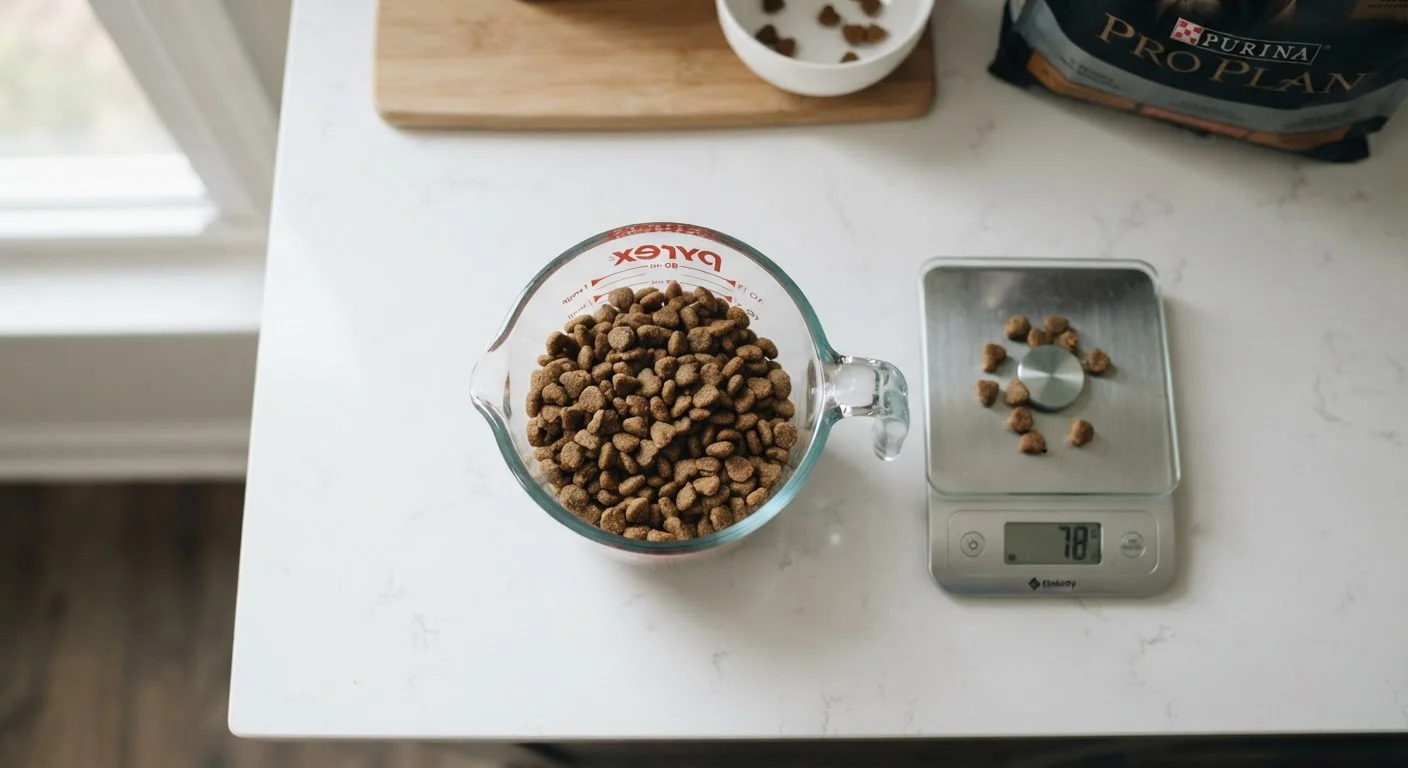
- Volume measurements are imprecise. A loosely scooped cup of kibble can contain meaningfully fewer calories than a packed one. Measuring by grams on a kitchen scale is the most reliable method.
Before adjusting portions, it also helps to understand what your pet's food actually contains. The pet food label guide explains how to read guaranteed analysis panels so you know the caloric density of what you're measuring.
Weigh Food, Don't Just Measure It
Switching from a measuring cup to a kitchen scale is one of the simplest upgrades you can make. Kibble density varies between products - a cup of one food may contain 100 more calories than a cup of another. Your pet's food packaging often lists a gram equivalent alongside cup measurements; use that number for consistency. Basic digital kitchen scales are widely available and inexpensive.
Key Variables That Shift Your Pet's Portion Needs
Several factors beyond simple body weight influence how much food a pet needs. Being aware of them helps you recognize when a portion adjustment may be warranted - even before a weight change becomes obvious.
- Life stage
- Puppies and kittens require more calories per pound of body weight to support rapid growth. Senior pets often need fewer calories overall but may benefit from adjusted nutrient profiles. The life-stage nutrition article explores this in depth.
- Neuter or spay status
- Spayed and neutered pets typically have lower energy requirements - sometimes 20-30% lower - than intact animals of the same weight and activity level.
- Activity level
- A working dog or a cat with outdoor access burns significantly more calories than a sedentary indoor pet. Portions should reflect actual energy expenditure, not an idealized activity level.
- Health conditions
- Conditions such as hypothyroidism, Cushing's disease, or diabetes can alter metabolism and caloric needs significantly. Always involve a veterinarian when managing portions for a pet with a known health condition.
It's also worth questioning popular assumptions about what pets need. Our pet nutrition myths article addresses some common misconceptions that can lead owners to unintentionally over- or underfeed.
Practical Steps for Implementing Better Portion Control
Translating the science into daily habit doesn't require expensive tools or complex routines. A few straightforward practices make a measurable difference:
- Get your pet weighed regularly. Monthly weigh-ins at home or at a veterinary clinic establish a trend line that's far more informative than any single number.
- Use a kitchen scale. A basic digital scale that measures in grams costs very little and removes the guesswork from cup measurements.
- Account for all calories. Treats, dental chews, food toppers, and pill pockets all carry calories. Factor them into the daily total and reduce the main meal if treats are given frequently.
- Split meals rather than free-feeding. Offering measured meals twice a day rather than leaving food out continuously gives you visibility into how much your pet is actually eating.
- Reassess when life changes. A new exercise routine, a move indoors, aging, or a health diagnosis all warrant a portion review. Use the diet transition checklist as a guide before making significant changes.
This article provides general educational information about pet nutrition and is not a substitute for personalized veterinary advice. Always consult a licensed veterinarian for guidance specific to your pet's health, weight, and dietary needs.