The Core Math: Why Movement Costs Money
The economics of conventional travel work against you from the start. Every new destination means a new booking fee, a new transit leg, and another round of orienting yourself to a place where you don't know where to eat affordably or shop locally. Nightly hotel rates are priced for transient occupancy — they reflect peak demand, cleaning turnover, and zero loyalty from guests who are there for two nights and gone.
Slow travel reframes this equation entirely. When you commit to one place for three, four, or eight weeks, the daily cost of accommodation drops substantially. Weekly and monthly rental rates — whether through furnished apartment platforms or direct landlord agreements — routinely run 30–50% below the equivalent nightly cost. That difference compounds fast. A place that costs $120 per night as a hotel might be available at $1,800 per month as a furnished rental, equivalent to $60 per night.
This is the foundational saving, but it's not the only one. Every additional week you stay, you eliminate another round of flights or trains, another airport transfer, and another set of tourist-area meals eaten out of logistical necessity. The savings stack.
30–50%
Typical savings on per-night cost with monthly rentals
General market observation across furnished apartment platforms comparing nightly vs. monthly rate tiers.
~3–4x
More flight segments in multi-city itineraries vs. slow travel
A two-week trip across four destinations typically requires three or more flight legs compared to one round trip for slow travelers.
Under $40
Monthly transit pass cost in many mid-size international cities
Commonly observed pricing in cities across Southern Europe, Latin America, and Southeast Asia for local public transit passes.
Eating Like a Local: Grocery Math vs. Restaurant Reality
Food is the second-largest variable in most travel budgets and also the most controllable. Hotels and nightly rentals typically don't offer kitchens, which forces travelers into restaurants for every meal. In tourist-heavy areas, even modest restaurant meals carry a significant markup over local grocery prices.
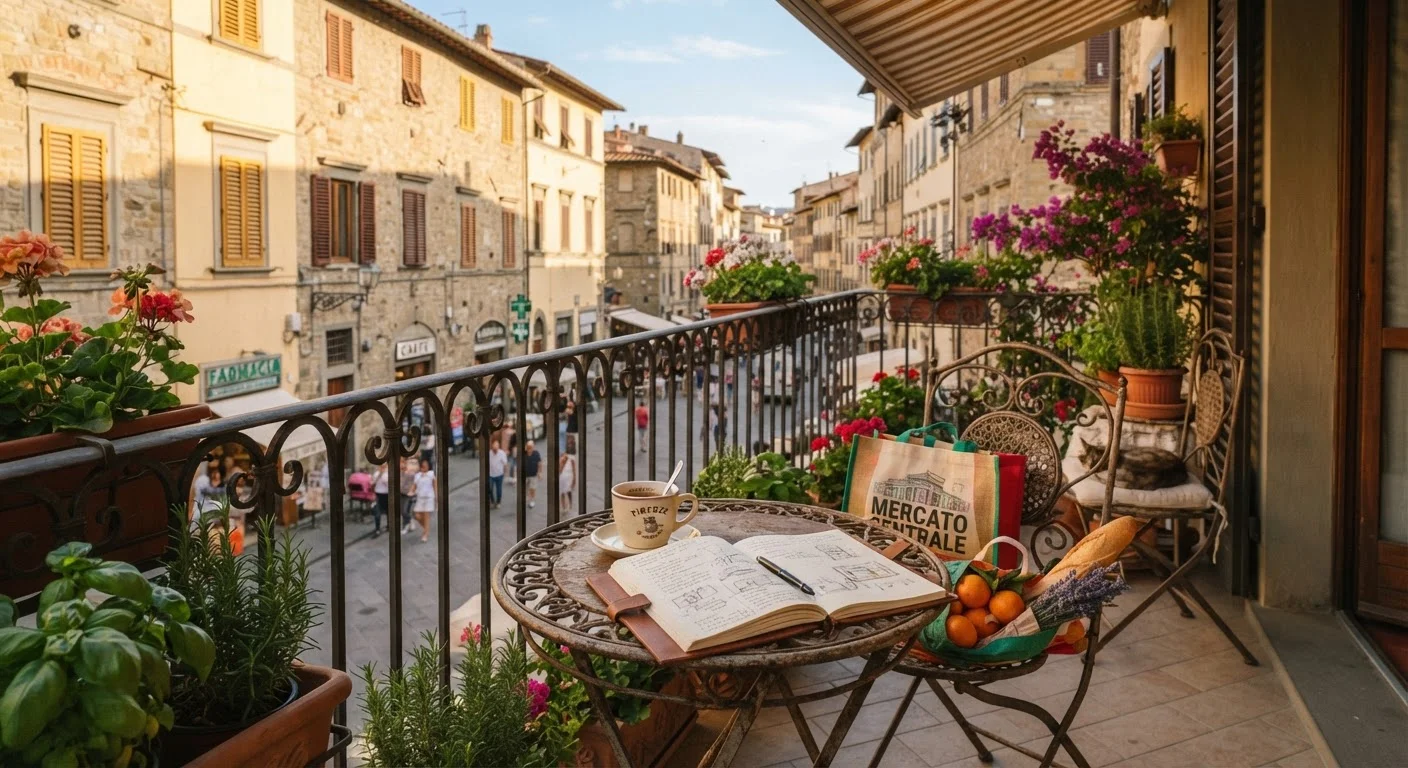
A furnished apartment rental almost always includes a kitchen. Once you can cook, your food costs begin to approach what locals actually spend — not what the restaurant district charges visitors. A week of groceries from a local market in many European, Latin American, or Southeast Asian cities can cost less than two or three restaurant meals in the same area.
Beyond cost, grocery shopping is one of the fastest ways to understand a place on its own terms. Local markets reveal seasonal produce, regional staples, and price norms that restaurant menus obscure. This connects naturally to the broader principle of slow travel: time in one place teaches you where to shop, which neighborhoods to avoid at peak prices, and which free or low-cost activities actually hold up over repeat visits. See our guide to free and low-cost experiences abroad for how experienced travelers fill their time without defaulting to paid attractions.
Transport: Fewer Legs, Lower Totals
Flights are typically the single largest line item in any international travel budget — and most itinerary-heavy travelers book several of them. A two-week trip across four countries might involve three or four flight segments, each with its own base fare, taxes, and baggage fees. Slow travel compresses this to one or two flights total, with surface transport — buses, trains, metro passes — covering any movement during the stay.
Monthly transit passes in most cities cost a fraction of what a week of ride-shares or taxis would. In many mid-size cities abroad, a monthly transit pass runs under $40. Even in US cities, a monthly pass is typically less than ten days of per-ride fares. The longer you stay, the more this monthly investment pays off relative to per-trip pricing.
Book Monthly Rate Minimums Directly
Many furnished apartment platforms apply weekly and monthly discounts automatically, but the largest reductions often come from contacting hosts directly once you've identified a listing. Ask explicitly about a monthly rate and confirm what utilities are included. Getting this in writing before you book protects against unexpected charges later.
For travelers who want to weigh this approach against faster-paced itineraries, our comparison of slow vs. fast-paced travel examines the real trade-offs across cost, fatigue, and experience depth.
Building a Slow Travel Budget That Holds Up
The practical challenge of slow travel isn't conceptual — most people understand that longer stays can be cheaper. The harder part is structuring a budget that accounts for the full picture: accommodation deposit requirements, utility inclusions or exclusions, health and travel insurance coverage for extended periods, and the occasional cost of re-booking if plans change.
Start by researching the realistic all-in monthly cost for your target destination: rent, groceries, local transport, and a reasonable discretionary allowance. Compare that against your current monthly living expenses at home. For many travelers, a month in a lower cost-of-living destination abroad costs less than their rent and food budget at home — which is how slow travel occasionally becomes financially neutral or even positive for people who can work remotely.
The same budgeting discipline that governs long-term financial planning applies here. The principles behind sustainable monthly spending plans — tracking actuals against estimates, building in buffer, and separating fixed from variable costs — translate directly to managing a slow travel budget. Pair this with shoulder season timing and you can reduce accommodation costs further while avoiding the crowds that inflate tourist-area prices.
This article is for general informational purposes only and does not constitute financial or travel advice. Prices, availability, and local conditions vary and should be verified directly before making travel or financial decisions.