Why the Resort Bubble Costs You More Than You Think
All-inclusive resorts deliver convenience, but that convenience is priced in. Once you're inside the resort zone — whether that's the Hotel Zone in Cancún, Los Cabos corridor, or Puerto Vallarta's Zona Hotelera — nearly every peso-denominated transaction is repriced for visitors expecting US-style spending. Taxis from the airport quote flat rates two to three times what metered or shared alternatives charge. Restaurant menus outside the hotel charge in dollars, not pesos. Excursion desks add substantial markups to tours you could book locally.
This doesn't mean resorts are a bad choice for every traveler — they're predictable and low-friction. But if your goal is value, staying tethered to a resort zone actively works against you. Mexico's real cost advantage appears when you move through it the way residents do: local transit, neighborhood restaurants, and accommodation outside the tourist corridor.
For a broader look at how apparent budget destinations can still generate high total bills, see the hidden costs travelers often overlook — many of the same dynamics apply here.
Shoulder Season Is a Real Advantage
Mexico's high season (December through April, plus major US holiday weeks) brings peak pricing to accommodation even outside resort zones. Traveling in May, June, or October typically yields lower rates and thinner crowds at popular sites. Hurricane season runs June through November in coastal areas — check regional patterns before booking a beach-adjacent trip during those months.
Where to Go Instead: Three High-Value Destinations
Not all of Mexico operates on resort economics. Several cities offer genuine cultural depth, reliable infrastructure, and daily costs that remain low even by regional standards.
- Oaxaca City: A UNESCO-recognized historic center, a nationally acclaimed food scene built around markets, and a strong base of budget and mid-range guesthouses. Daily costs for independent travelers — accommodation, three meals, local transport — can run $35–$55 USD depending on your choices, though prices shift with season and exchange rates.
- Mérida, Yucatán: Often called one of Mexico's most livable cities, Mérida offers free Sunday cultural events, affordable cenote day trips via colectivo, and a restaurant scene where a full lunch costs under $5 at a local comedor. It also serves as a practical base for exploring the broader Yucatán Peninsula without resort pricing.
- Guanajuato: A college town built into a canyon, with free public plazas, walkable streets, and a hostel-to-boutique-hotel spectrum that makes it accessible at almost any budget. Its proximity to San Miguel de Allende gives you a contrast point — though San Miguel now skews more expensive than it once did.
If you're weighing Mexico against other affordable international options, a country-by-country cost snapshot for Central America provides useful benchmarks for comparison.
How to Get Around Without Resort Pricing
Choose your base city before booking flights
Flight pricing to Mexico varies significantly by destination airport. Direct flights to Cancún, Los Cabos, and Puerto Vallarta are abundant but often priced at leisure-travel premiums. Flights into Mexico City (MEX), Guadalajara (GDL), or Oaxaca (OAX) frequently offer lower fares and connect you directly to lower-cost urban environments. Check both options before assuming a beach-gateway airport is cheaper.
Book accommodation outside tourist corridors
Search for neighborhoods adjacent to — but not inside — the main tourist zones. In most cities, moving two or three blocks from the primary tourist strip meaningfully reduces nightly rates. Look for guesthouses (casas de huéspedes), locally owned boutique hotels, and reputable hostels with private rooms. Read recent reviews specifically for neighborhood safety and walkability.
Exchange currency strategically
Airport exchange booths typically offer the least favorable rates. ATMs affiliated with major Mexican banks (such as BBVA or Banorte) generally offer better rates but charge fixed withdrawal fees — withdraw in larger amounts to reduce the per-transaction cost. Notify your home bank before travel to avoid international transaction flags. Avoid exchanging currency at hotels or resort desks, where rates are typically worse.
Use inter-city buses for longer distances
ADO and its affiliated lines (OCC, AU) connect Mexico's major cities and tourist destinations with frequent departures. Tickets can be purchased online in advance or at terminal windows. First-class ADO coaches include reclining seats, air conditioning, and onboard restrooms — comfortable enough for most routes. Compare bus fares against domestic flight costs, factoring in airport transit time and fees, before defaulting to flying.
Use colectivos for short regional routes
Colectivos are shared vans or minibuses that run fixed routes between towns and neighborhoods, departing when full. They are widely used across Mexico and cost a fraction of private taxi fares. For routes like Tulum to Playa del Carmen, or Oaxaca City to nearby villages, colectivos are the standard local option. Ask at your accommodation about departure points and typical fares before heading to a taxi stand.
Plan meals around market hours
Most covered markets (mercados) serve their main hot meals between roughly 8 a.m. and 3 p.m. Arrive during this window to access the widest selection of comida corrida and market fondas. Evenings often offer street food as an alternative, though selection varies by city. Building your meal schedule around market hours rather than tourist-restaurant hours both saves money and connects you to a more genuine local food experience.
Once you understand Mexico's transit options, the cost difference from resort-zone habits becomes concrete. ADO (a national bus network) connects most major cities with clean, air-conditioned coaches at fares that are a small fraction of what taxis charge. Colectivos — shared vans or minibuses — handle shorter regional routes at even lower cost and are used daily by most of the population.
Ride-hailing apps are available in many cities and offer transparent, metered pricing. In tourist zones, always confirm whether a price is in pesos or US dollars before accepting any service.
Eating and Spending Like a Local
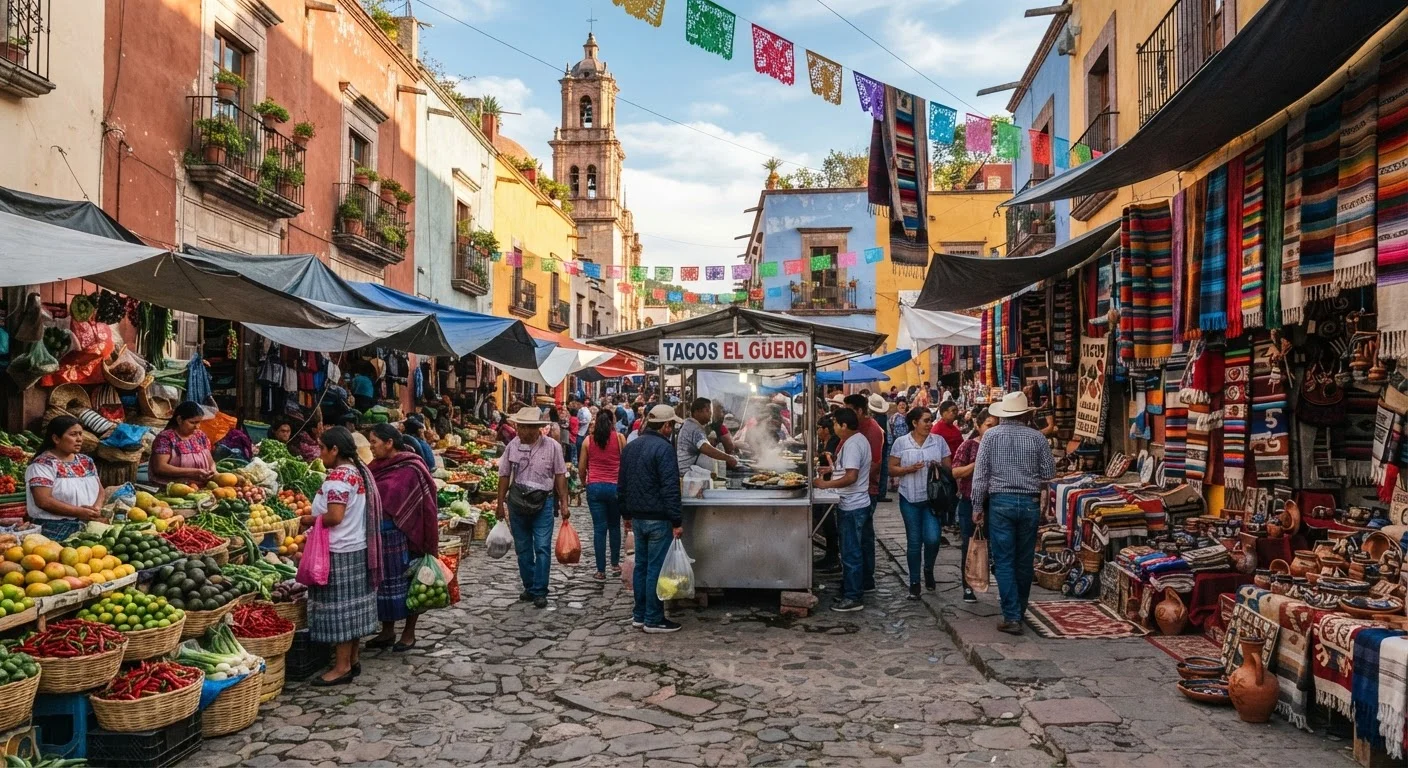
Food is where Mexico's value proposition is clearest — but only if you eat where locals eat. A comida corrida (a set midday meal, typically soup, main, rice, beans, and a drink) at a neighborhood fonda costs $3–$6 USD in most non-resort cities. Street tacos from a well-trafficked stand average $0.50–$1.50 each. Market fondas inside covered mercados often offer the best combination of variety, freshness, and price in any city.
By contrast, restaurants in tourist corridors or beach-facing streets routinely charge $12–$25 per entrée, with pricing sometimes listed in USD outright. The difference in daily food spend between these two approaches can easily reach $30–$50 per person.
Check Current Travel Advisories Before Booking
The US State Department issues tiered travel advisories for Mexican states that are updated regularly. Conditions vary significantly by region — some states carry higher advisories while others are comparable to popular international destinations. Always verify the current advisory level for your specific destination and transit routes through official government sources before finalizing travel plans. This is general guidance; verify with official sources for your specific itinerary.
For practical strategies on filling your itinerary without overspending on activities, making the most of free and low-cost experiences abroad covers the same principles applied across international destinations. And if you want a comprehensive framework for value travel beyond just destination choice, the complete guide to traveling affordably without sacrificing comfort is a useful reference.