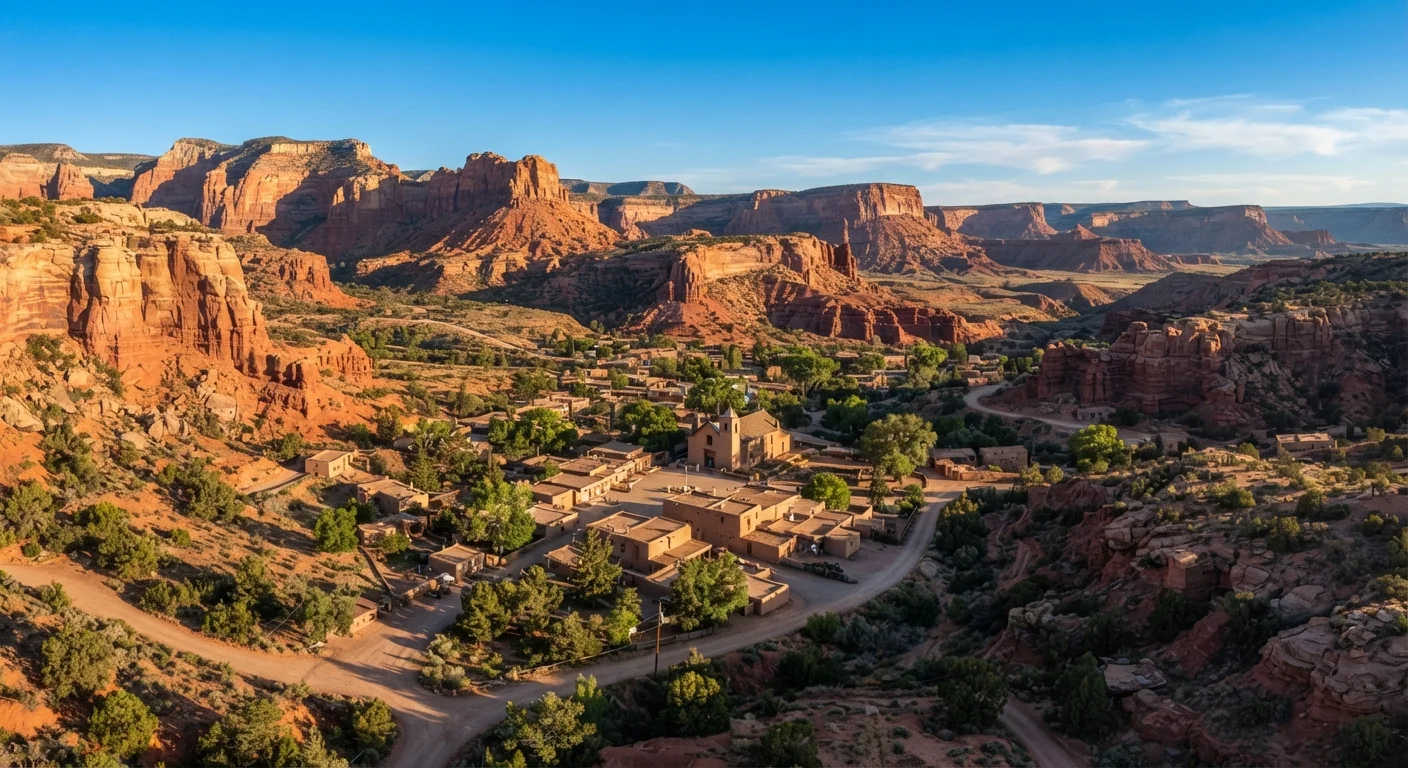
Why Small Desert Towns Deliver Outsized Value
The American Southwest is most often associated with places like Sedona, Santa Fe, and Scottsdale — destinations that have parlayed stunning landscapes into a booming hospitality industry, complete with resort pricing to match. But the region is vast, and scattered across it are smaller towns that offer comparable scenery, genuine local character, and a fraction of the cost.
These aren't compromise destinations. Towns like Marfa, Bisbee, and Truth or Consequences have developed distinct identities — built around art, history, or outdoor access — that hold up even for travelers with high standards and limited budgets. The trade-off is usually comfort-of-access rather than quality of experience: you may drive further, stay in a quirky motel instead of a full-service hotel, and eat at a counter-service spot instead of a white-tablecloth restaurant. For many travelers, that's the point.
If you're also weighing non-urban alternatives for outdoor experience, lesser-known federal and state lands often sit within easy range of these towns, compounding the value of a single road trip.
Marfa, Texas
Marfa punches well above its weight for a town of roughly 2,000 people. Known internationally for the Chinati Foundation's permanent art installations and the unexplained Marfa Lights phenomenon, it draws a sophisticated crowd without demanding resort-level spending. Motels along the highway run significantly less than comparable rooms in Austin or Dallas, and many of the most talked-about experiences — wandering the historic courthouse square, viewing Donald Judd's large-scale works during open hours, driving out to the Prada Marfa art installation — cost little to nothing.
Food options are limited but genuinely good; the town has a handful of counter-service spots and a few sit-down restaurants that reflect both its West Texas roots and its art-world influence. The Big Bend region, one of the least-visited national parks in the lower 48, is roughly two hours south — making Marfa a practical base for combining art and wilderness in the same trip.
Marfa offers internationally recognized art and genuine West Texas character with motel-level lodging costs.
Bisbee, Arizona
A former copper mining town tucked into the Mule Mountains near the Mexican border, Bisbee has reinvented itself as a haven for artists and history travelers without losing its working-class bones. The Queen Mine Tour takes visitors underground into the actual tunnels, and the Bisbee Mining and Historical Museum provides context for the town's late-19th-century boom years. Most of the old mining infrastructure is visible just by walking the steep, staircase-laced streets of the Brewery Gulch district.
Lodging options include historic hotels and smaller inns that are priced well below comparable historic properties in Tucson or Sedona. The town's compact walkability means you can realistically spend two full days here without a car once you've arrived. Tombstone, another historically significant and low-cost stop, is about 25 miles north.
Bisbee's mining history, walkable terrain, and art community make it one of Arizona's most distinctive budget stops.
Truth or Consequences, New Mexico
Renamed in 1950 after a popular radio game show as a publicity stunt, Truth or Consequences — T or C to locals — sits on the Rio Grande about 75 miles north of Las Cruces. Its hot springs, fed by geothermal activity beneath the town, are the main draw: several small bathhouses offer private soaking rooms for $10–$20 per person, a fraction of what spa resorts charge for similar mineral-water experiences.
The town has a small but active arts scene, a handful of independent restaurants, and direct access to Elephant Butte Lake State Park, the largest lake in New Mexico. Accommodations skew toward independent motels and guesthouses rather than chains, keeping nightly costs modest. It's a legitimate stop rather than a novelty, particularly for travelers who want to slow down rather than move quickly through a checklist.
Geothermal hot springs soaking in T or C costs a fraction of comparable spa resort experiences.
Silver City, New Mexico
Silver City sits at nearly 6,000 feet in the Gila National Forest region of southwestern New Mexico, giving it a milder summer climate than most Southwest desert towns. The Gila Cliff Dwellings National Monument — a set of well-preserved 13th-century cliff homes — is about 44 miles north and sees relatively light visitation compared to more famous ancestral Pueblo sites in the Four Corners area.
The downtown historic district has a lived-in quality: working galleries, independent bookstores, and restaurants that reflect the town's ongoing role as a regional hub rather than a purely tourist economy. Western New Mexico University is located here, which contributes to a more year-round cultural calendar than many comparably sized towns. Lodging options span from basic motels to a handful of well-maintained B&Bs.
Silver City's elevation, forest access, and authentic downtown make it one of New Mexico's most underrated stops.
Ajo, Arizona
Ajo sits about 43 miles from the Mexican border and 100 miles west of Tucson, making it genuinely remote — which is part of its appeal. The town is the gateway to Organ Pipe Cactus National Monument, a 517-square-mile reserve that protects one of the most ecologically rich sections of the Sonoran Desert. The monument's entrance fee covers several days of access, and its two scenic drives and network of hiking trails can fill a full weekend.
The town itself is built around a Spanish Colonial Revival plaza that dates to the early 20th century, when the Phelps Dodge Corporation developed it to house copper mine workers. Today it's home to an arts residency program and a small but notable gallery scene. Lodging is limited, which keeps prices relatively stable; booking ahead is advisable if you're visiting during the wildflower bloom in late February or March. Free and low-cost experience strategies — trails, public plazas, open galleries — apply directly to a town like Ajo.
Ajo's proximity to Organ Pipe Cactus National Monument gives budget travelers access to one of the Southwest's most distinctive desert landscapes.
Planning Tips Before You Go
Most of these towns see their highest prices and thinnest availability in spring and around holiday weekends. Visiting in late September through November or February through early March often means cooler temperatures, manageable crowds, and noticeably lower nightly rates. Shoulder-season travel involves real trade-offs worth understanding before you commit to dates.
Book Independently, Not Through Packages
In small Southwest towns, the best-value accommodations are often independent motels, guesthouses, or historic inns that don't list on major aggregator platforms. Calling ahead directly — especially for multi-night stays — can sometimes yield better rates than anything available online. Always confirm cancellation policies before booking.
For a broader framework on keeping daily spending in check without gutting the experience, this guide to affordable travel without sacrificing comfort covers destination selection through on-the-ground spending habits. And if you're considering extending your Southwest road trip across the border, Mexico's colonial cities and local transport can stretch the same budget even further.
This article is for general informational purposes only. Prices, hours, road conditions, and local services change — verify details directly with local sources and official government travel resources before your trip.