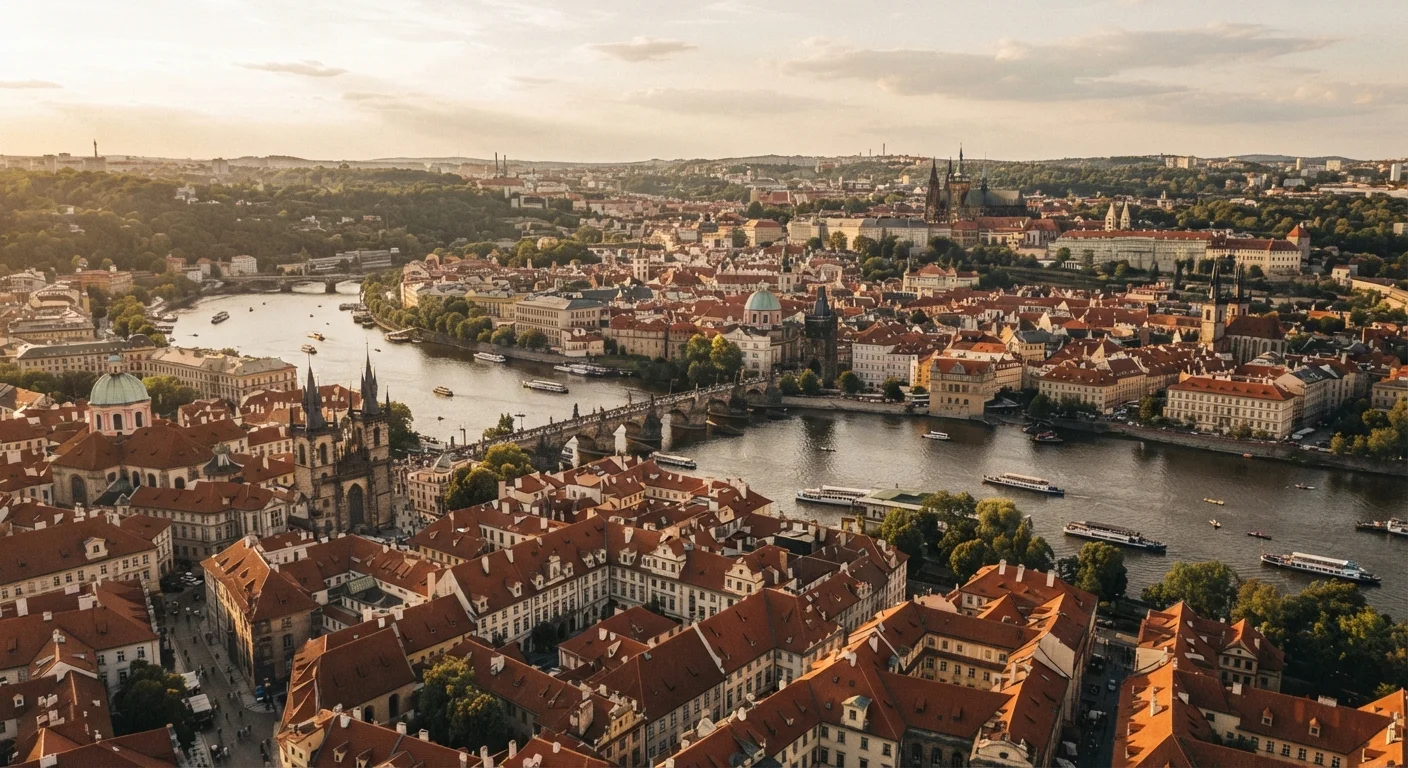
What Makes Eastern Europe 'Undervalued'?
The term 'undervalued' gets used loosely in travel writing, but in Eastern Europe's case it holds up to scrutiny. Countries like Poland, Czech Republic, Hungary, Romania, Bulgaria, and the Western Balkans consistently register lower daily travel costs than their Western counterparts — not because they lack infrastructure or cultural depth, but because local economies operate at different price levels.
For US travelers, that gap is meaningful. A well-reviewed hotel room that costs $180 per night in Vienna might have a direct equivalent in Krakow or Riga for $60–$90. A sit-down dinner with wine at a mid-range restaurant in Lisbon could run $50–$70 per person; in Sarajevo or Plovdiv, a comparable experience often comes in under $25. These aren't marginal differences — they compound across a week-long trip.
What makes the value argument stronger is that the trade-off in quality is minimal. Eastern Europe holds some of Europe's most intact medieval city centers, a remarkable concentration of UNESCO World Heritage Sites, and food traditions that haven't been homogenized for mass tourism. The undervaluation, in short, is the market's lag — not a reflection of what the region actually offers.
40–60%
Lower average daily costs vs. Western Europe
Based on aggregated traveler spending data comparing accommodation, food, and local transport costs across major Eastern and Western European cities.
~50
UNESCO World Heritage Sites in Eastern Europe
Countries including Poland, Czech Republic, Romania, Hungary, and Bulgaria collectively hold dozens of UNESCO-designated sites, reflecting the region's dense cultural heritage.
$40–$70
Estimated average daily budget (mid-range traveler)
Approximate range for accommodation, meals, and local transport in countries like Bulgaria, Romania, and the Western Balkans, excluding international flights.
The Cost Structure: Where the Savings Actually Come From
Understanding where costs are lower helps travelers make smarter decisions rather than just hoping for the best. Three categories drive the difference:
- Accommodation: Eastern European cities have robust accommodation markets — from hostels to boutique hotels — with strong competition keeping prices down, especially outside peak summer months.
- Food and drink: Local restaurant culture tends to favor hearty, inexpensive meals. Street food, market halls, and neighborhood restaurants frequented by locals rarely carry tourist premiums.
- Ground transport: Rail and bus networks across Poland, the Czech Republic, Hungary, and the Balkans are affordable by European standards. Inter-city trains and long-distance buses often cost a fraction of equivalent Western European routes.
Where costs don't shrink is on transatlantic flights. US travelers flying from major hubs like New York, Chicago, or Los Angeles should budget realistically for airfare, which can represent the single largest expense of the trip. It's also worth reading up on hidden costs in budget destinations before finalizing any itinerary — low daily rates don't always tell the full story.
Regional Variety: Eastern Europe Is Not One Destination
A common mistake is treating Eastern Europe as a uniform bloc. In practice, it encompasses dramatically different countries, languages, political histories, and travel experiences. A few illustrative contrasts:
- Poland
- Well-developed tourism infrastructure, easy Schengen entry for US citizens, strong budget airline connections within Europe, and cities like Warsaw and Wrocław alongside the globally recognized heritage of Krakow.
- Romania and Bulgaria
- EU members with their own currencies (leu and lev respectively), which often translates to even lower costs than Eurozone neighbors. Both countries offer mountain regions, Black Sea coastlines, and medieval fortified towns that see comparatively little international tourism.
- Western Balkans (Serbia, Albania, Bosnia and Herzegovina, North Macedonia)
- Non-EU, non-Schengen countries with some of the lowest daily costs on the continent. Less developed tourism infrastructure in places, but rapidly improving — particularly in cities like Belgrade, Tirana, and Mostar.
This variety means itinerary planning requires country-by-country research rather than a single set of assumptions. Visa rules, currency, border crossings, and transportation options all differ. It's also an argument for building in flexibility — Eastern Europe rewards explorers who are willing to move beyond the obvious cities.
Setting Realistic Expectations
Eastern Europe's value proposition is genuine, but a few caveats apply. Infrastructure quality varies — some rural areas have limited English-language signage and less predictable transport schedules. Certain popular destinations, like Prague's old town or Dubrovnik (in neighboring Croatia), have experienced significant tourism growth and no longer carry the cost advantages they once did.
Seasonality also matters. Summer — particularly July and August — brings peak prices and crowds to the most visited cities. Traveling in shoulder seasons can meaningfully reduce accommodation costs and improve the experience in popular areas. Our guide on off-season travel trade-offs covers what to weigh when timing a trip.
Finally, don't conflate low cost with low quality or assume that budget travel means an uncomfortable experience. The myths around budget travel often discourage travelers from regions that would suit them well. Eastern Europe, across its range of countries, supports everything from bare-bones backpacker trips to comfortable mid-range travel — often at prices that would be considered modest anywhere in Western Europe.
This article is for general informational purposes only. Travel costs, visa rules, and safety conditions change over time. Always verify entry requirements and current advisories through official government and embassy sources before booking.