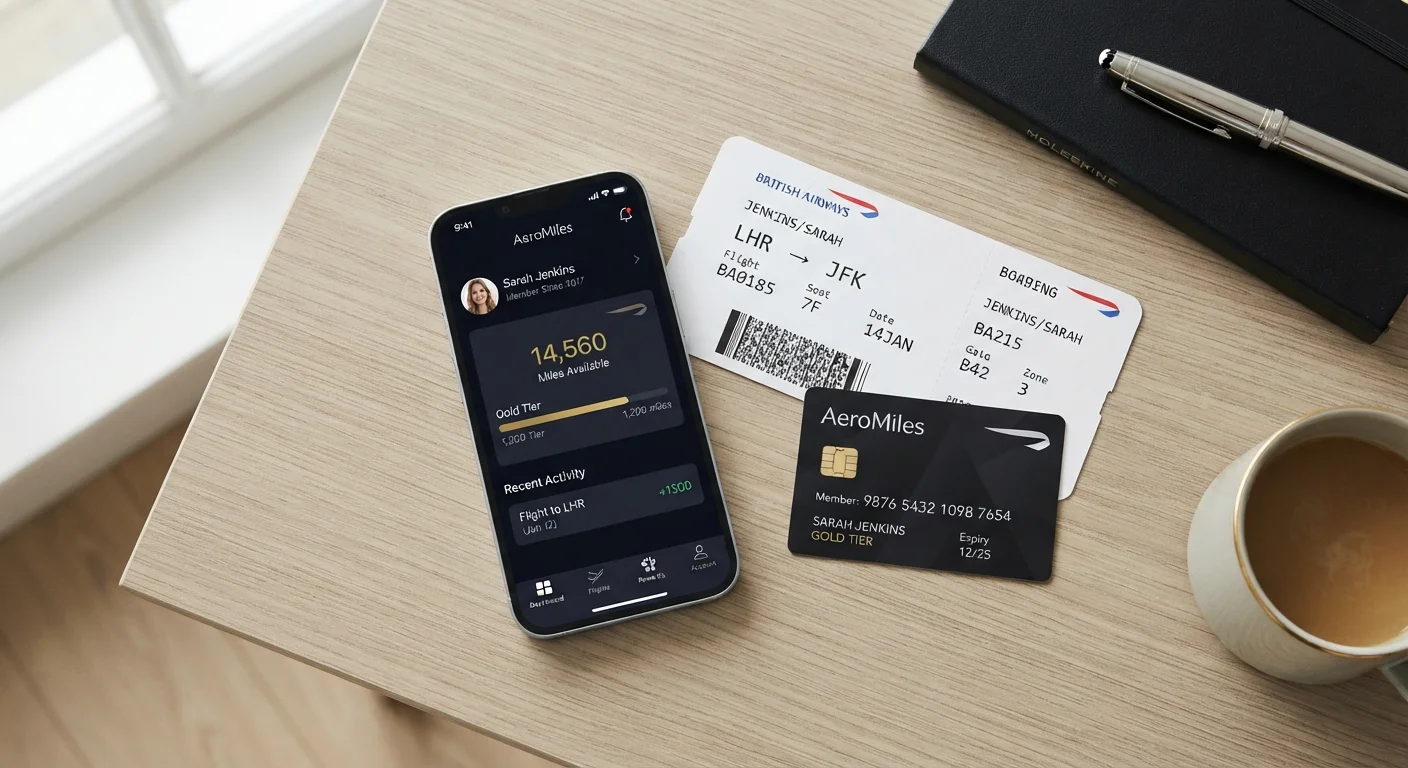
What Are Loyalty Programs, and How Do They Work?
Loyalty programs are structured reward systems run by airlines, hotels, car rental companies, and credit card issuers. They track your activity — flights flown, nights stayed, dollars spent — and credit you with a currency (miles, points, or credits) that can be redeemed for future travel or other benefits.
| Major reward currency types | Airline miles, hotel points, transferable card points |
| Typical transferable points ratio | 1:1 to airline or hotel partners (varies by program) |
| Fixed-rate redemption value | 1–1.5 cents per point through most travel portals |
| Common inactivity expiry window | 12–24 months (program-dependent) |
| Travel credits | Fixed-dollar offsets; category-restricted; no upside beyond face value |
| Key risk | Program devaluations can reduce redemption value without warning |
At the core, every program works on a simple loop: you earn, you accumulate, you redeem. But the specifics vary significantly by program type, and those differences determine whether the currency in your account is genuinely useful or quietly eroding in value.
For a fuller breakdown of how each program type is structured, see Travel Loyalty Programs, Decoded.
The Three Main Reward Currencies
Understanding reward currencies is foundational. There are three broad types:
- Airline miles — earned by flying on a specific carrier or its alliance partners, and by spending on co-branded credit cards. Redeemed primarily for award flights, though many programs also allow upgrades, seat selection, or partner redemptions.
- Hotel points — earned through paid stays and affiliated card spending. Redeemed for free nights, room upgrades, or in some programs, transferred to airline miles (usually at unfavorable rates).
- Transferable credit card points — earned through general-purpose travel cards. These sit in a flexible pool and can be transferred to multiple airline or hotel partners, often at a 1:1 ratio, or redeemed directly against travel purchases at a fixed rate (commonly 1–1.5 cents per point).
Award flight
A flight booked using miles or points instead of cash. The number of points required is set by the program's award chart or a dynamic pricing model, and availability is limited by the airline.
Transferable points
Points earned through a general-purpose rewards card that can be moved to multiple airline or hotel loyalty programs. They offer flexibility but require understanding transfer ratios and partner rules.
Redemption value
The monetary value extracted per point or mile, usually expressed in cents-per-point. This varies by how and where you redeem, and is not set by the program at a fixed rate.
Co-branded credit card
A credit card issued in partnership between a bank and an airline or hotel brand. Spending on the card earns currency in that brand's specific loyalty program rather than a transferable points pool.
Award chart
A published table showing how many miles or points are required to book specific routes or hotel categories. Some programs have replaced fixed charts with dynamic pricing, where costs shift based on demand.
Inactivity expiry
A policy where a program cancels your accumulated balance if you neither earn nor redeem points for a defined period — commonly 12 to 24 months. Terms vary by program and can change without advance notice.
Transferable points tend to offer the most flexibility, but that flexibility is only valuable if you understand the transfer rules and ratios. See The Anatomy of a Points Transfer for a detailed walkthrough.
Travel Credits: The Simplest Form of Reward
Travel credits are a distinct category — statement credits or fixed-dollar offsets applied to specific travel purchases. Unlike miles and points, their value is straightforward: a $300 annual airline credit is worth $300 if you spend at least that amount on qualifying purchases.
The catch is eligibility. Credits are often category-restricted — airline fees only, hotel bookings only, or purchases through a specific portal. Cards that offer large annual credits typically charge high annual fees, so the net value depends on how fully you use the credit and whether the card's other benefits justify the cost.
Credits don't expire within a program year, don't devalue, and don't require optimization to redeem — which makes them attractive for travelers who want predictability over complexity. However, they offer no upside: a mile redeemed on a business-class award can be worth 3–5 cents, while a credit is always worth exactly face value.
Where Real Value Hides — and Where It Doesn't
The single most important concept in travel rewards is redemption value — how many cents of value you extract per point or mile. Programs don't publish a fixed exchange rate; instead, the value fluctuates by how and where you redeem.
1–1.5¢
Typical portal redemption value per point
Most transferable card programs allow direct travel redemptions at this fixed rate, which sets a useful baseline for comparison.
3–5¢
Potential value per mile on premium award flights
International business or first-class redemptions using partner award availability can yield substantially higher per-point value than portal bookings.
12–24 months
Typical inactivity window before points expire
Most airline and hotel programs cancel balances after a defined period of no earning or redemption activity; terms vary and can change.
High-value redemptions typically include: international business or first-class flights using partner award charts, off-peak availability on premium routes, and hotel nights at high-price properties during low-reward-requirement windows. Low-value redemptions include: merchandise, gift cards, cash back at sub-1-cent rates, and last-minute award bookings at peak pricing.
Programs can and do devalue their currencies — reducing how many award seats are available or increasing the points required for a given redemption. This is a material risk. Why Your Points Aren't Worth What You Think covers the math behind real-world point value in plain terms.
It's also worth examining whether the programs you're enrolled in are actually shifting your spending in ways that don't serve your financial interests. Loyalty Programs: Genuine Perks or a Spending Trap? addresses that question directly.
Keeping Multiple Accounts Under Control
Most travelers accumulate balances across several programs simultaneously — an airline frequent flyer account, a hotel program, and one or more card point pools. The organizational challenge is real: expiry dates differ, some programs expire points after 12–18 months of inactivity, and balances can be scattered across accounts you've forgotten.
A few practical habits reduce the risk of losing value: consolidate where possible by choosing one primary transferable points card rather than several co-branded ones; set calendar reminders for any program with inactivity-based expiry; and track balances in a single spreadsheet or aggregator tool. For a structured approach, Managing Multiple Loyalty Accounts Without Losing Track provides a usable framework.
Loyalty programs can provide genuine travel value — but they reward travelers who understand the mechanics, not those who accumulate passively. The Deals & Rewards hub has further resources to help you build a strategy that fits your actual travel patterns.