What Dietary Guidance Actually Says About Plate Composition
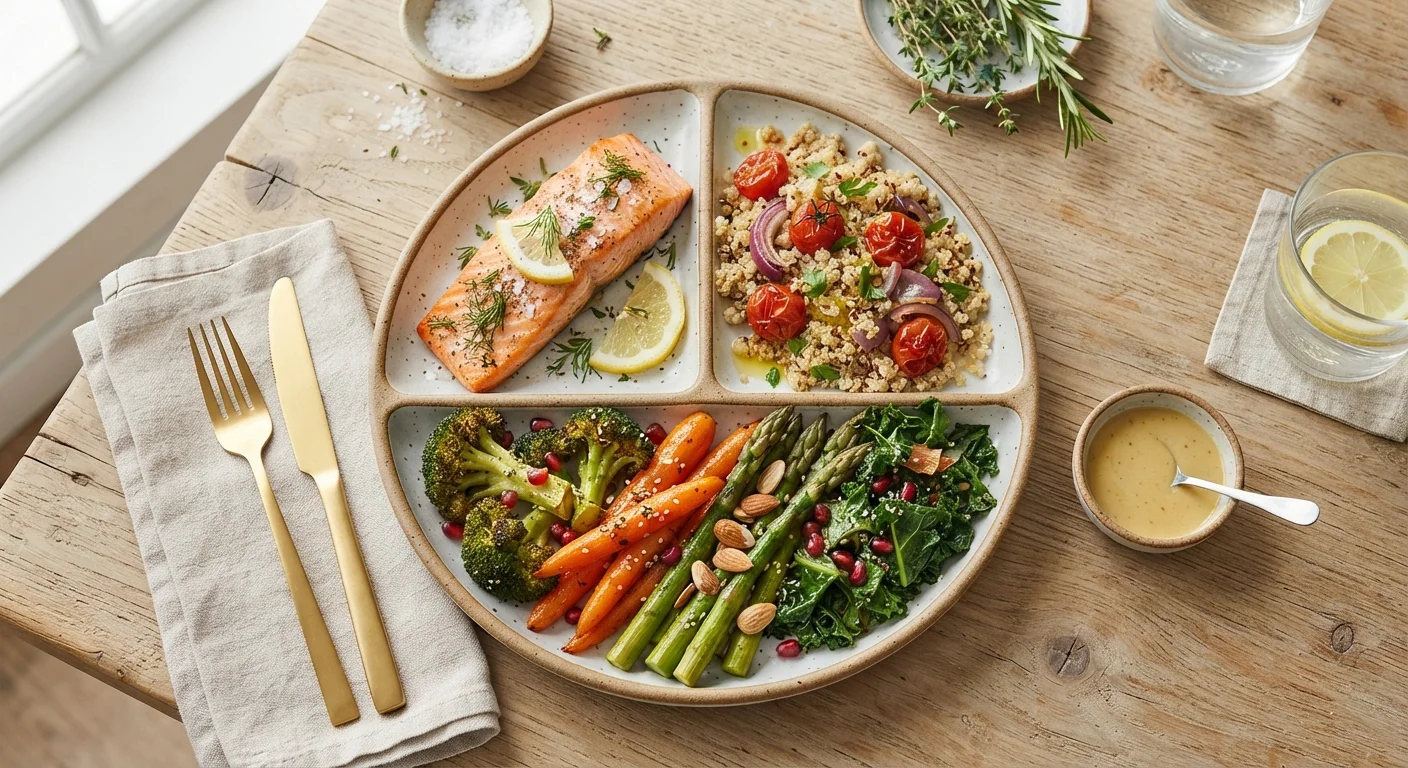
Most national dietary guidelines, including those published by the U.S. Department of Agriculture and the Department of Health and Human Services, translate nutritional science into a visual framework many people recognize as a divided plate. If you're new to these foundations, our introductory nutrition guide covers the core concepts before you dive in here.
The general guidance suggests thinking of your plate in rough proportions rather than precise weights or calories:
- About half the plate: vegetables and fruits, with an emphasis on variety and color
- About one quarter: grains, ideally whole grains such as brown rice, whole-wheat bread, or oats
- About one quarter: protein foods, which can include lean meats, poultry, seafood, eggs, beans, peas, nuts, or soy products
Dairy or fortified alternatives are often suggested alongside the plate as a complement, not a replacement for any section. These proportions are a framework, not a rigid prescription - individual needs vary based on age, activity level, and health status. Always consult a qualified healthcare professional or registered dietitian for guidance tailored to your circumstances.
Proportions Work Across Cuisines
The plate framework isn't tied to any specific cuisine. A stir-fry with mostly vegetables, some tofu, and a small portion of brown rice fits the model just as well as a more traditional Western plate. Apply the proportions to the foods you already enjoy eating - no overhaul required.
Tools and Concepts You'll Use
You don't need specialized equipment to build a balanced plate. The goal is developing a practical mental model you can apply consistently.
Standard dinner plate (9-10 inches)
Serves as a visual guide for dividing food into approximate proportions without measuring.
Measuring cup or kitchen scale
Useful for calibrating portion awareness early on, though not required for everyday use.
Nutrition label reference
Helps identify whole grain content and sodium levels when choosing packaged foods.
What you will need
Step-by-Step: Composing a Balanced Plate
Follow these steps each time you prepare or choose a meal. The process becomes intuitive quickly - most people find they no longer need to think through each step after a few weeks of practice. For ongoing support, explore our guide to long-term balanced eating habits.
Start with vegetables and fruit
Before adding anything else, fill roughly half your plate with vegetables and, to a lesser extent, fruit. Prioritize variety - different colors generally reflect different nutrients. Leafy greens, cruciferous vegetables like broccoli or cauliflower, and brightly colored peppers or carrots are all solid starting points.
Fresh, frozen, and canned vegetables all count. If using canned, look for options with no added salt or drain and rinse before serving to reduce sodium.
Add a grain - and choose whole when possible
Fill about one quarter of your plate with a grain food. Whole grains - those that retain the bran, germ, and endosperm - provide fiber, B vitamins, and minerals that refined grains largely lack. Common choices include brown rice, quinoa, whole-wheat pasta, barley, and oats.
If whole grains are new to you, mixing them with refined grains you already enjoy can ease the transition in taste and texture.
Choose a protein source for the remaining quarter
The final quarter of your plate is reserved for protein foods. Options include lean poultry, fish or seafood (generally suggested two or more times per week in many guidelines), eggs, beans, lentils, tofu, tempeh, nuts, and seeds. Red and processed meats can be included occasionally, though most guidelines suggest limiting them.
Plant-based proteins like legumes and soy products offer the added benefit of fiber and count toward your vegetable intake as well.
Incorporate healthy fats mindfully
Fats don't occupy a dedicated plate section in most visual frameworks, but they still play an important role. Unsaturated fats - found in olive oil, avocado, nuts, and oily fish - support nutrient absorption and contribute to satiety. Use them as cooking mediums, dressings, or toppings rather than as a separate plate portion.
Consider your beverage and accompaniments
Water is the default recommendation alongside most meals. Unsweetened drinks like plain coffee or tea are generally considered neutral. Dairy milk or fortified plant-based alternatives provide calcium and vitamin D for those who include them. Sugary drinks, even 100% fruit juice, are typically suggested as occasional rather than everyday accompaniments.
Common Pitfalls and How to Navigate Them
Even with a clear framework, a few patterns tend to trip people up:
- Treating every meal as a fresh failure
- Balance accumulates across a day or week. A lunch heavy on grains is easily offset by a vegetable-rich dinner. Guilt around individual meals is rarely productive.
- Conflating portion size with plate proportion
- The framework addresses relative amounts on the plate, not absolute serving sizes. A small plate following the proportions is just as valid as a large one. If you find nutrition labels useful context, our article on reading nutrition labels without getting lost in the numbers can help you interpret serving size information practically.
- Assuming plant-based meals can't meet the framework
- Beans, lentils, tofu, and tempeh fill the protein quarter effectively. Whole grains and varied vegetables complete the plate without animal products.
For a reflective look at your current habits, the nutrition check-in questions article offers a practical self-assessment you can revisit periodically.
This article is for general informational and educational purposes only. It is not a substitute for professional medical or nutritional advice, diagnosis, or treatment. Speak with a qualified healthcare provider or registered dietitian before making significant changes to your diet, particularly if you have an existing health condition.