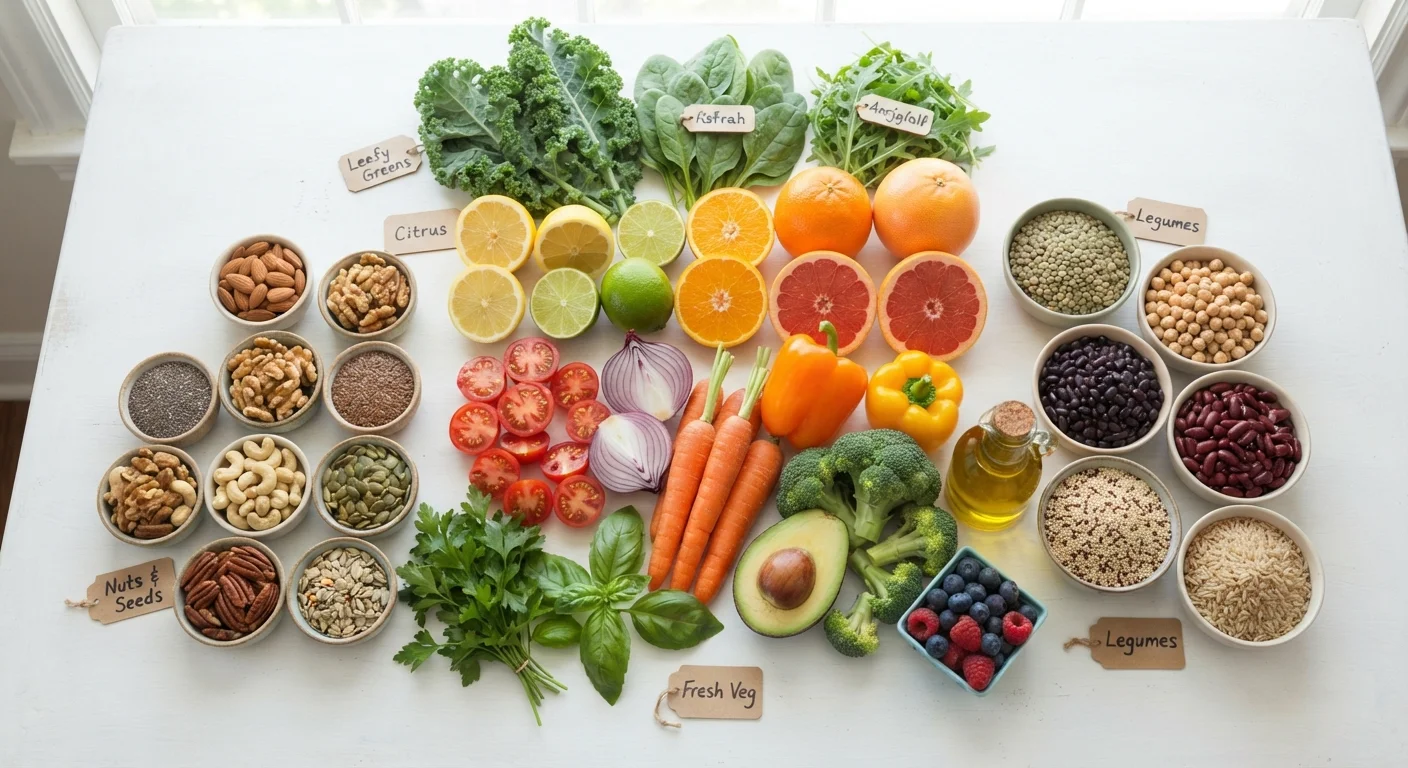
What Are Micronutrients?
Micronutrients are vitamins and minerals your body needs in relatively small amounts - but their impact on health is anything but small. They enable energy production, immune defense, bone strength, nerve signaling, and hundreds of other processes that keep you functioning day to day.
Unlike macronutrients like carbohydrates, proteins, and fats, micronutrients don't supply calories. Instead, they act as essential catalysts - the body can't manufacture most of them in sufficient quantities, so they must come primarily from food. If you're new to thinking about nutrition overall, the foundational nutrition guide is a helpful starting point before diving into specifics.
| Total essential vitamins | 13 (4 fat-soluble, 9 water-soluble) (National Institutes of Health, Office of Dietary Supplements) |
| Total essential minerals | At least 16 recognized as essential (Dietary Reference Intakes, National Academies) |
| Most common deficiency in the US | Vitamin D (widespread across age groups) (CDC National Health and Nutrition Examination Survey) |
| B12 and plant-based diets | Supplementation is typically recommended (Academy of Nutrition and Dietetics) |
| Iron absorption tip | Pair plant sources with vitamin C to improve uptake (Harvard T.H. Chan School of Public Health) |
Key Vitamins and What They Do
Vitamins fall into two broad categories: fat-soluble (A, D, E, K) and water-soluble (C and the B vitamins). Fat-soluble vitamins are stored in body fat and the liver, while water-soluble vitamins aren't stored in large amounts and need regular replenishment through food.
- Vitamin A - Supports vision (especially in low light), immune function, and skin cell turnover. Found in liver, dairy, eggs, and as beta-carotene in orange and leafy green vegetables.
- B Vitamins (B1, B2, B3, B5, B6, B7, B9, B12) - This family of eight supports energy metabolism, red blood cell formation, and nervous system health. Sources include whole grains, legumes, meat, fish, eggs, and dairy. Vitamin B12 is found almost exclusively in animal products, making it a key consideration for those eating plant-based diets.
- Vitamin C - Essential for collagen synthesis, wound healing, and antioxidant defense. Citrus fruits, bell peppers, broccoli, and strawberries are among the richest sources.
- Vitamin D - Regulates calcium absorption and supports bone health and immune function. Produced in the skin through sun exposure; also found in fatty fish and fortified foods.
- Vitamin E - Acts as an antioxidant protecting cells from oxidative damage. Nuts, seeds, and vegetable oils are primary sources.
- Vitamin K - Necessary for blood clotting and bone metabolism. Leafy greens such as kale and spinach are particularly rich sources.
Micronutrients
Vitamins and minerals the body requires in small amounts to support essential functions including metabolism, immunity, and cell growth. They do not provide calories but are critical for health.
Fat-soluble vitamins
Vitamins A, D, E, and K, which dissolve in fat and are stored in the body's fatty tissue and liver. Because they accumulate, excessive intake can become problematic over time.
Water-soluble vitamins
Vitamin C and the eight B vitamins, which dissolve in water and are not stored in significant quantities. They need to be replenished regularly through food.
Trace minerals
Minerals such as iron, zinc, iodine, and selenium that the body needs in very small amounts. Despite the tiny quantities required, they are still essential for normal physiological function.
Antioxidant
A compound that helps neutralize unstable molecules called free radicals, which can damage cells. Several vitamins - including C, E, and selenium - have antioxidant properties.
Hemoglobin
A protein in red blood cells that binds to oxygen and transports it throughout the body. Iron is a core component of hemoglobin, making iron intake essential for oxygen delivery.
Essential Minerals: A Quick Reference
Minerals are inorganic elements that serve structural and regulatory roles throughout the body. They are often grouped as major minerals (needed in larger amounts) and trace minerals (needed in smaller quantities but still essential).
- Calcium - The most abundant mineral in the body; critical for bone and tooth strength, muscle contraction, and nerve function. Dairy, fortified plant milks, tofu, and leafy greens are common sources.
- Iron - Central to hemoglobin, the protein in red blood cells that carries oxygen. Red meat, legumes, tofu, and fortified cereals all provide iron. Pairing plant-based iron sources with vitamin C can improve absorption.
- Magnesium - Involved in over 300 enzymatic reactions, including energy production and muscle relaxation. Found in nuts, seeds, whole grains, and dark chocolate.
- Potassium - Helps regulate fluid balance, nerve signals, and muscle contractions, including the heart. Bananas, potatoes, beans, and yogurt are good sources.
- Zinc - Supports immune function, wound healing, and DNA synthesis. Meat, shellfish, legumes, and seeds are rich sources.
- Iodine - Required for thyroid hormone production. Iodized salt and seafood are the primary dietary sources in the US.
- Selenium - Works with vitamin E as an antioxidant and supports thyroid function. Brazil nuts, seafood, and poultry contain meaningful amounts.
Staying well hydrated also matters for how your body transports and uses these minerals - see our article on the role water plays in nutrition for more.
Getting Enough - and Not Too Much
For most people eating a varied, whole-food diet, significant micronutrient deficiencies are uncommon - though certain gaps do occur, particularly for vitamin D, iron, calcium, and B12 depending on age, diet, and health status. Vulnerable groups including older adults, pregnant individuals, and those following restricted diets may have specific needs that warrant extra attention.
It's equally worth knowing that more isn't always better. Fat-soluble vitamins accumulate in the body, and excessive intake - typically through high-dose supplements rather than food - can cause harm. This is why any decision to supplement should involve a conversation with a qualified healthcare professional who can assess your individual circumstances.
Food first is a reasonable guiding principle: whole foods deliver micronutrients alongside fiber, water, and other compounds that work together in ways isolated supplements don't fully replicate. Curious whether your everyday eating habits cover the basics? The nutrition check-in guide offers a practical, non-prescriptive way to reflect on your patterns.
This article is for general informational and educational purposes only and is not a substitute for professional medical or dietary advice. Consult a qualified healthcare provider before making changes to your diet or starting any supplement regimen.