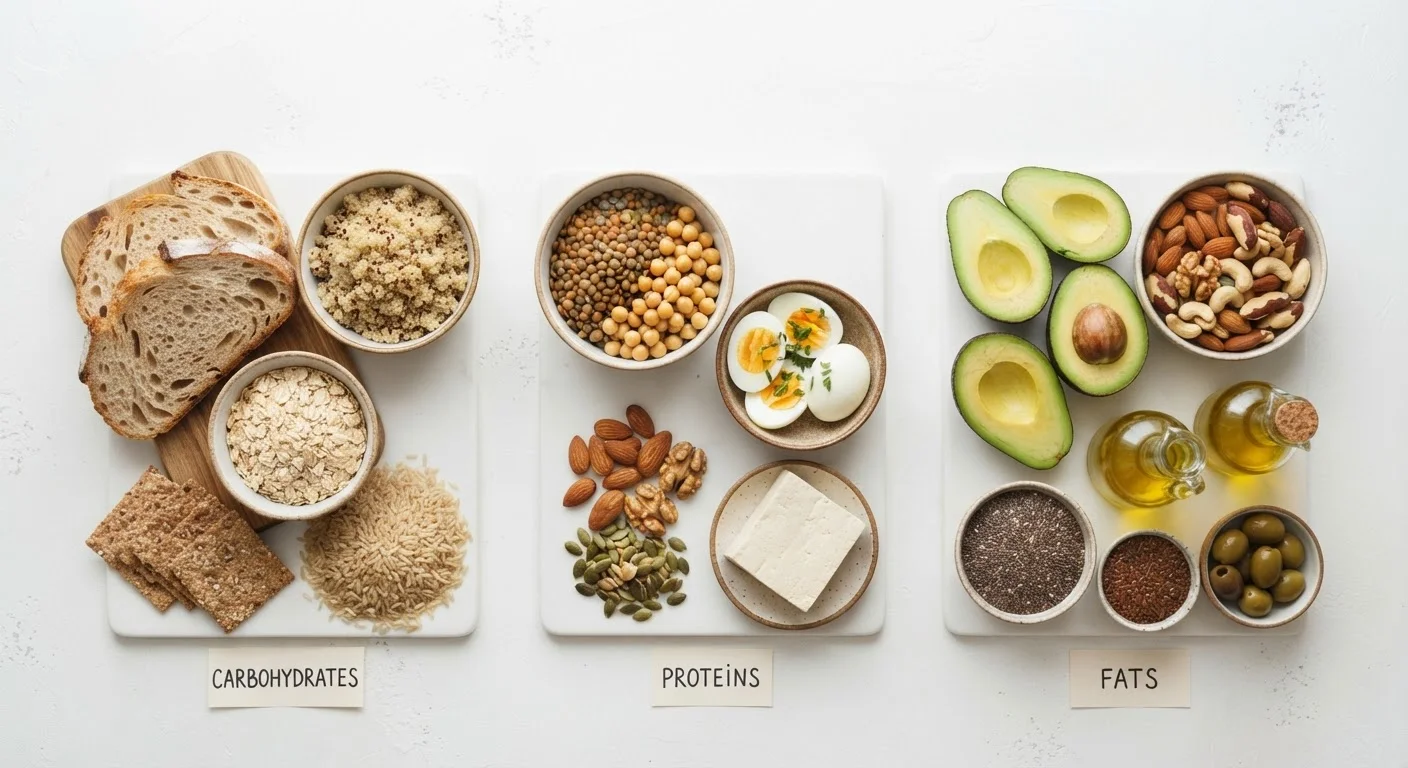
Why Macronutrients Matter
Every time you eat, you're taking in a combination of nutrients that your body breaks down and uses in different ways. Macronutrients are the biggest players in that process. Understanding what each one does - rather than treating them as things to maximize or minimize - can shift the way you think about food entirely.
If you're new to thinking about nutrition, our foundational nutrition guide covers the broader picture of how food and energy work together. Once you have that grounding, the role of each macronutrient becomes much easier to appreciate.
45-65%
Recommended calorie share from carbohydrates
According to the Dietary Guidelines for Americans, carbohydrates should make up roughly 45-65% of total daily calorie intake for most adults.
10-35%
Recommended calorie share from protein
The Dietary Reference Intakes established by the National Academies suggest protein should account for 10-35% of total daily calories for adults.
20-35%
Recommended calorie share from fat
The same Dietary Reference Intakes framework recommends that dietary fat make up 20-35% of total daily calorie intake for adults.
Carbohydrates: Your Body's Preferred Fuel
Carbohydrates are your body's go-to energy source. When you eat carbs - whether from bread, rice, fruit, or vegetables - your digestive system breaks them down into glucose. That glucose enters the bloodstream and is used by your cells for energy, including your brain, which relies heavily on glucose to function.
Not all carbohydrates behave the same way. Simple carbohydrates (like those in table sugar or white bread) are digested quickly, leading to a rapid rise in blood sugar. Complex carbohydrates - found in whole grains, legumes, and most vegetables - digest more slowly thanks to their fiber content, providing steadier energy over time. Fiber, a type of carbohydrate your body can't fully digest, also supports digestive health and helps you feel full longer.
The source of your carbohydrates matters. Our article on whole foods vs. processed foods explores how food processing affects the nutritional quality of carbohydrate-rich foods.
Protein: The Body's Builder and Regulator
Protein is often associated with muscle, but its role goes much further. Every cell in your body contains protein, and this macronutrient is involved in nearly every biological process - from repairing damaged tissue to producing enzymes, hormones, and antibodies that support immune function.
Proteins are made up of smaller units called amino acids. Of the 20 amino acids your body uses, nine are considered essential - meaning your body cannot make them and you must get them from food. Animal-based foods like meat, eggs, and dairy contain all nine essential amino acids and are called complete proteins. Many plant-based sources - such as beans, lentils, and tofu - can also meet protein needs when eaten in variety.
Combining Plant Proteins for Completeness
If you rely primarily on plant-based foods, pairing different protein sources throughout the day - such as rice and beans, or whole grain bread with nut butter - can help ensure you're getting a full range of essential amino acids. You don't need to combine them at every single meal; variety across the day is what matters most.
Beyond muscle maintenance, protein plays a key role in satiety. Protein-rich meals tend to keep you feeling full longer because protein takes more time and energy to digest compared to simple carbohydrates.
Dietary Fat: Essential, Not the Enemy
Fat has spent decades being mischaracterized as something to avoid. In reality, dietary fat is essential for survival. It insulates and protects organs, serves as a long-term energy reserve, and - critically - enables your body to absorb fat-soluble vitamins: A, D, E, and K. Without adequate fat in your diet, these vitamins pass through your system largely unused.
Fat also plays a central role in brain health, cell membrane integrity, and hormone production. Certain fatty acids, such as omega-3s found in fatty fish, walnuts, and flaxseed, are considered essential because the body cannot synthesize them on its own.
The type of fat makes a meaningful difference. Unsaturated fats - found in foods like avocados, olive oil, and nuts - are generally associated with positive health outcomes in research. Trans fats, largely found in some processed foods, are widely considered harmful and have been restricted or removed from many food supplies. For a complete breakdown, see our detailed guide to dietary fats. Common misconceptions about fat - and carbs - are also covered in our look at persistent nutrition myths.
Balance Over Elimination
Popular diets often spotlight one macronutrient as the problem and another as the solution. But nutrition research consistently points away from elimination and toward balance, quality, and dietary pattern as the key factors in long-term health. Your body is designed to use all three macronutrients - cutting out any one of them entirely typically requires careful planning to avoid deficiencies.
Individual needs do vary. Activity level, age, metabolic health, and personal goals all influence how much of each macronutrient is appropriate for a given person. These are exactly the kinds of questions a registered dietitian is well-equipped to help answer.
For a fuller picture of your nutritional needs, macronutrients are only part of the story. Vitamins and minerals work alongside macronutrients to support health in ways that calories alone can't capture.
This article is for general informational purposes only and is not a substitute for professional medical or dietary advice. Consult a qualified healthcare provider or registered dietitian before making significant changes to your diet.