Where the Term Comes From
The phrase "empty calories" became part of mainstream nutrition language largely through public health messaging in the mid-to-late 20th century. Nutrition educators needed a simple way to explain why not all calories are created equal - that eating 200 calories of white sugar and 200 calories of lentils both contribute to your daily energy intake, but they do very different things for your body.
The USDA's Dietary Guidelines for Americans have formally used the concept to draw attention to added sugars and solid fats - two categories that contribute a significant share of calories in the average American diet without delivering proportional nutritional benefit. The intent was never to declare certain foods forbidden, but to give people a mental model for understanding nutrient density.
To understand how this concept appears in practice, reading a nutrition label can help you spot where added sugars and fats show up in packaged foods.
What Empty Calories Actually Describes
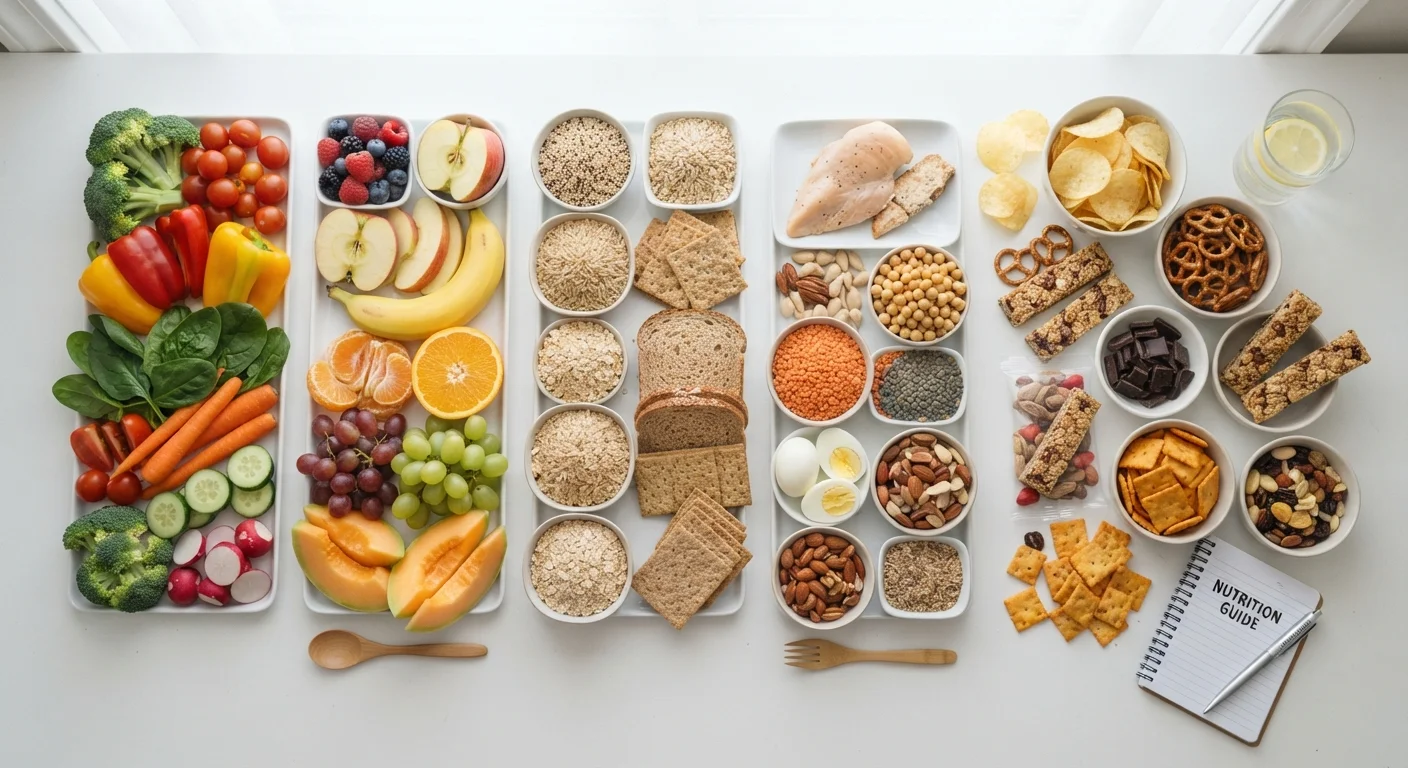
At its core, the term points to a mismatch between caloric contribution and nutritional contribution. Foods most commonly described this way include:
- Sugar-sweetened beverages - sodas, sweetened coffees, energy drinks, and fruit-flavored drinks that are high in added sugar but provide no fiber, protein, or meaningful micronutrients.
- Highly processed snack foods - many commercially made crackers, chips, and cookies that derive most of their calories from refined starch and added fats.
- Candy and confections - primarily sugar and fat, with negligible vitamins or minerals.
- Alcohol - provides roughly 7 calories per gram, more than carbohydrates or protein, but contributes no essential nutrients.
The underlying idea is straightforward: your body has a finite calorie budget each day. Foods that consume a large share of that budget while returning little in the way of vitamins, minerals, fiber, or protein leave less room for foods that support your body's functions.
~57%
Share of US calories from ultra-processed foods
A study published in BMJ Open estimated that ultra-processed foods account for approximately 57% of energy intake in the US diet, based on nationally representative dietary data.
17 tsp
Average daily added sugar intake per American adult
According to estimates cited by the American Heart Association, Americans consume an average of around 17 teaspoons of added sugar per day - well above the recommended limit.
~6%
Recommended daily calorie limit for added sugars (USDA)
The USDA Dietary Guidelines for Americans suggest limiting calories from added sugars to less than 10% of total daily intake; stricter guidance from the American Heart Association points even lower.
Why the Label Has Real Limits
Here's where it gets more complicated. "Empty calories" is a blunt instrument, and applying it too broadly can mislead rather than inform.
Consider white rice. By strict nutrient-density standards, it scores modestly - it's not a powerhouse of fiber or micronutrients. But in many cultures and dietary patterns worldwide, it forms the caloric foundation of diets associated with good health outcomes. Context matters enormously.
Or take honey. Often framed as an "empty calorie" food because it's primarily sugar, it does contain trace antioxidants and other compounds - though not in quantities that dramatically change the picture at typical serving sizes. The point is that food is rarely purely empty or purely dense; it exists on a spectrum.
The label also carries a moral dimension that nutrition researchers have grown more cautious about. Calling food "empty" implies the food - and by extension, the person eating it - is doing something wrong. For people with complicated relationships with food, this kind of language can be counterproductive. Persistent nutrition myths often thrive precisely because they rely on this kind of binary thinking.
A More Useful Frame: Nutrient Density
Rather than sorting foods into "empty" versus "not empty," many nutrition educators now favor thinking in terms of nutrient density - the ratio of beneficial nutrients a food provides relative to its calorie count. This framing is additive rather than subtractive: it encourages asking "what does this food contribute?" rather than "what is this food lacking?"
Practically speaking, building meals around foods that are high in nutrient density - vegetables, legumes, whole grains, lean proteins, fruits - naturally limits the share of your diet that low-nutrient foods occupy, without requiring you to categorically avoid anything.
This doesn't mean every food choice needs to be optimized. Eating is social, cultural, and enjoyable, and those dimensions have real value too. The goal most nutrition professionals point toward is an overall dietary pattern that works for your health, not a checklist of forbidden items.
For a broader look at how nutrition advice can go astray, see where nutrition information goes wrong.
This article is for general informational purposes only and is not a substitute for professional medical or dietary advice. For guidance specific to your health situation, consult a qualified healthcare provider or registered dietitian.