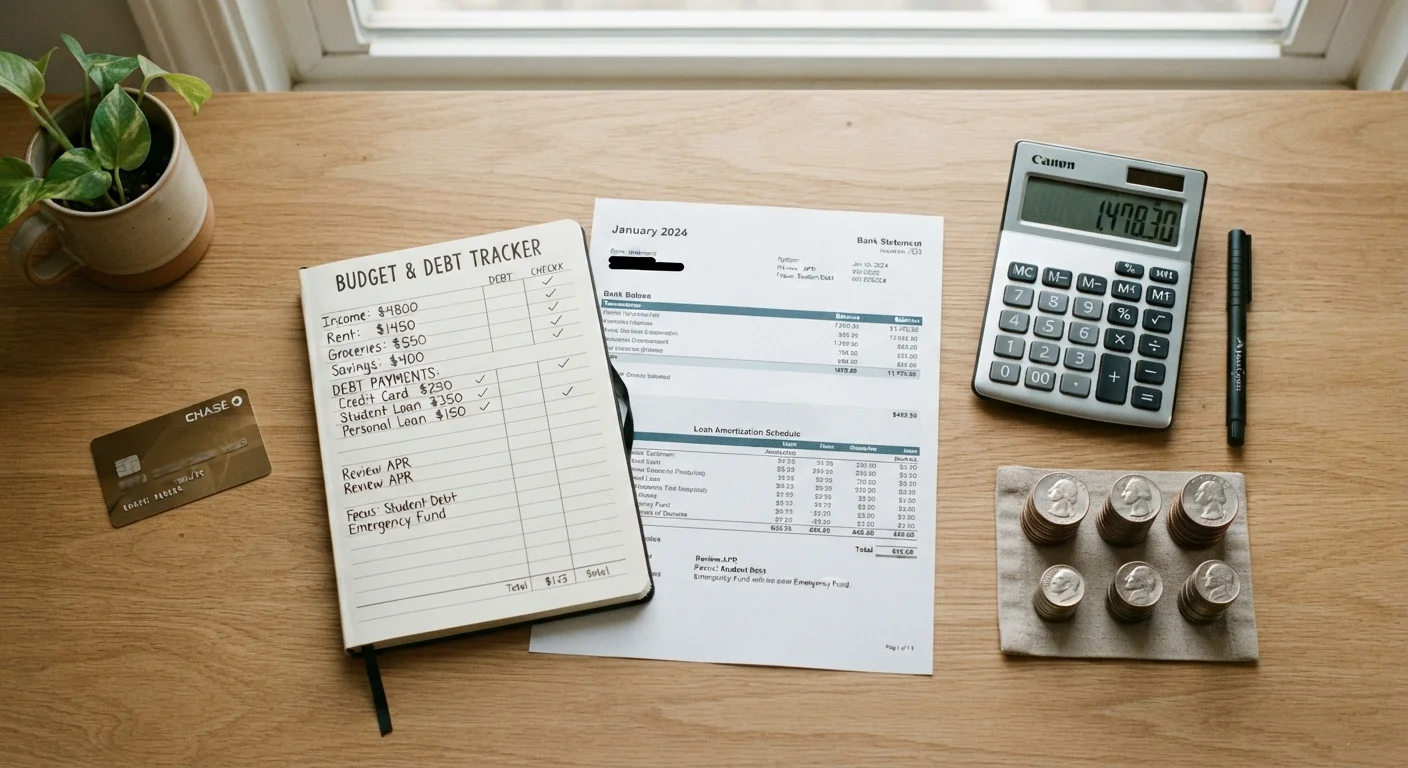
What a Personal Loan for Debt Payoff Actually Means
Using a personal loan to pay off existing debt - often called debt consolidation - means borrowing a lump sum, using it to retire one or more current balances, and then repaying the new loan in fixed monthly installments. The logic is straightforward: if the personal loan carries a lower annual percentage rate (APR) than your existing debts, you can reduce the total interest you pay over time.
This approach is most frequently used to pay down high-interest credit card balances, though it can apply to medical bills or other unsecured obligations. For a broader overview of how different debt types are structured, see our complete guide to personal debt types and terms.
The strategy is neither inherently good nor bad - outcomes depend heavily on the specific loan terms you qualify for and the behavioral changes you make alongside the refinancing.
The Pros: Where a Personal Loan Can Genuinely Help
There are several concrete ways a personal loan can work in your favor when used deliberately.
Potentially lower interest rate than credit cards
Personal loan APRs for qualified borrowers can be significantly below typical credit card rates, reducing total interest paid over the life of the debt.
Fixed repayment schedule with a clear end date
Unlike revolving credit, a personal loan has a defined term - commonly 24 to 60 months - so you know exactly when you'll be debt-free if you make every payment.
Simplifies multiple payments into one
Replacing several creditors with a single monthly payment reduces the chance of missed due dates and simplifies cash-flow planning.
Can improve credit utilization ratio
Paying off revolving credit card balances with an installment loan lowers your credit utilization rate, which is a significant factor in most credit scoring models.
Predictable payment amount every month
Fixed installment loans never change their required payment mid-term, making it easier to budget with confidence compared to variable minimum payments on cards.
20%+
Average credit card APR in the US
According to Federal Reserve data, average credit card interest rates have exceeded 20% APR in recent years, making the rate-reduction case for personal loans significant for qualified borrowers.
30%
Credit utilization's weight in FICO scoring
FICO scoring models weight amounts owed - including utilization of revolving credit - at approximately 30% of a borrower's total score, meaning paying off card balances can meaningfully improve credit standing.
Beyond interest savings, consolidating into a single loan can reduce the mental load of tracking multiple due dates, minimum payments, and creditors. For readers also navigating other types of structured debt, the principles discussed in our article on when debt consolidation makes sense apply directly here.
The Cons: Real Risks to Weigh Before You Borrow
The potential downsides are equally concrete and should not be minimized.
Origination fees reduce your effective savings
Many personal loans charge an origination fee of 1%-8% of the loan amount, which must be factored into your true cost of borrowing before assuming you're saving money.
Requires good credit to get a competitive rate
Borrowers with fair or poor credit may be offered APRs that are no lower - or even higher - than their existing debt, eliminating the primary benefit of consolidation.
Hard credit inquiry temporarily lowers your score
Applying for a personal loan triggers a hard inquiry on your credit report, which typically causes a small, temporary dip in your credit score.
Risk of accumulating new debt on cleared cards
Once credit card balances are paid off with loan funds, those cards become available again - creating a behavioral risk of running balances back up and doubling total debt.
Longer term can mean more total interest paid
A lower monthly payment achieved by extending the loan term can result in paying more total interest over time, even if the rate itself is lower.
Prepayment penalties on some loans
Some lenders charge fees if you pay off the loan early, which can negate the benefit of making extra payments to accelerate your payoff.
One of the most overlooked risks is behavioral: borrowers who consolidate credit card debt but continue charging those cards can end up owing on both the personal loan and refreshed card balances simultaneously - a materially worse position. Our companion piece on paying down credit card debt faster covers the behavioral guardrails that matter most.
This Is Not a Cure - It's a Tool
A personal loan does not eliminate debt; it restructures it. If the underlying spending patterns that created the debt do not change, consolidation provides only temporary relief. Financial educators broadly agree that behavioral change must accompany any debt-restructuring strategy for it to produce lasting results. Consider tracking your monthly cash flow before and after consolidation to confirm the strategy is working as intended.
How to Evaluate Whether It Makes Sense for Your Situation
Before applying, run a basic comparison. Add up the total interest you would pay on your current debts at their current rates over your expected payoff timeline. Then calculate total interest on a personal loan offer - factoring in any origination fees - over its term. If the personal loan total is meaningfully lower, the math favors consolidation.
Key questions to ask yourself:
- Is the loan APR (including fees) lower than my weighted average current interest rate?
- Can I afford the fixed monthly payment without strain?
- Am I prepared to stop adding to the debts I'm paying off?
- Is my income stable enough to commit to this loan term?
If you are also trying to build savings while managing debt, the trade-offs are worth exploring in our piece on paying off debt while saving at the same time.
This article is for general informational purposes only and does not constitute personalized financial advice. Consult a licensed financial professional before making decisions specific to your situation.