What an Award Chart Actually Is
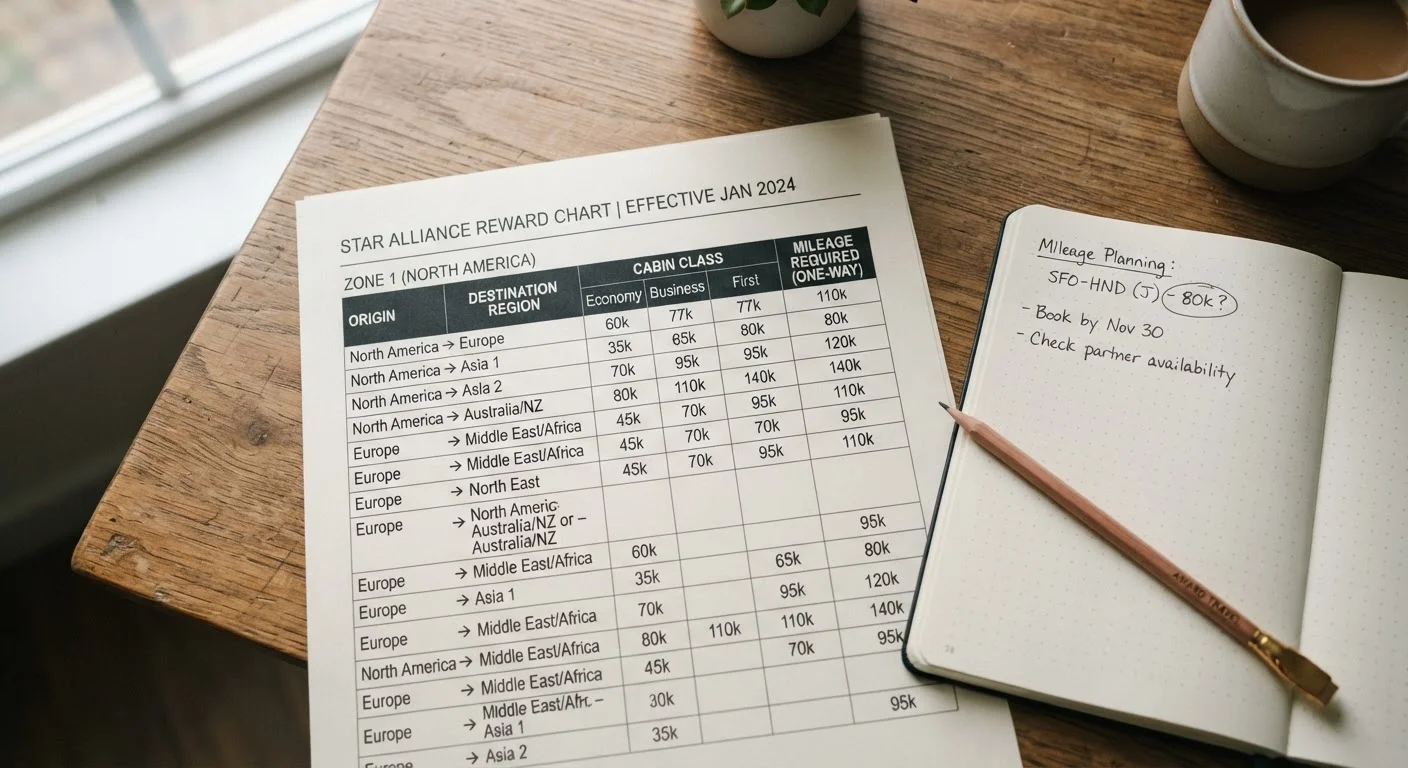
An award chart is a pricing table published by an airline loyalty program that shows how many miles or points a redemption costs based on where you're flying from and to. Unlike a cash fare — which fluctuates daily — a fixed award chart ties the cost to geography, typically dividing the world into zones or regions.
For example, a program might define North America as one zone and Europe as another. A one-way business class ticket between those two zones would cost a fixed number of points regardless of whether you're flying from New York or Miami, to London or Paris. That predictability is what makes award charts useful for planning.
It's worth understanding this foundation before diving into specific programs. For a broader look at how miles and points work together, see this plain-language overview of loyalty programs.
Fixed vs. Dynamic: Know Which You're Reading
Fixed award charts let you plan redemptions months in advance with predictable costs. Dynamic programs adjust point prices with demand, so the same seat may cost far more during peak periods. If you're comparing programs, this distinction affects how far in advance your planning needs to happen.
Not all programs still use fixed award charts. Several major U.S. carriers have shifted to dynamic pricing, where award costs fluctuate with demand — much like cash fares. If a program publishes no chart at all, assume dynamic pricing applies.
Zones, Partners, and the Rules That Shape Every Redemption
Once you understand zones, the next layer is partner awards. Most major programs belong to an alliance — SkyTeam, Star Alliance, or oneworld — and allow members to redeem points on partner airlines using the home program's chart. This is where significant value can be unlocked.
A practical example: Program A may let you book a seat on Partner Airline B's transatlantic flight using Program A's award chart rates, which may be lower than what Partner Airline B charges its own members. Comparing charts across alliance partners is a legitimate and well-documented strategy for reducing point costs on the same physical seat.
Two other terms that frequently appear in award chart rules deserve attention:
- Stopover: A layover of more than 24 hours at a connecting city, intentionally built into the itinerary. Some programs allow one free stopover on round-trip awards, effectively giving you two destinations for the price of one.
- Open-jaw: Flying into one city and out of another (e.g., fly to Rome, return from Barcelona). Many programs price this at the same rate as a standard round-trip, stretching geographic coverage.
These structural rules are what separate a routine redemption from a high-value one. For a deeper breakdown of how program mechanics fit together, Travel Loyalty Programs, Decoded walks through tiers, transfers, and alliance logic in detail.
Partner Award Rules Change Without Notice
Airlines periodically renegotiate partner award agreements, and access to certain partners' inventory can be reduced or eliminated. A redemption that's available today may not be bookable in six months. Build flexibility into your planning and always confirm current partner availability directly with the program.
How to Read a Chart Without Getting Confused
Here's the step-by-step process for translating an award chart into a specific redemption cost:
Identify the program's chart structure
Find the program's official award chart page. Confirm whether it uses a fixed zone-based chart or dynamic pricing. If a chart exists, note whether it's organized by cabin class (economy, business, first) and direction (one-way vs. round-trip).
Locate your origin and destination zones
Find where your departure country or region appears on the chart's row or column axis, then cross-reference it with your destination zone. The intersection cell shows the point cost for that cabin level.
Check partner airline availability
Search for award space on the operating carrier's website or a third-party award search tool to confirm seats exist at the saver (lowest) rate. Award charts show pricing tiers, but availability is controlled by the operating airline.
Apply stopover and open-jaw rules
Review the program's stopover and open-jaw policy in its terms. If stopovers are permitted, identify a hub city on your routing that adds geographic value. Calculate whether the same point cost applies or if an additional surcharge is assessed.
Factor in taxes and carrier surcharges
Before treating your point cost as final, look up the cash fees associated with the itinerary. These typically include government taxes, airport fees, and — on certain carriers — fuel surcharges that can reach several hundred dollars on long-haul routes.
After you've completed these steps, you'll have a realistic point cost in hand. One critical check remains: fees. Award tickets are rarely fully free — taxes, carrier-imposed surcharges, and booking fees vary by program and partner. These can range from negligible to several hundred dollars on certain routes. The Hidden Costs of 'Free' Award Travel covers exactly what to look for before finalizing any redemption.
If you're earlier in the process and still building your points base, Travel Rewards from Scratch is a useful starting point before award chart strategy becomes relevant.
This article is for general informational purposes only. Program rules, award charts, and pricing structures change frequently. Always verify current terms directly with the loyalty program before making redemption decisions.