What Companion Planting Can and Cannot Do
Companion planting - the practice of growing certain plants near one another to mutual benefit - has been part of agriculture for centuries. Some combinations genuinely deliver: reduced pest populations, improved pollinator visits, or better use of space. Others are garden folklore with little supporting evidence.
Before choosing your pairings, it helps to understand the actual mechanisms involved. Proven benefits tend to fall into three categories: physical habitat disruption (making it harder for pests to locate a host plant), chemical deterrence (volatile compounds that repel or confuse insects), and nitrogen fixation (legumes feeding soil bacteria that convert atmospheric nitrogen into plant-available form). If a pairing can't be explained by at least one of these mechanisms, treat its reputation skeptically.
If you're working on a tight gardening budget, focusing on evidence-backed combinations means you're less likely to waste bed space on pairings that don't pan out. See our guide to starting a vegetable garden on a budget for more cost-conscious planning strategies.
Combinations That Have Evidence Behind Them
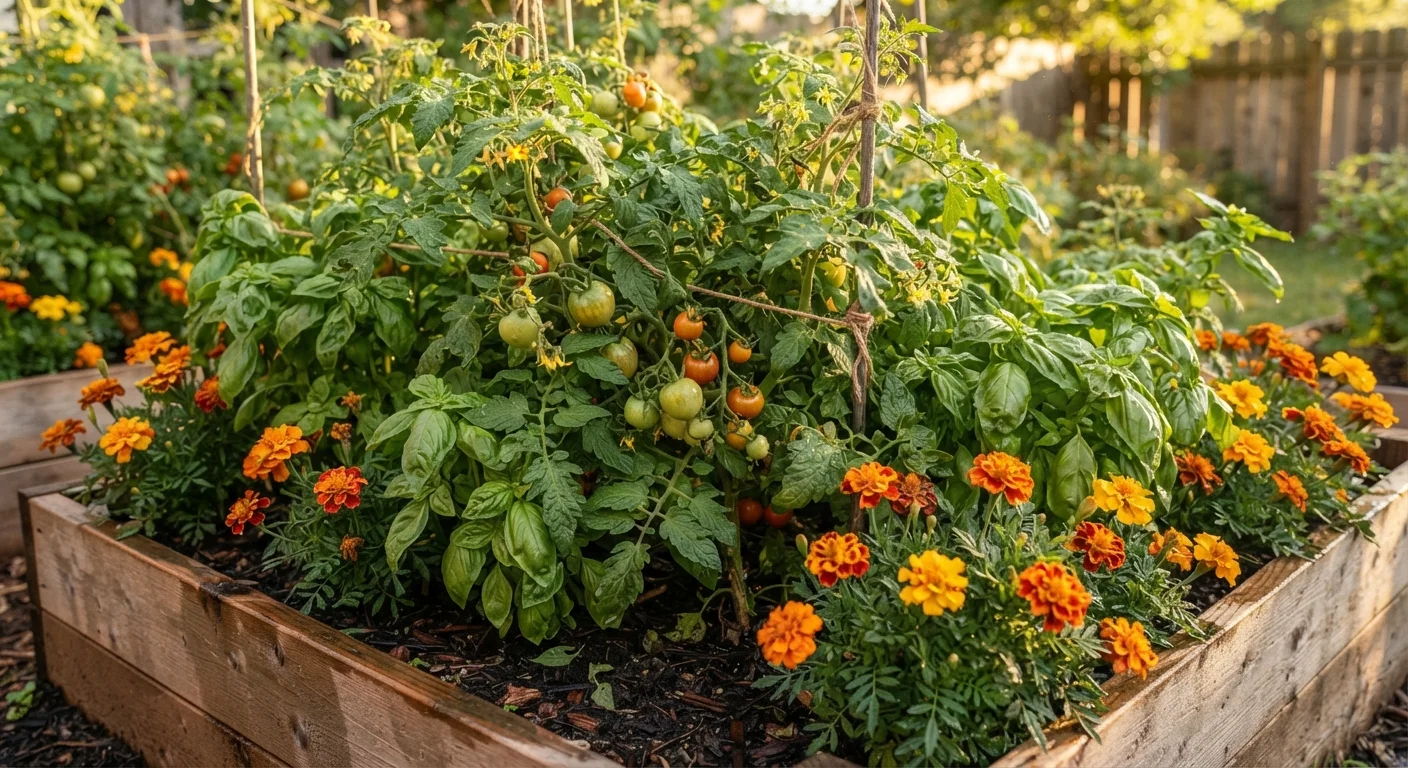
Plant French marigolds (Tagetes patula) near tomatoes and peppers to deter whiteflies and nematodes.
French marigolds emit terpene compounds that have been shown in controlled studies to reduce whitefly populations on neighboring crops. Their roots also produce alpha-terthienyl, a compound toxic to certain soil nematodes. This makes them particularly useful in beds with a history of nematode damage.
Grow the Three Sisters combination - corn, climbing beans, and squash - together in a dedicated bed.
This is among the most thoroughly documented companion combinations. Corn provides a physical trellis for beans; beans fix atmospheric nitrogen and enrich the soil; squash leaves shade the ground, suppressing weeds and retaining moisture. Each plant contributes to the others' growing conditions.
Interplant basil closely with tomatoes to help repel thrips and potentially aphids.
Basil releases volatile compounds - including linalool and eugenol - that some research suggests disrupt the host-finding behavior of common tomato pests. While evidence is still developing, the pairing is low-risk, makes efficient use of space, and yields a culinary harvest alongside your tomatoes.
Use dill or fennel (in a separate bed) to attract beneficial predatory insects such as parasitic wasps and hoverflies.
Umbellifers - plants with flat-topped flower clusters - are well-documented attractors of beneficial insects. Parasitic wasps lay eggs in aphid and caterpillar larvae, providing biological pest control. Hoverfly larvae consume aphids directly. Providing a nectar source for these insects keeps beneficial populations present throughout the season.
Pair legumes (peas, beans) with heavy-feeding brassicas in a rotation-aware planting plan.
Legumes host nitrogen-fixing bacteria in root nodules, adding usable nitrogen to the soil as they grow and especially after their roots decompose. Brassicas - broccoli, kale, cabbage - are nitrogen-hungry crops that benefit directly from this residual fertility. This pairing reduces the need for added fertilizer.
Making Companion Planting Work in Practice
Spacing is frequently overlooked. Companions planted too far apart offer little benefit - most chemical and physical effects require plants to be within a few feet of each other. Equally, crowding reduces airflow and can create conditions favorable to fungal disease, which offsets any pest-deterrent gains.
Timing also matters. Marigolds, for example, need to be established before pest pressure builds - planting them alongside tomatoes on the same day you transplant seedlings is ideal. Waiting until aphids have already arrived reduces their effectiveness considerably.
Finally, companion planting works best alongside other good practices: healthy soil, consistent watering, and appropriate mulching. Our practical guide to mulching garden beds covers how to retain moisture and suppress weeds - both of which affect how well companion plantings establish and thrive.
Start Small and Observe Results
Rather than replanting your entire garden around companion planting principles at once, try one or two pairings in a defined section and compare results against an unmodified area. This lets you evaluate what's actually working in your specific soil, climate, and pest conditions. Keep brief notes on what you planted, when, and what pest or yield differences you noticed - even informal records improve your decisions next season.
Adapting Combinations to Your Setup
Not every combination works equally well in every setup. If you're growing in containers or raised beds, space is at a premium and you'll need to be selective. The basil-tomato pairing translates well to containers since both can share a large pot or sit in adjacent containers on a patio. The Three Sisters, by contrast, needs horizontal room - it's better suited to in-ground or large raised beds.
For gardeners working with raised beds specifically, companion planting can also serve a space-maximization function: beans climbing a corn stalk, for instance, use vertical space that would otherwise go unused. Our raised bed guide discusses how to plan bed dimensions with this kind of layered planting in mind.
Regional climate affects outcomes too. Marigolds perform best in full sun; in shaded northern gardens their pest-deterrent effect may be diminished simply because they're not thriving. Match companions to your actual growing conditions, not just to planting charts designed for ideal conditions.
Companion Planting Isn't a Silver Bullet
Even the best-evidenced combinations reduce pest pressure - they rarely eliminate it entirely. Companion planting is most effective when combined with crop rotation, good sanitation (removing diseased foliage promptly), and soil health practices. Expecting any single planting strategy to solve persistent pest problems without addressing underlying conditions is likely to lead to disappointment.