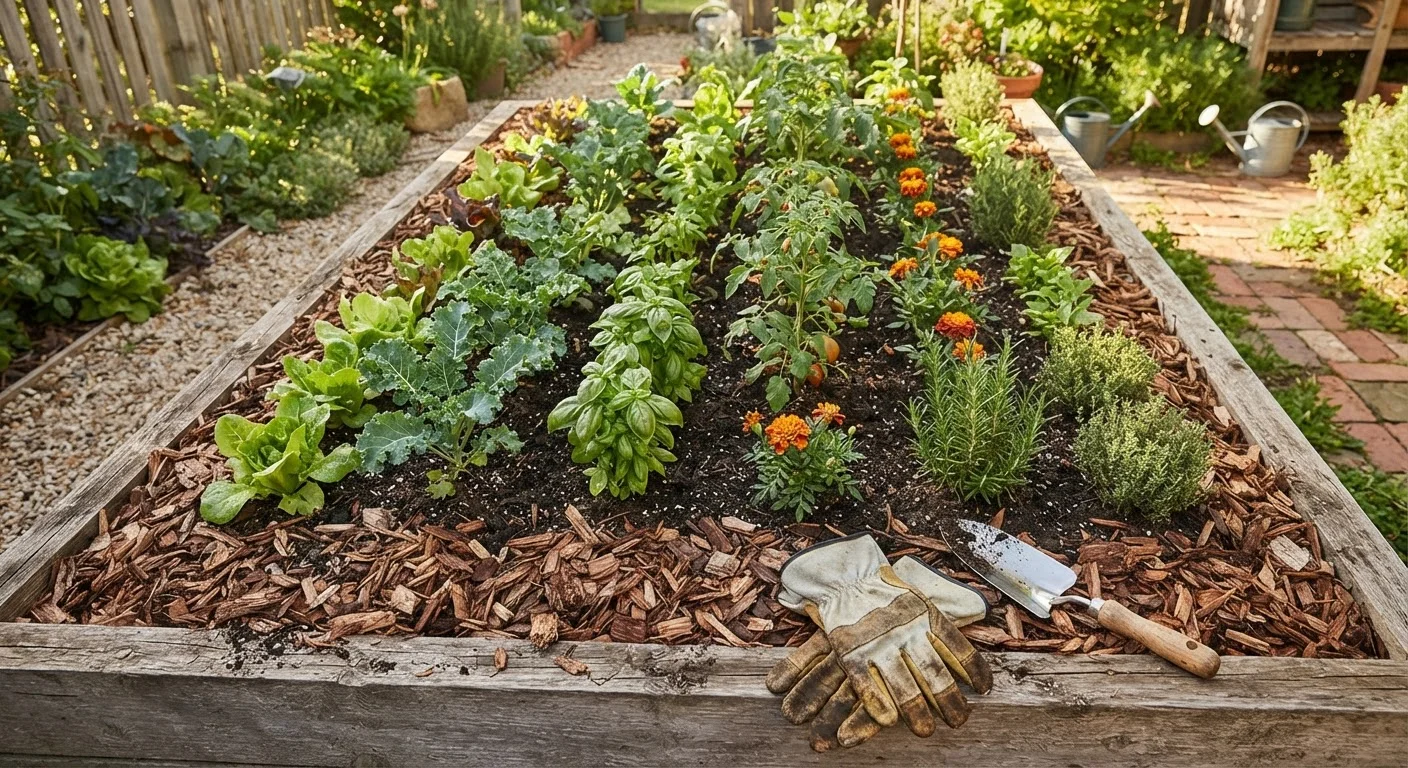
What Mulch Actually Does for Your Soil
Mulch is any material layered over bare soil to protect and improve it. Its benefits are interconnected: a good mulch layer slows water evaporation so you irrigate less, blocks sunlight so weed seeds can't germinate, moderates soil temperature swings, and - when organic - slowly breaks down to feed soil biology. These aren't minor perks. Studies from university extension programs consistently find that a 2-4 inch organic mulch layer can reduce soil moisture loss by 25-50% compared to bare ground, meaning fewer watering sessions per week.
Understanding these mechanisms helps you choose the right material and apply it correctly rather than just copying a neighbor's approach. For context on how your bed type affects mulch decisions, see our guide on container vs. in-ground bed setups.
| Optimal organic mulch depth | 2-4 inches for most garden beds (University cooperative extension guidelines) |
| Moisture retention benefit | Up to 25-50% less evaporation vs. bare soil (University extension research, general consensus) |
| Minimum trunk/stem clearance | 3-6 inches gap around base |
| Weed suppression effectiveness | Most reliable at 3+ inch depth |
| Typical refresh frequency (organic) | Annually or when depth drops below 1 inch |
| Straw bale coverage (at 2-inch depth) | Approximately 50-75 sq ft per bale (General practitioner estimates; varies by bale size) |
Mulch Types: Organic vs. Inorganic at a Glance
The broadest distinction is organic versus inorganic. Organic mulches decompose and improve soil structure over time; inorganic mulches are longer-lasting but contribute nothing to soil nutrition.
Common Organic Options
- Wood chips and shredded bark - long-lasting, ideal for pathways and around shrubs; generally 2-4 years before breakdown.
- Straw - excellent for vegetable beds; decomposes within a single season, adding organic matter. Avoid hay, which carries weed seeds.
- Shredded leaves - a cost-free option if you have deciduous trees. Run a mower over them to prevent matting. Pairs well with strategies in our low-cost soil improvement guide.
- Compost - nutrient-rich but breaks down quickly; works best as a thin bottom layer under a coarser mulch. For a deeper comparison, see compost vs. bagged fertilizer.
- Grass clippings - apply in thin layers (no more than 1 inch) to prevent compaction and odor.
Common Inorganic Options
- Gravel and river rock - suited to arid-climate beds and drought-tolerant plantings; reflects heat, which can stress some plants.
- Landscape fabric - suppresses weeds but degrades over years and can impede soil aeration; generally not recommended for vegetable beds.
- Rubber mulch - extremely durable; does not enrich soil and may leach compounds over time.
Organic mulch
Any mulch material derived from plant or animal matter that decomposes over time, gradually adding nutrients and organic matter to soil. Examples include wood chips, straw, and shredded leaves.
Inorganic mulch
Mulch made from non-decomposing materials such as gravel, rubber, or landscape fabric. Inorganic mulches last longer but do not improve soil nutrition or structure.
Soil temperature
The temperature of the soil at root depth, which influences seed germination, root activity, and microbial health. Mulch insulates soil, slowing both warming in spring and cooling in fall.
Volcano mulching
A common mulching mistake where material is piled high against a tree trunk or plant stem, creating a cone or 'volcano' shape. This traps moisture against bark, promotes rot, and can invite pests.
Weed suppression
Blocking weed seed germination by preventing sunlight from reaching soil. A mulch layer of 3 or more inches is generally needed to suppress most common weed species effectively.
Arborist chips
Wood chips produced as a byproduct of tree pruning or removal by professional tree-service companies. They are often available free or at low cost and make effective coarse mulch for landscape beds.
Application Depth, Timing, and Technique
Getting the depth right is critical. Too little mulch and weeds push through; too much and water can't penetrate and roots may be smothered.
Depth Guidelines by Use Case
| Bed Type | Recommended Depth | Notes |
|---|---|---|
| Vegetable beds | 2-3 inches | Use straw or compost; refresh mid-season |
| Perennial flower beds | 2-3 inches | Pull back slightly in spring as shoots emerge |
| Shrubs and trees | 3-4 inches | Keep mulch 3-6 inches away from trunk base |
| Pathways | 4-6 inches | Wood chips preferred for durability |
Seasonal Timing
Spring: Apply after soil has warmed but before weed seeds germinate - typically when daytime temperatures are consistently above 50°F. Mulching too early traps cold and slows warming.
Summer: Refresh thin spots after heavy rain washes material away. This is also when mulch delivers the most noticeable water-saving benefit. Pair with smart watering habits - see common garden watering myths for context.
Fall: Apply a fresh layer after cleanup to insulate perennial roots through winter. Check our fall garden cleanup checklist for full seasonal guidance.
Application Tips
- Clear existing weeds and water the bed thoroughly before mulching.
- Spread evenly using a rake; avoid volcano mounding around plant stems or tree trunks.
- Leave a small gap (2-3 inches) around plant crowns to allow air circulation and prevent rot.
- Check depth with a ruler - it's easy to under-apply when working by eye.
Cost-Saving Strategies for Budget Gardeners
Mulch doesn't have to be expensive. Many gardeners spend more than necessary by defaulting to bagged products at full price. Consider these alternatives:
- Municipal wood chip programs: Many US municipalities offer free wood chips from tree-trimming operations. Contact your local parks or public works department to ask about pickup or delivery programs.
- Arborist chips: Tree-service companies often need to offload chips quickly and will deliver free or at low cost. Chips may be mixed species and sizes, which is fine for most landscape beds.
- Leaf mulch: Bagging and shredding fall leaves from your own yard costs nothing. Store in a pile over winter and apply in spring as a ready-made mulch and mild soil amendment.
- Straw bales: A single bale typically covers 50-75 square feet at a 2-inch depth and is generally more economical than bagged decorative bark at retail.
For raised bed gardeners, these cost-saving approaches are especially relevant - the enclosed space makes it easy to calculate exactly how much material you need. Our article on raised bed trade-offs covers volume calculations and other overlooked considerations.