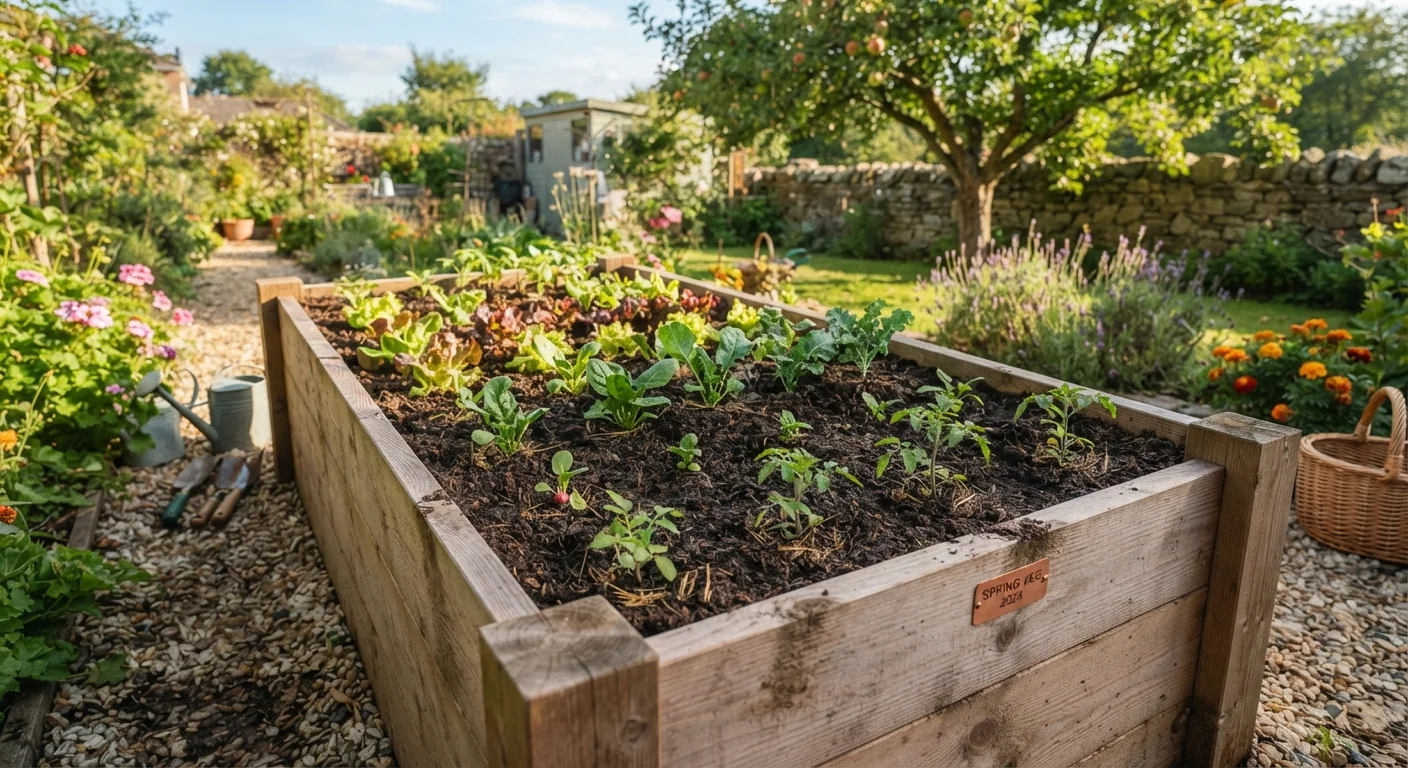
The Real Appeal of Raised Beds
Raised garden beds have earned their popularity for practical reasons. The ability to fill a bed with a custom soil mix - rather than fighting native clay, compaction, or shallow topsoil - is genuinely transformative for many gardeners. You're essentially starting fresh with conditions you control from day one.
Drainage is another honest benefit. Raised beds shed excess moisture far more effectively than flat ground, which protects roots from the rot and oxygen starvation that waterlogged soil causes. If your yard pools after rain, a raised bed solves a real problem in-ground gardening cannot easily fix.
The warmth factor also matters more than beginners expect. Raised bed soil heats up faster in spring, which can allow earlier planting - sometimes two to four weeks ahead of in-ground beds in the same yard. For short-season climates, that's a meaningful advantage. And if you're planning to grow culinary herbs, that early warmth helps Mediterranean varieties like basil establish before summer heat peaks.
Complete control over soil quality from the start
You fill the bed with a custom mix rather than amending native soil, which is especially valuable where ground soil is compacted, nutrient-poor, or contaminated.
Superior drainage protects roots from waterlogging
Elevated beds drain freely, preventing root rot in yards where standing water is a seasonal problem after heavy rain.
Soil warms faster, extending the growing season
Raised bed soil can be ready for planting two to four weeks earlier in spring than in-ground plots in the same location.
Reduced bending improves physical accessibility
A bed built to 18 inches or taller significantly reduces the need to kneel or crouch, making gardening easier for those with mobility or back concerns.
Defined boundaries simplify weed management
Weed pressure is generally lower than in-ground beds because you start with clean soil and can line the bottom to suppress upward growth.
Easier to protect with row covers and netting
The defined frame makes it straightforward to attach hoops, netting, or frost cloth for season extension and pest exclusion.
The Costs Nobody Warns You About
Here's what catches many first-time raised bed builders off guard: filling the bed is often more expensive than building it. A standard 4×8-foot bed that's 12 inches deep requires roughly 32 cubic feet of material. Buying a quality mix of topsoil, compost, and amendments at retail prices can easily run $80-$150 for a single bed - and that's before you've bought lumber, screws, or hardware cloth for the bottom.
Materials for the frame itself vary widely. Untreated pine or cedar boards are common DIY choices, but cedar - which resists rot - costs noticeably more than pine. Composite and metal bed kits bypass the rot issue but come with higher upfront price tags. Budget builders often start with pine, accepting that it may need replacing in five to seven years.
A Note on Treated Lumber Safety
Modern pressure-treated lumber uses copper-based preservatives (CA or ACQ) rather than the arsenic-containing formulas phased out in the early 2000s. While current treatments are widely considered acceptable for raised food gardens by extension horticulture programs, some gardeners prefer to use naturally rot-resistant wood like cedar or line treated lumber with a physical barrier as an added precaution. Check with your local cooperative extension service for the most current regional guidance.
For those comparing options, our guide on container gardening vs. in-ground beds breaks down the full cost and flexibility picture across growing setups.
High upfront cost for materials and soil fill
A single 4×8-foot bed can cost $150-$300 or more to build and fill properly, making raised beds a significant investment compared to in-ground planting.
Soil dries out faster, increasing watering demands
The elevation and drainage that help roots also mean moisture evaporates more quickly, often requiring daily watering in summer without irrigation infrastructure.
Soil volume shrinks and needs annual replenishment
Organic matter breaks down over each growing season, requiring regular top-dressing with compost to maintain fill level and fertility.
Wood frames eventually rot and need replacement
Untreated pine may last only five to seven years before boards weaken; longer-lasting materials like cedar or metal cost more upfront.
Limited scalability on a tight budget
Each additional bed carries its own material and soil costs, making expansion expensive compared to simply expanding an in-ground planting area.
Maintenance Realities Once You're Growing
One of the least-discussed drawbacks of raised beds is how quickly the soil dries out. Because the bed is elevated and well-drained, moisture evaporates faster - especially in summer heat. Expect to water more frequently than you would an in-ground plot, sometimes daily during dry spells. A drip irrigation system or soaker hose can mitigate this, but adds another cost and setup step.
Soil volume also shrinks over time. Organic matter breaks down, compost settles, and after one or two growing seasons you'll notice the fill level dropping several inches. Topping up annually with compost is standard practice - which means an ongoing material cost. Our piece on low-cost soil amendments covers practical ways to replenish fertility without buying bagged products every year.
32 cu ft
Soil needed for a 4×8×12-inch raised bed
A standard 4-by-8-foot bed with 12-inch depth requires approximately 32 cubic feet of growing mix - a volume that surprises most first-time builders.
2-4 weeks
Earlier spring planting vs. in-ground beds
Raised bed soil warms faster in spring, commonly allowing planting two to four weeks ahead of in-ground plots in the same yard and climate zone.
5-7 years
Typical lifespan of untreated pine bed frames
Untreated pine lumber, a common budget choice for raised bed construction, generally lasts five to seven years before rot weakens the boards significantly.
Pests behave differently in raised beds, too. Slugs, cutworms, and burrowing animals are often easier to manage - hardware cloth on the bottom and physical barriers help. But above-ground pests like aphids and beetles find raised beds just as easily as any other planting. Don't expect a pest-free experience just because your soil is elevated.
Who Should - and Shouldn't - Build a Raised Bed
Raised beds make strong sense when your native soil is genuinely problematic: heavily compacted, contaminated (particularly in older urban lots where lead may be present in surface soil), or pure clay with no realistic amendment path. They're also worthwhile if physical accessibility matters - a bed built 18-24 inches tall can eliminate the need to kneel or stoop entirely.
If your native soil is already decent and your yard is large, in-ground growing will almost always be more cost-effective per square foot. You'll put less money into materials, and you won't face the soil shrinkage or watering frequency that raised beds require. For renters or gardeners who move frequently, even containers may offer more flexibility than a fixed raised structure.
The honest summary: raised beds are a tool, not a universal upgrade. For gardeners who start seeds indoors and want to transplant into optimized soil, or those with genuinely difficult growing conditions, they're well worth the investment. For everyone else, weigh the costs carefully before committing.