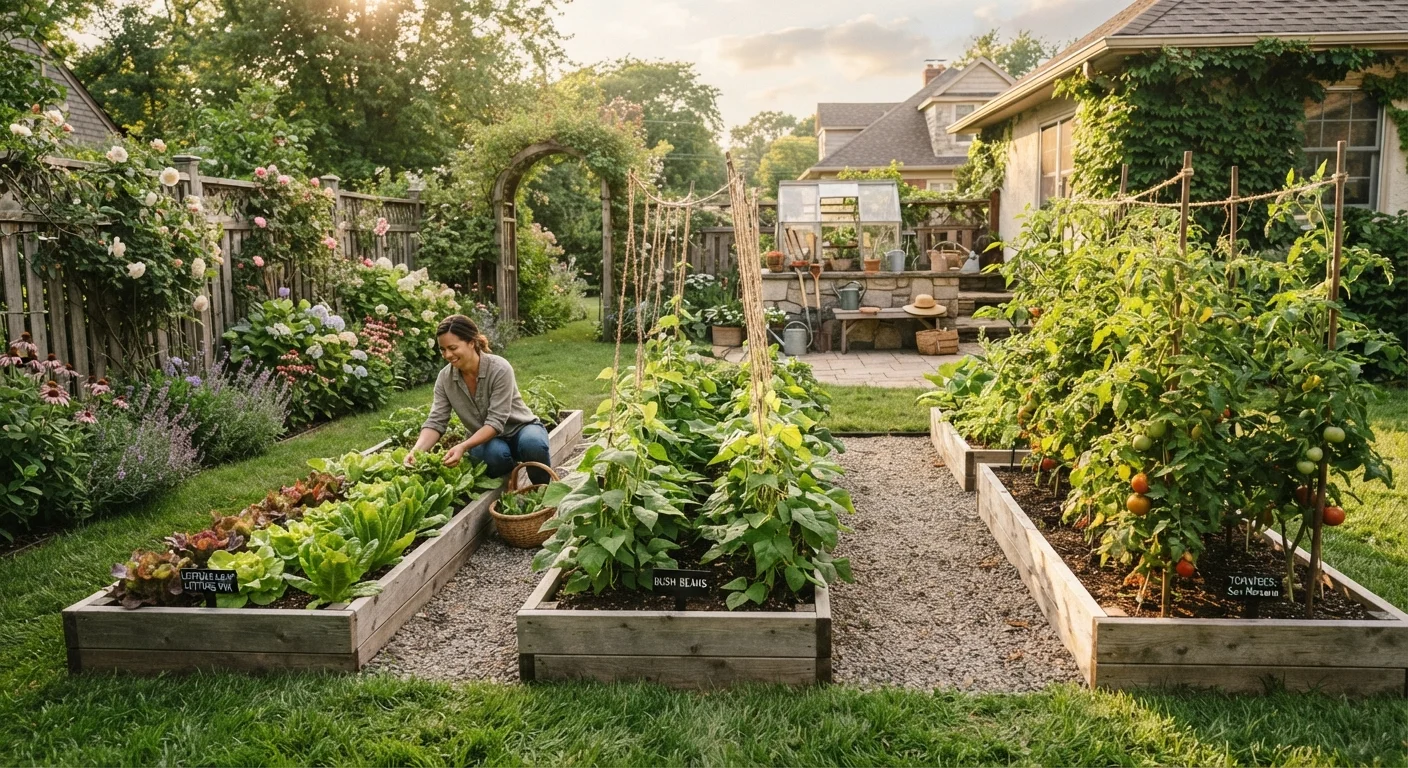
Planning Your Garden on a Budget
The most common budget mistake in vegetable gardening is starting too big. A new 400-square-foot garden requires far more soil, seeds, water, and time than most beginners anticipate - and unused or neglected space wastes money. A 4-by-8-foot patch or even a few containers is enough to learn the basics and still harvest meaningful quantities of food.
Before spending anything, take stock of what you already have: a sunny patch of yard, a few old pots, kitchen compost, or even cardboard boxes you can use as a base layer to smother grass. Map your space roughly, identify which areas receive at least six hours of sunlight per day, and decide whether in-ground beds or containers suit your situation better. Our guide on container versus in-ground gardening walks through the trade-offs in detail.
Write a simple planting list before buying anything. Knowing exactly what you intend to grow prevents impulse purchases of seeds, starts, or gadgets you don't need.
Direct sowing
Planting seeds directly into outdoor garden soil rather than starting them indoors first. Works well for crops that don't tolerate root disturbance or that grow quickly.
Transplant
A young plant started elsewhere - indoors or in a nursery - and moved into the garden once it's large enough and conditions are right.
Compost
Decomposed organic matter such as food scraps and yard waste, used to improve soil fertility and structure. Homemade compost is essentially free.
Last frost date
The approximate calendar date after which freezing temperatures are unlikely in your area. Used to time when it's safe to plant cold-sensitive vegetables outdoors.
Mulch
A layer of material - straw, wood chips, leaves - spread over the soil surface to retain moisture, suppress weeds, and moderate soil temperature.
Cut-and-come-again
A harvesting method for leafy crops where you trim outer leaves rather than pulling the whole plant, allowing it to keep producing throughout the season.
Starting from Seed Instead of Transplants
Purchasing seedling transplants from a nursery is convenient, but seeds are dramatically cheaper - often costing less than a dollar per packet for dozens of plants. This single switch can reduce your startup cost by half or more.
Many vegetables direct-sow easily: beans, peas, carrots, beets, radishes, and squash go straight into the ground after your last frost date. Crops that need a longer growing season - tomatoes, peppers, and eggplant - benefit from being started indoors several weeks early. Our detailed walkthrough on indoor seed starting timing and conditions covers light, heat, and moisture requirements so your seedlings get off to a strong start.
Save Seeds at Season's End
Let a few of your healthiest plants - beans, tomatoes, squash - fully mature and dry out before collecting their seeds. Store seeds in a cool, dry place in labeled paper envelopes. This practice costs nothing and can supply your entire next season's planting for free.
At the end of the season, allow one or two healthy plants to go to seed, then dry and store those seeds in a labeled envelope. You'll have free seeds for next year's garden.
Building and Improving Soil Without Big Expenses
Healthy soil is the foundation of a productive garden, but you don't need expensive bags of amendments to get there. Kitchen scraps - vegetable peels, coffee grounds, and eggshells - combined with fallen leaves and grass clippings break down into rich compost with almost no cost. Even a simple pile in a corner of the yard will produce usable compost within a few months.
If your existing soil is compacted or sandy, layering compost on top and turning it in each season gradually improves its texture and nutrient content. Our article on free and cheap ways to improve garden soil offers specific techniques including leaf mulch, cover cropping, and cardboard sheet mulching to build fertility over time.
Avoid purchasing synthetic fertilizers in your first season. Well-amended soil with compost typically provides enough nutrients for most vegetables without additional inputs.
Choosing What to Grow for Maximum Value
Not every vegetable delivers equal return on your investment. To get the most value per square foot, prioritize crops whose store-bought equivalents are expensive, that produce over a long season, or that you genuinely eat regularly.
- Tomatoes: High-yielding and costly at the grocery store; one plant can produce for months.
- Salad greens and lettuce: Fast-growing, cut-and-come-again, and expensive to buy pre-washed.
- Herbs: Small plants with outsized returns - a single basil or cilantro plant saves what you'd spend on repeated grocery bundles. See our guide to growing herbs at home for variety and care details.
- Zucchini and summer squash: Prolific producers that often outpace what one household can eat.
- Green beans: Easy from seed, productive, and freeze well for extended use.
Pairing plants smartly can also reduce pest pressure and improve yields. Companion planting combinations that have evidence behind them - like tomatoes with basil - are worth including from the start.
Keeping Costs Low as Your Garden Grows
Ongoing expenses are where many gardeners overspend after their first year. Water, fertilizer, pest control products, and new tools can accumulate quickly. A few habits help keep the garden self-sustaining and affordable.
Mulching around plants with straw, wood chips, or shredded leaves reduces watering frequency by retaining soil moisture - and it's often free if you collect yard waste or ask neighbors. Hand-picking pests and using water sprays for aphid control are effective first-response strategies that cost nothing.
Seed swaps - informal exchanges through neighborhood groups, community gardens, or local gardening clubs - let you diversify your garden each year without spending. Dividing perennial herbs like chives and mint is another free way to expand your growing space.
For those interested in how vegetable gardening fits into a broader household budget, our resources on smart spending strategies can help you track and plan your garden investment alongside everyday expenses.
The goal isn't a perfect garden - it's a productive one that doesn't drain your wallet. Start small, build gradually, and let experience guide what you plant more of each season.