Why Soil Quality Is Worth Prioritizing
Healthy soil is the foundation of a productive garden, yet it's one of the most overlooked places gardeners invest time and money. The good news: building better soil doesn't require expensive bagged amendments or specialty fertilizers. Many of the most effective improvements come from materials you already have, generate regularly, or can source for free in your community.
Before reaching for any amendment, it's worth knowing what your soil actually needs. A basic soil test - available inexpensively through many county cooperative extension offices - tells you pH, nutrient levels, and organic matter content. Testing first prevents over-correcting and helps you spend effort where it counts. For a deeper look at how pH shapes plant performance, see our guide on how soil pH controls plant health.
The strategies below are practical, low-cost, and approachable for gardeners at any experience level.
Start a Compost Pile Using Kitchen and Yard Scraps
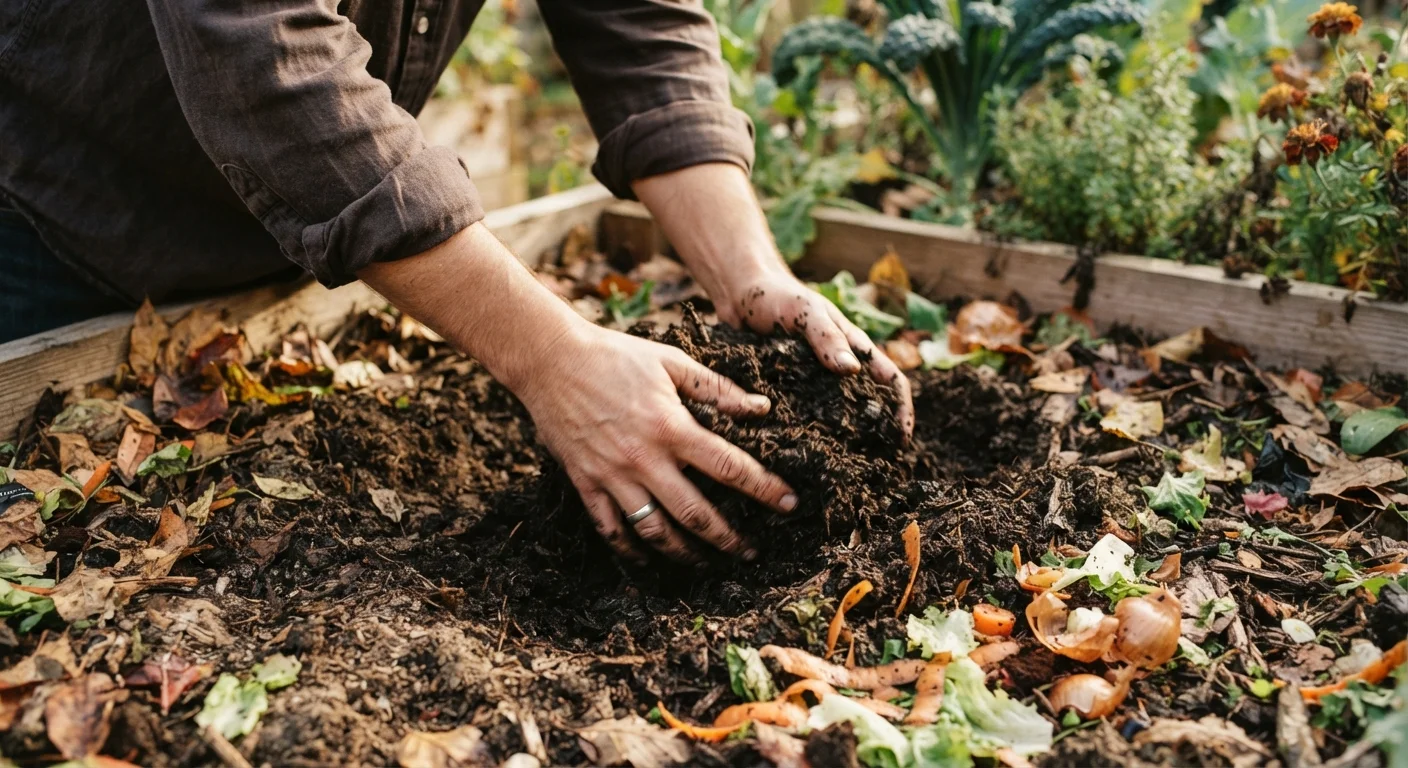
Composting is the most impactful free soil amendment available to any home gardener. Vegetable peels, coffee grounds, eggshells, and fruit scraps from your kitchen - combined with dry leaves, cardboard, or straw from your yard - break down into rich, dark humus that improves soil structure, feeds beneficial microbes, and delivers a broad range of nutrients.
A functional compost pile needs a balance of "greens" (nitrogen-rich materials like food scraps and fresh grass clippings) and "browns" (carbon-rich materials like dried leaves, cardboard, or paper). Aim for roughly 2-3 parts browns to 1 part greens by volume. Turn the pile every week or two to add oxygen and speed decomposition. Even a basic pile can produce usable compost within two to three months in warm weather.
No yard space? A small enclosed bin works on a patio or balcony and still handles most kitchen scraps effectively.
Composting kitchen scraps and yard waste costs nothing and builds the richest soil amendment you can make.
Mulch Beds with Fallen Leaves Instead of Buying Bags
Fallen leaves are one of the most underused free resources in home gardening. Rather than bagging them for the curb, run them over with a lawn mower to shred them into smaller pieces, then spread a 2-3 inch layer over garden beds. Shredded leaves break down faster than whole ones and won't mat together and block water penetration.
As leaf mulch decomposes, it feeds earthworms, builds organic matter in the top layer of soil, and gradually improves drainage in clay-heavy beds or water retention in sandy ones. It also suppresses weeds and moderates soil temperature through seasonal shifts.
Neighbors who don't garden are often happy to leave bags of raked leaves at the curb for you to collect - effectively giving you free mulch in bulk. For a broader look at mulching strategy and timing, see our practical field guide to mulching garden beds.
Shredded fallen leaves mulch, feed, and protect beds through decomposition - at zero cost.
Use Grass Clippings as a Nitrogen-Rich Soil Booster
Fresh grass clippings are roughly 4% nitrogen by dry weight, making them a meaningful free fertilizer when used correctly. The key is to apply them in thin layers - no more than an inch at a time - and avoid clippings from lawns treated with herbicides or pesticides, which can harm garden plants.
Thin layers mixed lightly into the top inch of soil will break down quickly without heating up or forming a slimy barrier. Alternatively, add clippings to your compost pile as a "green" material to accelerate decomposition. Over time, incorporating them into beds improves organic matter content and supports the microbial life that makes nutrients accessible to plant roots.
If your lawn generates more clippings than you can use, they can be dried briefly in the sun before applying to reduce their tendency to clump.
Grass clippings applied in thin layers deliver free nitrogen and build organic matter steadily over time.
Plant Cover Crops to Rebuild Soil Between Growing Seasons
Cover crops - also called green manures - are plants grown specifically to improve the soil rather than for harvest. Common choices include winter rye, crimson clover, buckwheat, and Austrian winter peas. Seed costs are low, often just a few dollars for enough to cover a large bed, and the benefits can be substantial.
Leguminous cover crops like clover and field peas fix atmospheric nitrogen into the soil through root bacteria, reducing the need for added fertilizer the following season. All cover crops add organic matter when tilled under before flowering, break up compacted soil with their root systems, and help prevent erosion and nutrient runoff in bare beds over winter.
Sow cover crops in empty beds after your main harvest wraps up, then cut and turn them into the soil a few weeks before replanting in spring. This pairs well with the seasonal work described in our fall garden cleanup checklist.
Legume cover crops fix free nitrogen into your soil, reducing next season's fertilizer needs significantly.
Lay Cardboard to Smother Weeds and Feed Soil Organisms
Plain cardboard - the kind from moving boxes or appliance packaging - serves double duty in the garden. Laid directly on the soil surface, it blocks light and smothers existing weeds without chemicals. Over several months, it breaks down completely, adding carbon to the soil and feeding earthworms and other decomposers that improve soil tilth.
Remove any tape or staples first, wet the cardboard so it lies flat, and cover it with several inches of compost, wood chips, or shredded leaves to hold it in place and accelerate breakdown. This "sheet mulching" or "lasagna gardening" method is particularly effective for turning grass or weed-covered ground into a new planting bed without digging.
Cardboard is available free from most grocery stores, furniture retailers, and moving companies. Call ahead and ask - most are happy to set boxes aside rather than recycle them.
Sheet mulching with free cardboard smothers weeds and quietly feeds soil microbes as it breaks down.
Source Free Wood Chips from Local Tree Services
Arborists and municipal tree crews generate enormous quantities of chipped wood, and many are willing to deliver truckloads free of charge simply to avoid hauling chips to a disposal site. A quick search for local tree services or a check of community platforms that connect residents with free loads can yield more chips than most gardeners need in a season.
Fresh wood chips are best used as a surface mulch in pathways or around perennial beds and trees - not mixed directly into vegetable planting areas, where they can temporarily tie up soil nitrogen as they decompose. Used as a 3-4 inch top dressing, they retain moisture, regulate temperature, and gradually add organic matter as they break down over a year or two.
This approach also supports the low-cost curb appeal improvements that mulched beds contribute to a home's exterior appearance.
Free wood chips from local tree services make excellent mulch and slowly enrich soil as they decompose.
Making the Most of What You Already Have
Improving your soil is largely a practice of paying attention to what's around you. Leaves from your yard, scraps from your kitchen, clippings from your lawn - these materials are constantly being generated and thrown away when they could be cycling back into the earth beneath your plants.
Layer Amendments for Compounding Results
Rather than applying a single amendment and waiting, try layering complementary materials: cardboard on the bottom, compost in the middle, and a leaf or wood chip mulch on top. This mimics how forest floors naturally build fertile soil over time. Each layer serves a distinct purpose and the combination typically outperforms any single material applied alone.
If you're deciding between growing setups, soil improvement strategy often changes depending on whether you're working with containers or in-ground beds. Our article on container gardening vs. in-ground beds walks through the trade-offs. And if you're comparing what compost actually does versus store-bought fertilizer, this breakdown of compost vs. bagged fertilizer is a useful companion read.
Consistency matters more than any single intervention. Layering organic material into your beds season after season builds the microbial activity, water retention, and loose structure that plants thrive in - without the ongoing expense of purchased products.