The Hidden Lever in Your Garden
Gardeners often pour money into fertilizer, water diligently, and still end up with yellowing leaves or stunted growth. The culprit is frequently something they never checked: soil pH. Before nutrients can do anything useful for a plant, they need to actually be available in the soil solution - and pH is what controls that availability.
Think of pH as a gatekeeper. Even if your soil contains plenty of iron, phosphorus, or manganese, the wrong pH locks those nutrients away in forms plant roots cannot absorb. You could be fertilizing faithfully while your plants starve. Understanding pH doesn't require a chemistry degree - but it does require you to take it seriously as a foundational factor, not an afterthought.
6.0-7.0
Optimal pH range for most vegetables
According to USDA soil science guidelines, this range maximizes availability of the broadest set of essential nutrients for common garden crops.
~$15
Typical cost of a cooperative extension soil test
Many state land-grant university extension programs offer mail-in soil tests at low cost, often including amendment recommendations alongside pH results.
13 essential
Soil-sourced nutrients affected by pH
Of the 17 nutrients plants require for growth, 13 are taken up from soil - and the availability of each one is directly influenced by soil pH levels.
How pH Affects Nutrient Availability
The relationship between pH and nutrients is specific and well-documented. In highly acidic soils (below pH 5.5), phosphorus becomes bound to aluminum and iron compounds and essentially disappears from the plant's reach. At the same time, manganese and aluminum become more soluble - sometimes reaching toxic levels that damage roots.
In alkaline soils (above pH 7.5), iron, manganese, zinc, and boron become increasingly unavailable, even when present in adequate quantities. This is why plants growing in high-pH soil often show yellowing between leaf veins - a classic sign of iron or manganese deficiency called chlorosis - despite soil that looks fertile and receives regular feeding.
Nitrogen, potassium, and sulfur are generally most available in the 6.0-7.5 range. Phosphorus peaks around 6.5. This is precisely why that slightly acidic sweet spot works well for so many common garden plants - it keeps the broadest range of nutrients in usable form simultaneously. For more on feeding your soil affordably, see how compost compares to bagged fertilizer.
“Soil pH is arguably the single most important soil chemical property that gardeners and farmers manage - it affects almost every aspect of soil chemistry and biology.”
— Dr. Quirine Ketterings, Professor of Nutrient Management, Cornell University
Testing Your Soil: The Essential First Step
No pH management strategy makes sense without knowing your starting point. Guessing leads to over-correcting, wasted money on amendments, and potentially making conditions worse. Fortunately, soil testing is one of the least expensive things you can do for your garden.
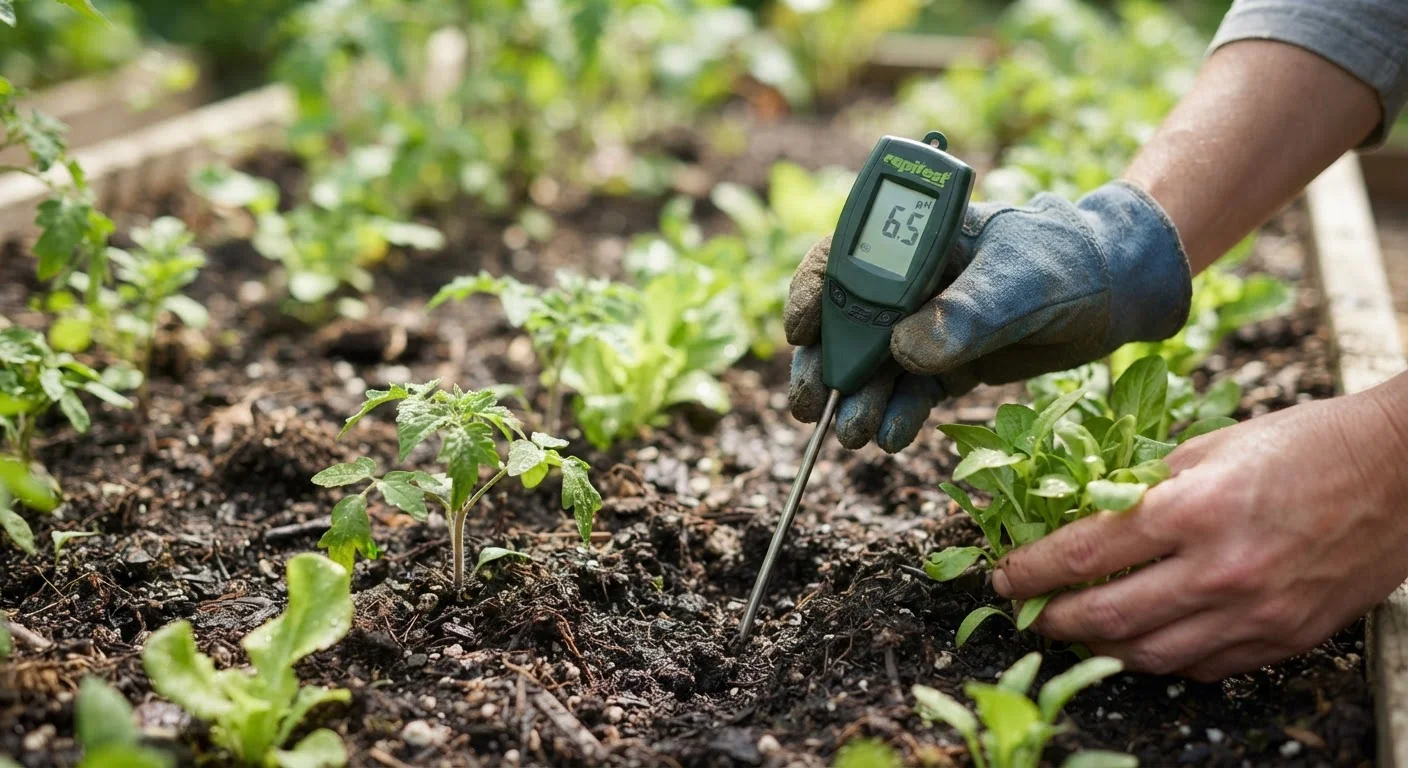
Your state's cooperative extension service typically offers mail-in soil tests for a modest fee - often under $20 - and returns results with specific amendment recommendations based on your crop goals. Home test strips and handheld pH meters cost less but sacrifice some accuracy; they're useful for quick spot-checks between formal tests.
When collecting samples, take small amounts from several spots across the bed and mix them together for a composite reading. This accounts for variation across the planting area. Avoid sampling right after fertilizing or heavy rain, which can temporarily skew readings.
Adjusting pH: What Works and What to Expect
Once you know your soil's pH, targeted correction is straightforward - though not instant. The two most common adjustments are raising pH in overly acidic soil and lowering it in overly alkaline soil.
To raise pH (make less acidic): Ground agricultural limestone is the standard amendment. Dolomitic lime adds magnesium alongside calcium, which can be beneficial if your soil is also magnesium-deficient. The rate depends on soil type and how far you need to shift - sandy soils respond faster than clay. Work lime into the top 6 inches ideally in fall, giving it a full season to react.
To lower pH (make more acidic): Elemental sulfur is the most reliable option, working as soil bacteria convert it over weeks to months. Organic matter - compost, leaf mold, and aged wood chips - contributes mild acidification over time and improves overall soil structure. Regular incorporation of organic matter, as described in our guide to low-cost soil amendments, also helps buffer pH naturally.
Patience is essential. pH adjustments rarely show full results in one season. Retest after six to twelve months before adding more amendments - overcorrection is a real risk and can introduce new deficiency problems.
Plants That Prefer Extremes - and What to Do About Them
Most garden plants are flexible within the 6.0-7.0 range, but some species are genuinely particular. Blueberries, azaleas, rhododendrons, and camellias prefer pH between 4.5 and 5.5. Trying to grow blueberries in neutral soil almost always disappoints - the iron and manganese they depend on simply aren't accessible at higher pH.
If your landscape soil is naturally alkaline, growing acid-loving plants in raised beds or containers is often more practical than trying to acidify the ground. Container gardening gives you direct control over the growing medium from the start - a major advantage when plants have strong pH preferences. For a full comparison of container versus in-ground approaches, see container gardening vs. in-ground beds.
On the other end, asparagus and brassicas tolerate mildly alkaline conditions well - a useful consideration if your native soil trends above 7.0 and you want to garden with minimal amendment effort.
pH and the Broader Soil Ecosystem
Soil pH doesn't just affect nutrients - it shapes the microbial community living in your soil. Bacteria that break down organic matter and make nitrogen available tend to thrive in near-neutral conditions. Fungi, which support nutrient exchange with plant roots, can tolerate a wider range but are still influenced by extremes.
This means a well-balanced pH indirectly supports decomposition, organic matter cycling, and the overall biological health of your garden bed. Pairing pH management with practices like mulching - which moderates temperature, retains moisture, and adds slow organic material - creates a more stable environment overall. Our practical guide to mulching garden beds covers how to layer mulch effectively for these benefits.
For budget-conscious gardeners, the takeaway is clear: a one-time soil test and targeted, inexpensive amendments can unlock far more plant performance than additional fertilizer ever could on its own. Address pH first, then feed.