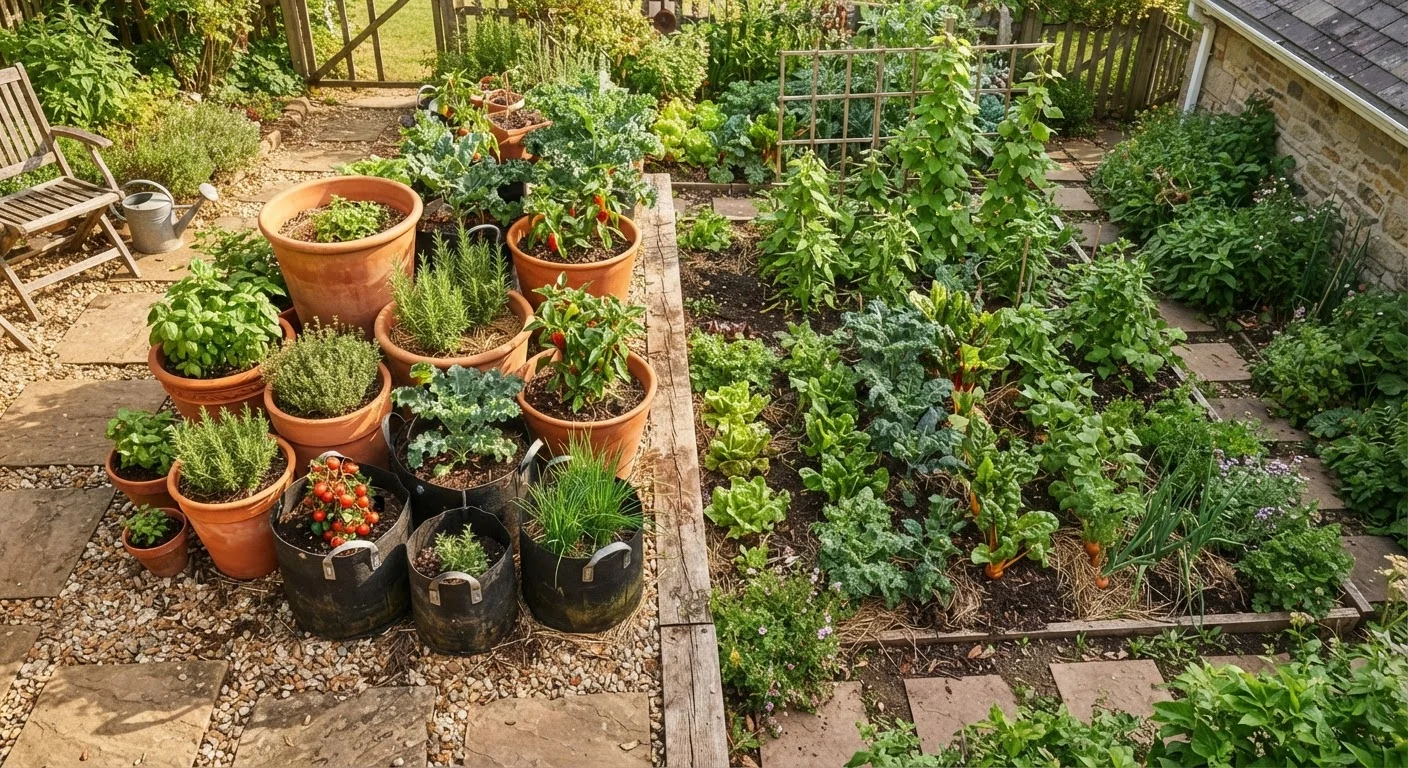
Understanding the Core Difference
Container gardening means growing plants in pots, planters, grow bags, or other portable vessels. In-ground gardening means planting directly into your yard's native soil, sometimes after amending it. Both methods can produce herbs, vegetables, flowers, and fruit - but the conditions, costs, and labor they require differ in meaningful ways.
If you're also weighing a third option, our article on raised garden beds covers how that middle-ground approach compares in practice. For this comparison, we'll focus on the two most common setups and what actually separates them for budget-conscious gardeners.
| Container Gardening | In-Ground Beds | |
|---|---|---|
| Startup Cost | Moderate-High ($15-$80+ per container) | Low (soil amendment only, often under $30) |
| Ongoing Cost | Higher (potting mix, frequent feeding) | Lower (soil improves over time) |
| Space Required | Minimal - patio or balcony works | Requires yard or ground access |
| Soil Control | Full control over mix | Dependent on native soil quality |
| Watering Frequency | High - dries out quickly | Moderate - retains moisture longer |
| Plant Variety Range | Best for compact or shallow-rooted plants | Supports wide range including deep-rooted crops |
| Portability | Moveable - follow sun, overwinter indoors | Fixed location |
| Best For | Renters, small spaces, poor native soil | Homeowners with yard space, long-term growers |
Startup Costs and Ongoing Expenses
In-ground beds typically cost less to establish. If your native soil is reasonably healthy, you may only need a bag or two of compost to get started - often under $20 for a modest plot. See our guide to low-cost soil improvements for ways to amend without overspending.
Containers have a steeper entry point. A single large pot can run $15-$80, and you'll need quality potting mix (not garden soil, which compacts in containers) at roughly $8-$15 per bag. However, you control exactly what goes in each vessel, which matters if your yard soil is clay-heavy, compacted, or has a history of chemical use.
Over several seasons, in-ground beds generally win on cost - the soil improves with each amendment cycle and you're not replacing potting mix. Containers, on the other hand, often need fresh mix every one to two years to maintain drainage and nutrient levels. For tips on feeding both systems economically, see our comparison of compost vs. bagged fertilizer.
Start Small to Control Costs
If you're new to either method, beginning with two or three containers or a single 4x4-foot in-ground plot keeps initial spending low. This scale lets you observe how your specific soil, light, and watering habits perform before committing to a larger setup. Expand only after a season or two of experience.
Flexibility, Space, and Plant Suitability
Containers shine when space is tight or sunlight is uneven. You can move pots to follow the sun, bring tender plants indoors before frost, and reconfigure your layout as the season changes. This makes them well-suited to patios, balconies, and small yards. Compact herbs, lettuce, peppers, and dwarf tomato varieties generally perform well in containers. For detailed variety guidance, our herb growing guide walks through what thrives in each setting.
In-ground beds accommodate a wider range of plants, particularly deep-rooted crops like squash, corn, and large tomato varieties that struggle when root-bound. They also support companion planting strategies more naturally, since plants share the same soil ecosystem. For gardeners starting seeds indoors before transplanting, see our seed starting guide for timing and transplant tips that apply to both setups.
Watering, Maintenance, and Seasonal Care
Containers dry out faster than in-ground soil - sometimes requiring daily watering in summer heat. Smaller pots are especially unforgiving. Nutrients also leach out more quickly with each watering, so container plants typically need feeding every two to three weeks during the growing season.
In-ground beds hold moisture longer and benefit from organic matter breaking down naturally over time. They do require weeding - often more than containers - and seasonal prep work. Our fall garden cleanup checklist covers how to close out either system and set up for a stronger following season.
If you have mobility limitations or prefer lower-impact gardening, containers at table height or on wheeled platforms can reduce bending and kneeling. In-ground beds are harder to adapt for accessibility without significant structural changes.
Making the Call for Your Situation
Start with two honest questions: Do you own the space you're gardening? And what does the native soil look like? Renters or those with truly unusable soil (rocky, heavily compacted, or with contamination concerns) will find containers the more practical path. Homeowners with average to decent yard soil will almost always find in-ground gardening more cost-effective at scale.
A hybrid approach works well for many gardeners: use containers for herbs and compact crops where access and flexibility matter, and reserve in-ground space for high-yield vegetables or perennials that benefit from deeper root runs. Both methods reward thoughtful soil management - and neither requires expensive products to succeed when approached with patience and planning. For broader ideas on making smart use of outdoor space, our home organization hub includes strategies for layout and storage that complement either growing setup.