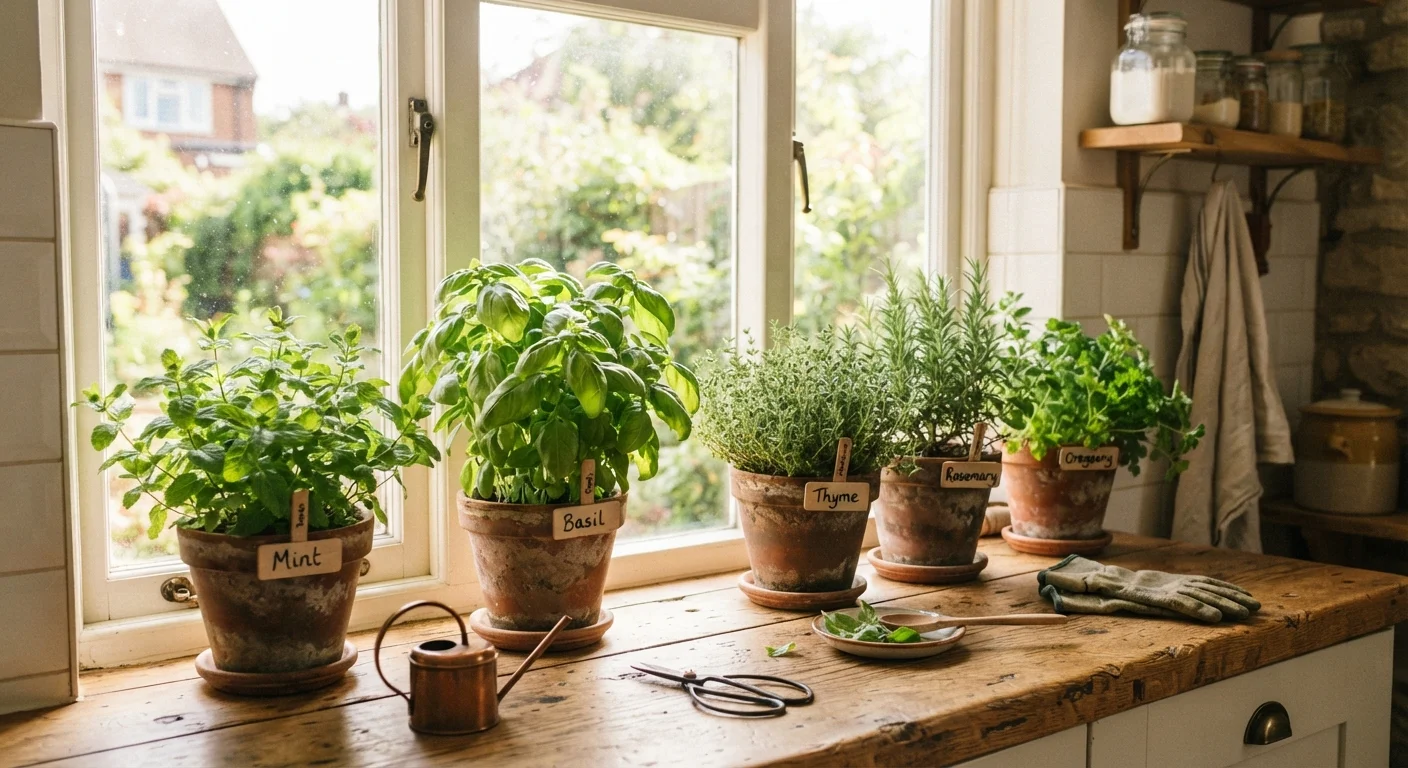
Why Grow Herbs at Home?
Fresh herbs transform everyday cooking, yet a small bunch at the grocery store can cost as much as a packet of seeds that yields dozens of harvests. Growing your own puts flavor and savings on the same side of the equation. Even a single pot of basil on a windowsill can pay for itself within a few weeks of regular use.
Beyond the savings, homegrown herbs are harvested at peak freshness, meaning more flavor and higher nutrient retention than produce that has sat in transit or cold storage. And for budget-conscious gardeners, herbs are one of the most forgiving entry points: they need minimal space, inexpensive supplies, and basic care. Whether you have a bright windowsill, a small patio, or a full backyard, there is a workable herb-growing setup for you.
Start Small, Then Scale
Begin with just two or three herb varieties rather than planting a large assortment at once. Mastering the light and watering needs of a few plants builds the confidence and skills to expand successfully. Overextending early is one of the most common reasons beginner herb gardens fail.
Choosing the Right Herbs for Your Space
Start by matching herbs to your available conditions rather than picking solely by preference. This prevents wasted effort and money.
- Windowsill and indoor growers: Basil, chives, cilantro, and parsley adapt well to indoor light levels and compact containers. They prefer south- or west-facing windows.
- Patio and balcony growers: Mint, thyme, rosemary, and lemon balm thrive in containers outdoors. Note that mint spreads aggressively - always keep it in its own pot.
- In-ground and raised bed growers: Oregano, sage, dill, and fennel benefit from the rooting room and drainage that a garden bed provides. See our guide to raised beds for what to plan before building one.
Perennial herbs - thyme, oregano, mint, chives, and sage - return year after year in most US climates (USDA zones 5-9), making them especially cost-effective long-term investments. Annual herbs like basil and cilantro complete their life cycle in one season but are fast-growing and highly productive while they last.
~$3-$5
Typical cost of a seed packet
A single herb seed packet generally yields dozens of transplants, compared to $4-$6 per individual nursery transplant.
6+ hours
Daily sunlight most herbs require
The majority of culinary herbs are sun-loving plants that underperform in low-light conditions, making window placement critical indoors.
3-4 weeks
Succession planting interval for cilantro
Cilantro bolts quickly in warm weather; staggered sowings every few weeks maintain a continuous harvest through spring and fall.
Soil, Containers, and Garden Beds
Poor drainage is the leading cause of herb failure. Most Mediterranean herbs - rosemary, thyme, oregano, sage - evolved in lean, fast-draining soils and will rot in waterlogged conditions. A standard potting mix amended with about 20-30% perlite or coarse sand works well for containers. For in-ground beds, work compost into heavy clay soil to improve drainage and aeration.
When choosing containers, prioritize drainage holes over aesthetics. Terra-cotta pots are porous, allowing soil to dry evenly - a natural fit for drought-tolerant herbs. Plastic pots retain moisture longer, making them better suited for moisture-loving herbs like basil, cilantro, and parsley.
If you are weighing containers against an in-ground setup, our article on container vs. in-ground gardening breaks down the cost and maintenance trade-offs in detail. As a general rule, containers offer flexibility and portability; in-ground beds offer greater soil volume and less frequent watering.
Soil Mixes Vary by Herb Type
There is no single perfect potting mix for all herbs. Mediterranean varieties (rosemary, thyme, oregano) prefer lean, sharply draining soil, while moisture-loving herbs (basil, cilantro, parsley) prefer a richer, more moisture-retentive mix. Grouping herbs by watering needs in the same container simplifies care and reduces the risk of over- or under-watering.
Light and Watering Essentials
Most culinary herbs need a minimum of six hours of direct sunlight daily. South-facing windows come closest to meeting this indoors. If natural light is limited, a simple grow light positioned 4-6 inches above the foliage for 12-14 hours per day can supplement effectively; basic LED grow lights are widely available at modest cost.
Overwatering is as harmful as underwatering. The standard test: press a finger about an inch into the soil. If it feels dry, water thoroughly until it drains from the bottom. If it still feels moist, wait. Most herbs prefer a slight dry-out period between waterings. In outdoor beds, established perennial herbs may need little supplemental watering once rooted, except during prolonged dry spells.
Group herbs with similar water needs in the same container or garden zone. Pairing drought-tolerant rosemary with thirsty basil forces you into a compromise that usually harms one of them.
Mismatched watering needs are a leading cause of container herb failure, and grouping by moisture preference makes consistent care straightforward.
If your indoor herbs are leggy and pale, move them closer to the light source before buying new plants. Light intensity drops sharply even a foot away from a window.
Insufficient light is frequently misdiagnosed as a pest or nutrient problem; adjusting placement is free and often resolves the issue within days.
Pruning and Harvesting for Continuous Growth
Regular harvesting is the most impactful technique for keeping herbs productive. Cutting stimulates new branching, which means a well-harvested plant stays compact and keeps generating fresh leaves rather than bolting (going to seed and turning bitter).
- Basil: Pinch just above a leaf node, never taking more than one-third of the plant at once. Remove flower buds as soon as they appear to extend the harvest season.
- Mint and lemon balm: Cut stems back by half several times during the season. These plants are vigorous and bounce back quickly.
- Rosemary and thyme: Harvest from the soft, new-growth tips. Avoid cutting into woody stems, which are slow to regenerate.
- Cilantro and dill: Harvest leaves regularly. Once the plant flowers, leaf flavor diminishes - succession planting every 3-4 weeks keeps a steady supply going.
Harvest in the morning after dew has dried for the most flavorful leaves. Use clean scissors or pruning shears to avoid tearing stems, which invites disease.
Saving Money and Expanding Your Herb Garden
Seeds cost a fraction of transplants - a single seed packet typically yields far more plants than you could reasonably use, leaving plenty to share or expand your garden. For herbs that propagate easily from cuttings (mint, basil, rosemary, sage), snip a 4-inch stem, strip the lower leaves, place it in water until roots form, then pot it up. This is essentially a free plant.
Dividing established perennial clumps - chives and mint in particular - every two to three years revitalizes the plant and gives you new transplants at no cost. Our article on budget vegetable gardening covers additional low-cost strategies that apply equally well to herbs, including composting and seed-saving.
Excess harvests preserve well. Freeze chopped herbs in ice cube trays with a little water or olive oil for ready-to-use portions. Dry bundles of thyme, oregano, or sage by hanging them in a warm, ventilated space for one to two weeks. Both methods dramatically extend the value of a seasonal harvest.
“The garden is the poor man's apothecary. And the kitchen garden - humble as it is - has always been the most practical garden of all.”
— Traditional gardening proverb, Longstanding principle in kitchen garden philosophy