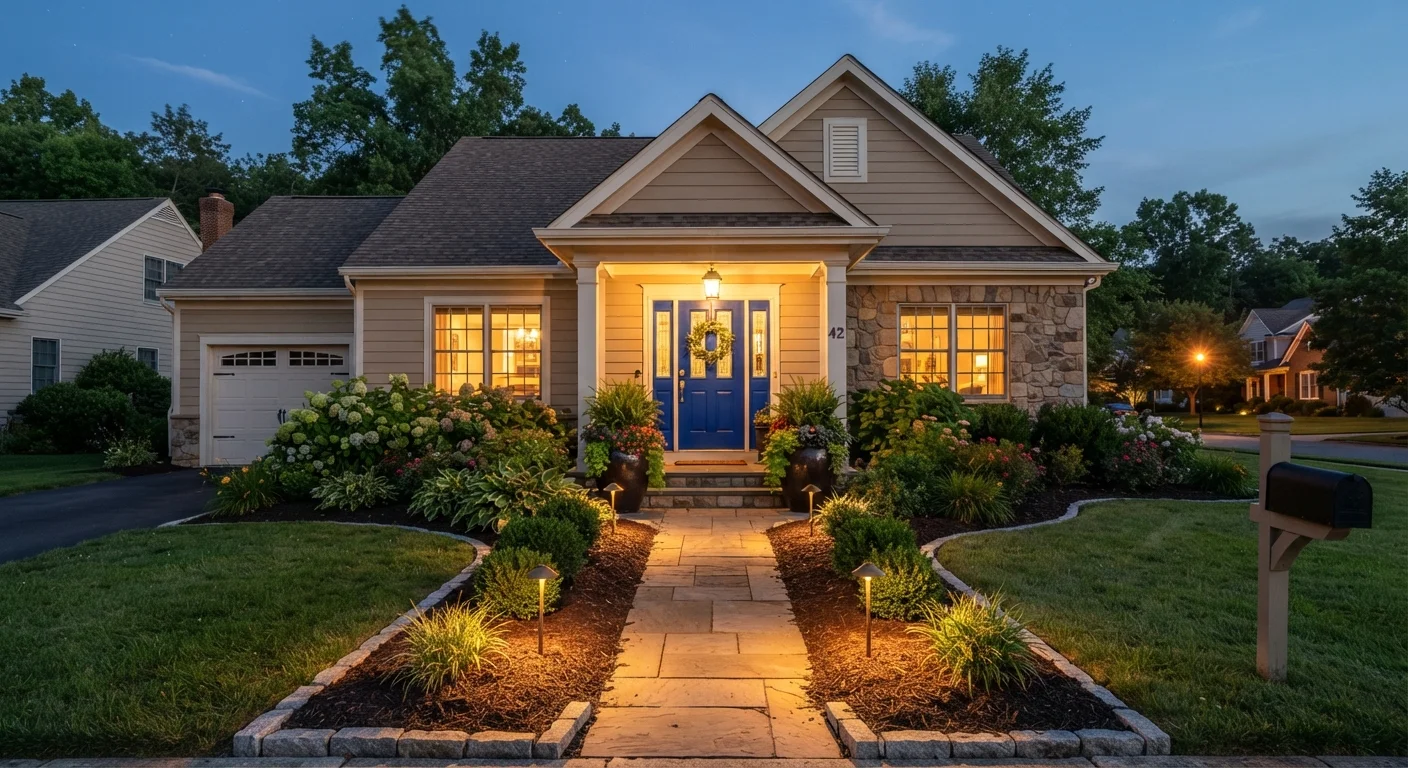
Big Impression, Small Budget
You don't need a contractor or a hefty renovation budget to make your home's exterior turn heads. Many of the changes that make the greatest visual difference cost roughly the same as - or far less than - a tank of gas. The key is targeting the elements visitors and passersby notice first: the front door, the garden beds, the hardware, the lighting, and the landscaping edges.
These are projects almost any homeowner can complete on a weekend morning with basic tools and a little elbow grease. Whether you're preparing to sell or simply want a home that feels more welcoming, the list below covers DIY-friendly upgrades that deliver a clear visual payoff. For projects that also improve the health of your garden beds, see our guide to low-cost soil amendments.
Repaint or refresh the front door
A front door in a fresh, intentional color is one of the highest-visibility updates you can make. A quart of exterior paint - enough for a standard door - typically costs $15-$25. Clean the surface, lightly sand any peeling areas, apply painter's tape around hardware, and roll or brush on two thin coats. Classic choices include deep navy, forest green, or a crisp glossy black, though the right color depends on your home's siding and trim. If the door itself is in good shape, this single change can make the whole facade look newer.
A fresh coat of exterior paint on a front door can make an entire facade look newer for under $25.
Freshen garden beds with new mulch
Faded, thin, or patchy mulch makes even well-maintained plantings look neglected. A 2-cubic-foot bag of shredded bark mulch typically runs $4-$8, and most standard foundation beds require just two to four bags for a full refresh. Aim for a 2-3 inch layer, keeping mulch a few inches away from plant stems and the home's foundation to avoid moisture buildup and pest issues. Beyond aesthetics, fresh mulch helps retain soil moisture and moderate temperature - a practical bonus alongside the visual one.
Refreshing mulch for under $30 of materials is one of the fastest ways to tidy a home's exterior.
Swap outdated door hardware
Old, tarnished, or mismatched door hardware - knobs, knockers, kick plates, and house numbers - reads as neglect even when everything else looks clean. Replacement sets are widely available in the $15-$40 range and install with a standard screwdriver in under 30 minutes. Choose a single finish (matte black, brushed nickel, or oil-rubbed bronze are all durable) and apply it consistently across the door, exterior light fixtures, and mailbox for a cohesive look. This small coordinating detail is something visitors notice subconsciously and immediately.
Matching hardware across your door, lighting, and mailbox creates a cohesive, intentional exterior look.
Add solar-powered pathway lighting
Exterior lighting serves both safety and atmosphere. Solar-powered stake lights require no wiring, no electrician, and no ongoing electricity cost - the panels charge during the day and illuminate paths or garden edges at dusk automatically. A set of six to eight lights typically costs $20-$45. Space them evenly along a front walk or driveway edge, pressing stakes firmly into soil so they stay upright. Even modest lighting makes a home look finished and welcoming after dark, which matters especially in fall and winter when evenings arrive early.
Solar pathway lights add evening curb appeal with no wiring and no electricity cost.
Edge and define lawn borders
A clean, sharp edge between the lawn and garden beds or walkways signals attentiveness and care. Overgrown, blurry borders undermine otherwise tidy landscaping. A manual half-moon edger costs around $20-$30 and can redefine the entire perimeter of a front yard in under an hour. Run the blade along existing bed lines at a slight inward angle, remove the cut strips, and the contrast between green lawn and dark soil creates an instantly sharper look. This is one of the most underrated yet immediately visible low-cost changes.
Sharp lawn edges cost almost nothing but deliver one of the most immediately visible curb appeal improvements.
Add or rearrange potted plants at the entrance
Flanking a front door with planters filled with seasonal annuals, ornamental grasses, or simple evergreen shrubs draws the eye toward the entry and softens hard surfaces. You don't need expensive containers - basic terracotta or resin pots in the $8-$15 range work well, especially when plants are healthy and full. Choose plants suited to your sun exposure: shade-tolerant ferns or impatiens for north-facing doors, drought-tolerant lavender or ornamental peppers for sunny spots. Odd-numbered groupings (one large, two smaller) tend to look more natural and balanced.
A pair of well-chosen planters flanking a front door frames the entry and adds instant color.
Clean and touch up exterior trim and shutters
Dirty or chipped trim and shutters make a home look older and less cared for. Start with a wash using a bucket of warm soapy water and a stiff-bristled brush - no pressure washer required - and allow surfaces to dry fully before evaluating. Small chips and scuffs on painted trim can be touched up with a small brush and leftover paint, or a fresh quart of trim paint matched to your existing color. This is particularly impactful on homes with white or light-colored trim, where dirt and yellowing are most visible from the street. For related energy-saving improvements around windows and doors, see our article on caulking, sealing, and weatherstripping.
Clean, touched-up trim costs almost nothing and erases years of weathered appearance from the exterior.
Making It Last
The best curb appeal improvements are those you can maintain with minimal effort. Stick to plants suited to your climate, choose hardware finishes that resist rust, and opt for exterior paint formulated for your region's weather. A little consistency - keeping beds weeded, refreshing mulch annually, cleaning fixtures every season - preserves the work you've already done.
Tackle Projects in the Right Order
Start with cleaning and edging before adding any new plants or mulch - it prevents you from disturbing fresh materials. Paint the front door after hardware is removed but before new hardware is installed. This sequence saves time and avoids redoing work unnecessarily.
If you're also looking for ways to stretch your home improvement budget indoors, our articles on a bathroom refresh without a full renovation and kitchen cabinet updates that don't require replacement show similarly cost-conscious approaches room by room. And for projects with a measurable return, explore weekend projects that actually add home value.