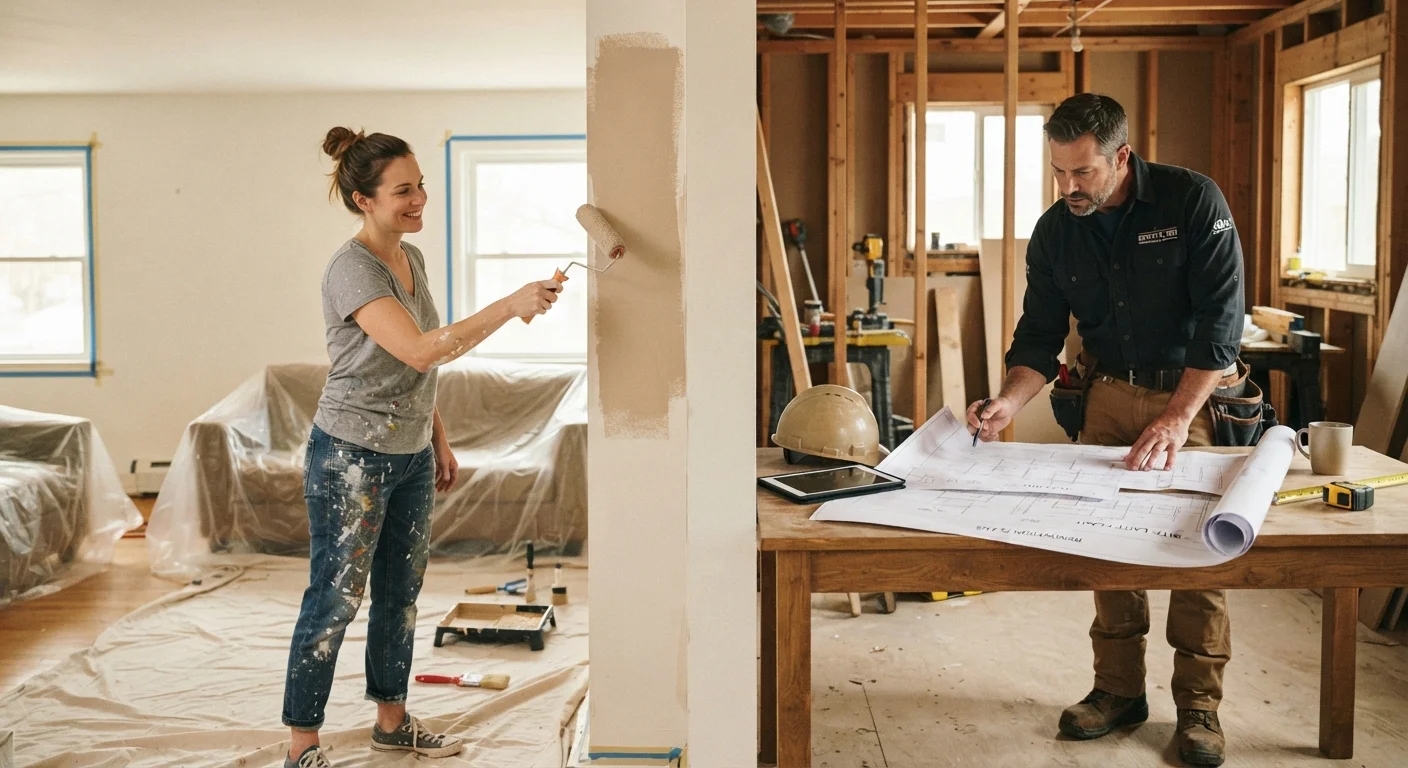
Why This Decision Is Harder Than It Looks
The instinct to save money by doing home improvement work yourself is understandable - labor often accounts for 50% or more of a project's total cost. But the DIY-vs.-contractor decision involves more variables than the price difference alone. Skill requirements, available time, tool costs, permit obligations, and the consequences of a mistake all factor in.
This isn't a one-size-fits-all answer. Some projects are genuinely well-suited to motivated beginners. Others carry real safety or legal risk when attempted without the right credentials. Understanding the difference is what helps you make a confident, budget-aware choice - and avoid costly reversals down the road.
If you're brand new to home improvement, our practical starting point for first-time DIYers can help you calibrate where to begin.
The Case for DIY: Real Advantages
Doing work yourself has genuine benefits - but they apply most clearly in specific circumstances.
Significant labor cost savings on eligible projects
Labor can represent half or more of a project's total cost. For straightforward work like interior painting or basic garden grading, doing it yourself can cut hundreds of dollars from a budget.
Full control over materials and pace
DIY lets you choose exactly what goes into your home without relying on a contractor's preferred suppliers. You can also work at your own schedule rather than around a crew's availability.
Builds practical skills and home knowledge
Completing a project yourself deepens your understanding of how your home works, which often makes future maintenance easier to spot and address sooner.
Satisfying, low-stakes learning opportunity
For cosmetic projects where errors are correctable - like painting, minor patching, or basic landscaping - DIY offers a low-risk way to build confidence with hands-on experience.
To understand where the financial return is strongest, it helps to look at real project data. Our overview of DIY project costs versus returns breaks down which upgrades tend to pay off and which don't - useful context before committing time and money.
The Case for Hiring a Contractor: Real Drawbacks of Going It Alone
DIY has limits, and underestimating them is one of the most common and expensive mistakes homeowners make.
Mistakes can cost more than hiring a professional
An improperly installed fixture, a missed waterproofing step, or a bad tile job often costs more to undo and redo than the original professional quote would have. Recovery work adds labor plus materials.
Hazardous work requires licensed tradespeople
Electrical wiring, gas lines, structural modifications, and certain plumbing connections are regulated for safety reasons. Attempting these without proper credentials puts your household at risk and may void homeowner's insurance coverage.
Tool costs reduce the actual savings
Many projects require specialized tools that most homeowners don't own. Rental fees and necessary purchases can narrow the cost gap between DIY and hiring help substantially.
Unpermitted work creates future legal and financial problems
Work that should have been permitted but wasn't can surface during home sales, refinancing appraisals, or insurance claims - sometimes requiring expensive remediation or disclosure.
Time investment is often underestimated
Projects that professionals complete in a day can stretch across several weekends for an inexperienced homeowner. Extended timelines affect daily routines and may leave work half-finished if life intervenes.
50%+
Share of project cost often attributed to labor
Industry estimates commonly place labor at half or more of total home improvement project costs, making it the largest variable in the DIY-vs.-contractor comparison.
1 in 3
DIY projects that end up needing professional correction
Various home improvement surveys suggest a notable share of DIY projects require follow-up professional work, often at greater combined cost than hiring out initially.
One area where many homeowners stumble is permit requirements. Skipping permits on regulated work - even seemingly minor jobs - can create complications when selling a home, filing an insurance claim, or passing a safety inspection. Learn when permits are typically required and what's at stake if you skip them.
How to Think Through Your Specific Project
Rather than defaulting to DIY or contractor based on habit or price alone, work through a few practical questions before deciding:
- What's the skill ceiling? Painting, basic drywall patching, and simple landscaping have a manageable learning curve. Electrical panel work, load-bearing wall removal, and gas line modifications do not.
- What happens if something goes wrong? A patchy paint job is fixable. A failed structural repair or an improperly wired outlet carries lasting safety and financial risk.
- Do you have the right tools? Factor in tool rental or purchase costs - they can narrow the savings gap significantly.
- How much time do you actually have? A project that takes a professional crew one day might take you several weekends. Weigh the value of your time honestly.
- Are permits or inspections required? If so, some work must be done or signed off by a licensed trade. Verify requirements with your local building department before starting.
When Local Codes Change the Equation
Permit and inspection requirements vary significantly by municipality, county, and state. What requires a licensed contractor in one jurisdiction may be legal to DIY in another - and vice versa. Before starting any project beyond cosmetic updates, contact your local building department to confirm what approvals, if any, are required. This step protects your investment and keeps your home insurable and saleable.
For projects like tile installation, the line between manageable DIY and contractor territory depends heavily on surface prep quality, layout complexity, and the materials involved. Our guide to tile installation for DIYers walks through what the process actually involves before you commit.
Where DIY Myths Can Lead You Astray
A common misconception is that any task labeled "easy" online is safe to attempt without prior experience. Tutorial videos compress complexity, skip edge cases, and rarely show what happens when something goes wrong. Similarly, many homeowners assume permits are only needed for large additions - in reality, window replacements, deck construction, and even certain fence heights may require approval depending on local codes.
Common DIY myths that lead homeowners into costly situations are worth reviewing before starting any significant project. And if you're tackling something like drywall, understanding when to repair versus replace drywall can prevent unnecessary material costs and labor.
The goal isn't to discourage DIY - it's to encourage realistic assessment so the projects you take on yourself actually go well.