The Sequence Almost Everyone Gets Backward
Walk into most organizing-focused content and you'll quickly land on storage solutions: baskets, bins, drawer dividers, label makers. The assumption baked into that advice is that you already know what you're keeping. Most people don't - and that gap is exactly why so many reorganization projects feel temporary or incomplete within a few months.
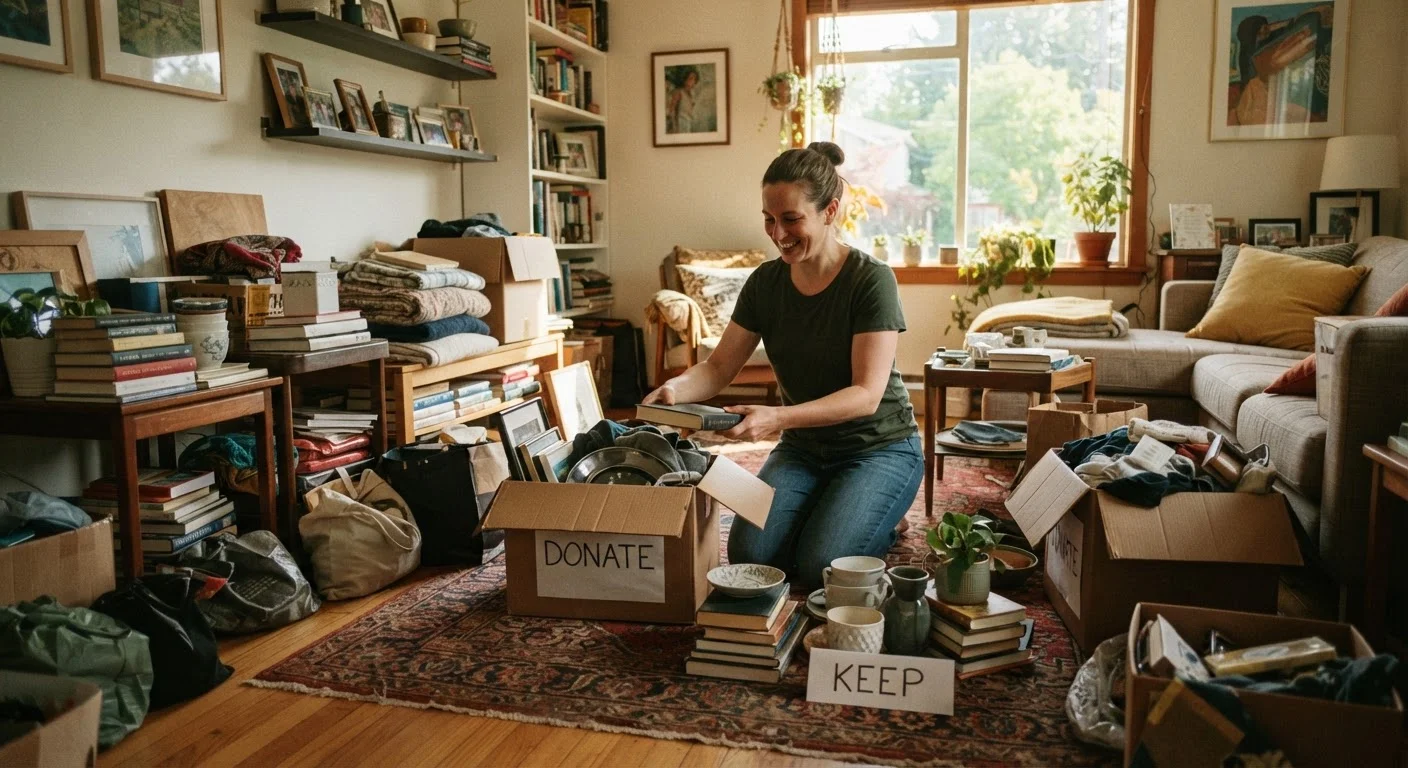
The correct sequence is straightforward: first decide what stays, then decide where it lives. Decluttering is the decision phase. Organizing is the placement phase. Running them simultaneously - or skipping the first entirely - guarantees a system built on the wrong foundation.
This article addresses the most common misconceptions that lead homeowners to organize before they declutter, and explains why correcting that order produces more lasting, cost-effective results. For a deeper look at the behavioral side of keeping a home organized long-term, see our guide on habits over hardware.
Myth
You can organize your way out of clutter without getting rid of anything.
Fact
Organization arranges items; it doesn't reduce them. Volume has to decrease before a system can work.
More storage does not equal less clutter. If the total number of items in a space stays constant, adding bins or shelves just redistributes the problem. A well-organized home has proportionate storage - meaning the amount of stuff and the available space are genuinely compatible. That proportion is only achievable after you've removed what isn't needed or used.
Myth
Buying the right storage products is the first step to getting organized.
Fact
Purchasing storage before sorting almost always results in buying the wrong products in the wrong quantities.
It's tempting to start with a trip to a home goods store because it feels productive. But without knowing exactly what you're keeping - and in what quantities - you're guessing at container sizes, shelf configurations, and drawer layouts. Declutter first, measure what remains, then shop with a specific list. This approach reduces wasted spending and avoids the common result of a garage full of unused organizers.
Myth
Decluttering is a one-time event that solves the problem permanently.
Fact
Decluttering is a recurring practice, not a single fix; new items enter homes continuously.
A thorough initial declutter creates meaningful breathing room, but it's the starting point, not the finish line. Homes accumulate items through purchases, gifts, and general drift. Regular, lighter passes - seasonally or even monthly - prevent the buildup from returning to its original scale. The goal is building a habit of evaluation, not completing a project.
Myth
If you organize fast enough, you won't have to make hard decisions about what to keep.
Fact
Avoiding decisions during decluttering is the primary reason organizing projects fail to hold.
Speed and avoidance might feel efficient in the short term, but deferred decisions reappear quickly. Items that weren't evaluated just get relocated - still taking up space, still creating visual noise, still blocking access to things you actually use. Effective decluttering is slower and more deliberate than most people expect. Giving yourself adequate time to make real keep-or-release decisions is what makes the resulting organization durable.
Myth
Sentimental items should be dealt with first to get them out of the way.
Fact
Sentimental items are the hardest category to evaluate and should be saved for last, once decision-making confidence has built up.
Starting with emotionally charged belongings - photos, inherited objects, gifts - tends to stall the entire process. Most people get stuck, feel overwhelmed, and abandon the project before reaching the more straightforward categories. A more effective approach is to begin with obvious, low-stakes items (expired pantry goods, duplicate tools, clothes that don't fit) and work up to sentimental items once the habit of deciding feels more natural.
What Happens When You Skip Decluttering
Skipping or rushing the declutter phase creates several predictable problems. Storage systems fill up immediately because volume hasn't changed. Newly purchased bins get stuffed with items that should have been donated or discarded. Within weeks, overflow starts again - usually in the same spots that were problematic before.
There's also a financial cost. Homeowners who buy organizing products before sorting their belongings frequently purchase the wrong sizes, wrong quantities, or wrong formats for what they actually end up keeping. That's spending money to house things you may not want.
80%
Of stored items rarely or never used
Professional organizers frequently cite informal estimates suggesting a large majority of household possessions are seldom accessed, underscoring how much space is devoted to items that aren't serving the household.
~$1,200
Average annual spend on unused purchases
Consumer research has suggested US households spend hundreds to over a thousand dollars annually on items that go largely unused, reinforcing the cost of acquiring before evaluating.
If you're working with limited square footage, the volume problem is even more acute. Getting started in a small space requires particularly honest decluttering because there's no room to absorb excess. And if you share your home, differing thresholds for what counts as clutter add another layer of complexity - something worth addressing directly, as covered in organizing shared spaces with different standards.
The good news: decluttering doesn't have to be emotionally exhausting or done all at once. Working room by room, category by category, keeps the process manageable and the decisions clearer.
Avoid Renting Storage as a First Step
Off-site storage units are frequently used to defer decluttering decisions rather than resolve them. Items placed in a unit 'temporarily' often remain there for years at ongoing monthly cost. If you're considering outside storage, complete your declutter first - you may find you don't need it at all, or need far less than you anticipated.