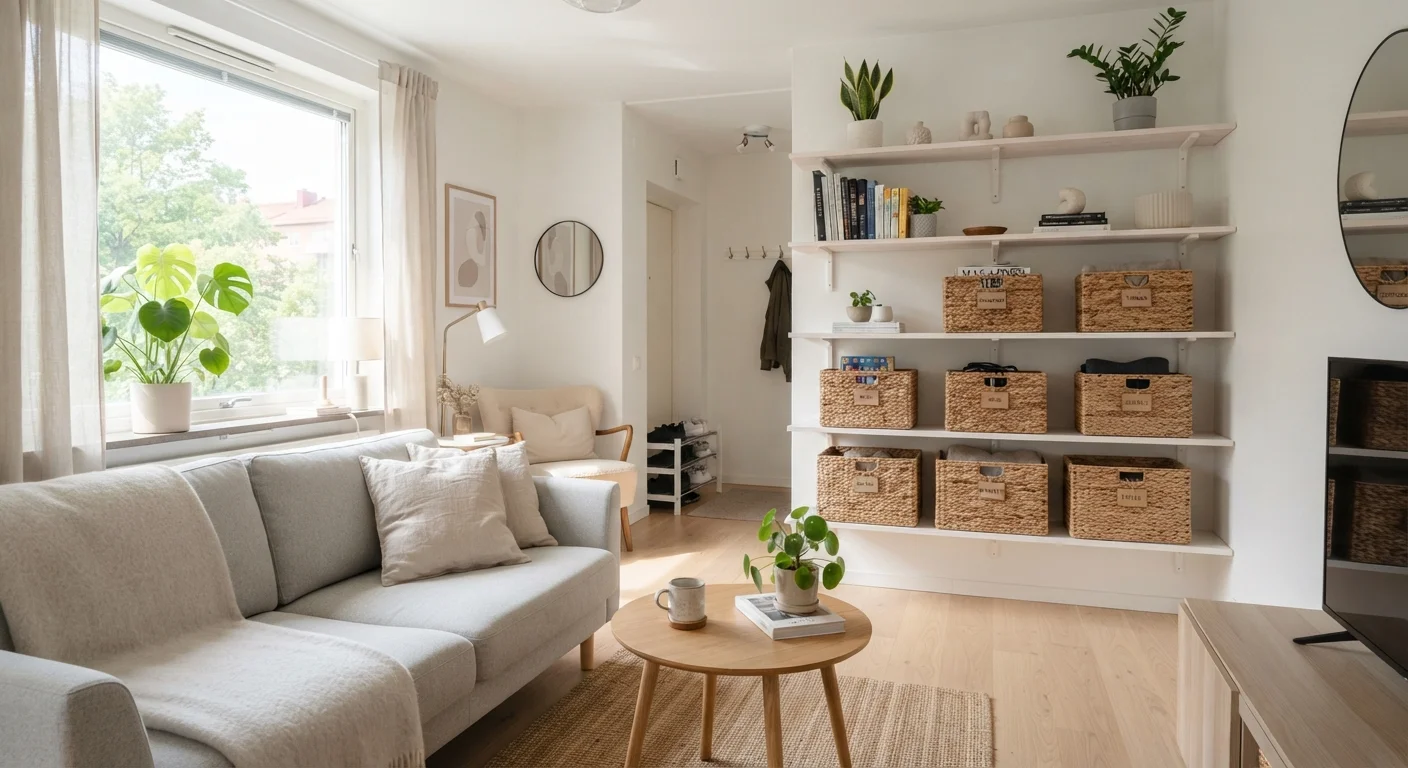
Why Small Spaces Need a Different Approach
Organizing a compact home isn't simply a scaled-down version of organizing a larger one. In a small space, every square foot carries more weight - a misplaced item blocks a pathway, a poorly chosen piece of furniture eats into precious floor area, and clutter accumulates faster because there's nowhere for it to hide.
The good news is that small spaces also respond more quickly to organizational changes. A single afternoon of focused decluttering can visibly transform a studio or one-bedroom apartment in a way that would barely register in a sprawling house. That responsiveness makes small spaces genuinely rewarding to work with, as long as you start with the right framework.
This guide is designed for people who are starting from scratch - whether you've just moved into a compact space or have lived in one for years and are finally ready to address the clutter. No particular system, product, or spending level is required to begin.
Start With a Realistic Inventory
Before touching a single storage bin, take stock of what you actually own. This step is skipped constantly - and it's why people end up with beautifully organized shelves full of things they don't need.
Walk through each area of your home and sort items into three broad categories: things you use regularly, things you use occasionally, and things you haven't used in a year or more. Be honest. Sentimental value is real, but it doesn't require physical possession of every object associated with a memory.
Items in the third category are candidates for donation, selling, or disposal. The goal isn't radical minimalism - it's ensuring that every object in your home has a legitimate claim on the space it occupies. For a balanced perspective on what that trade-off actually looks like in practice, see The Honest Trade-Offs of Minimalist Home Organization.
Once you know what you're keeping, you can make genuinely useful decisions about storage. Buying containers before this step almost always results in wasted money.
Core Principles for Small-Space Organization
A few foundational ideas guide effective small-space organization. Understanding these before you start prevents common missteps.
Everything needs a designated home
Clutter is almost always the result of items that have no assigned place. When you're done using something and don't know where it goes, it lands on the nearest flat surface - and stays there. Assign a specific location to every category of item you own, even if that location is a single labeled basket.
Think vertically, not just horizontally
Most people organize at counter or floor level and ignore everything above. Walls, the backs of doors, and the space above cabinets all represent usable storage. Tall shelving units, mounted hooks, and over-door organizers can meaningfully expand capacity without taking any additional floor space. Our guide on vertical storage strategies covers this in depth.
Organize by function, not by room
In a small home, a single room often serves multiple purposes. Grouping items by what they're used for - rather than where they technically live - reduces friction. The zone method is a structured approach to this that works well in compact spaces.
Start With Your Worst Spot First
Tackling the most chaotic area in your home first - even if it's small - generates visible momentum that makes the rest of the process feel achievable. A cleared kitchen counter or untangled entryway delivers an immediate psychological payoff that motivates continued effort.
Your First Organizing Steps
Once you've decluttered and understand the core principles, work through these steps in order:
- Identify your problem zones. Every home has one or two areas where clutter reliably accumulates - a kitchen counter, an entryway table, the floor near the bed. Name them specifically.
- Assign homes to the items in those zones. Ask where each item logically belongs based on where it's used. If there's nowhere logical, that's a sign you may have too many items for the space.
- Use what you already own before buying anything. Repurpose shoeboxes, jars, trays, and existing shelves as organizers. You can always upgrade later once your system is working.
- Label storage containers. Labels make systems sustainable, especially in shared homes. They remove the guesswork that leads to things being put back in the wrong place.
- Test your system for two weeks. If you find yourself consistently not putting something back, the location probably isn't working - adjust it rather than abandoning the system entirely.
If your space includes a closet, that's often the highest-return area to tackle first. See Closet Organization Systems for guidance on how different storage approaches compare.
Don't Buy Storage Before Decluttering
Purchasing bins, baskets, and organizers before removing unwanted items is one of the most common and costly small-space organizing mistakes. You risk buying containers sized for items you'll eventually discard, and you end up organizing clutter rather than eliminating it. Complete your declutter first - then assess what storage you genuinely need.
Keeping It Going Without Overspending
The most common reason organizing efforts fail isn't a lack of storage products - it's a lack of consistent daily habits. A well-labeled system collapses within weeks if items aren't returned to their designated spots regularly.
Two habits make the biggest difference: a brief daily reset (five to ten minutes of returning stray items to their homes) and a one-in, one-out rule for new purchases. When something new enters the home, something of comparable size leaves. Both habits are free and have an outsized effect on long-term organization. The article Setting Up a Home That Stays Organized: Habits Over Hardware goes deeper on this behavioral foundation.
When you are ready to spend on storage, prioritize versatility. A simple modular shelving unit will serve you across multiple configurations and moves; a highly specific single-purpose organizer probably won't. For broader guidance on matching storage solutions to your home's footprint, see Storage Solutions That Scale.
Most importantly: don't wait until you have the perfect system before starting. Imperfect progress in a small space beats a flawless plan that never gets implemented.