Why Routine Spending Is Harder to Control Than Big Purchases
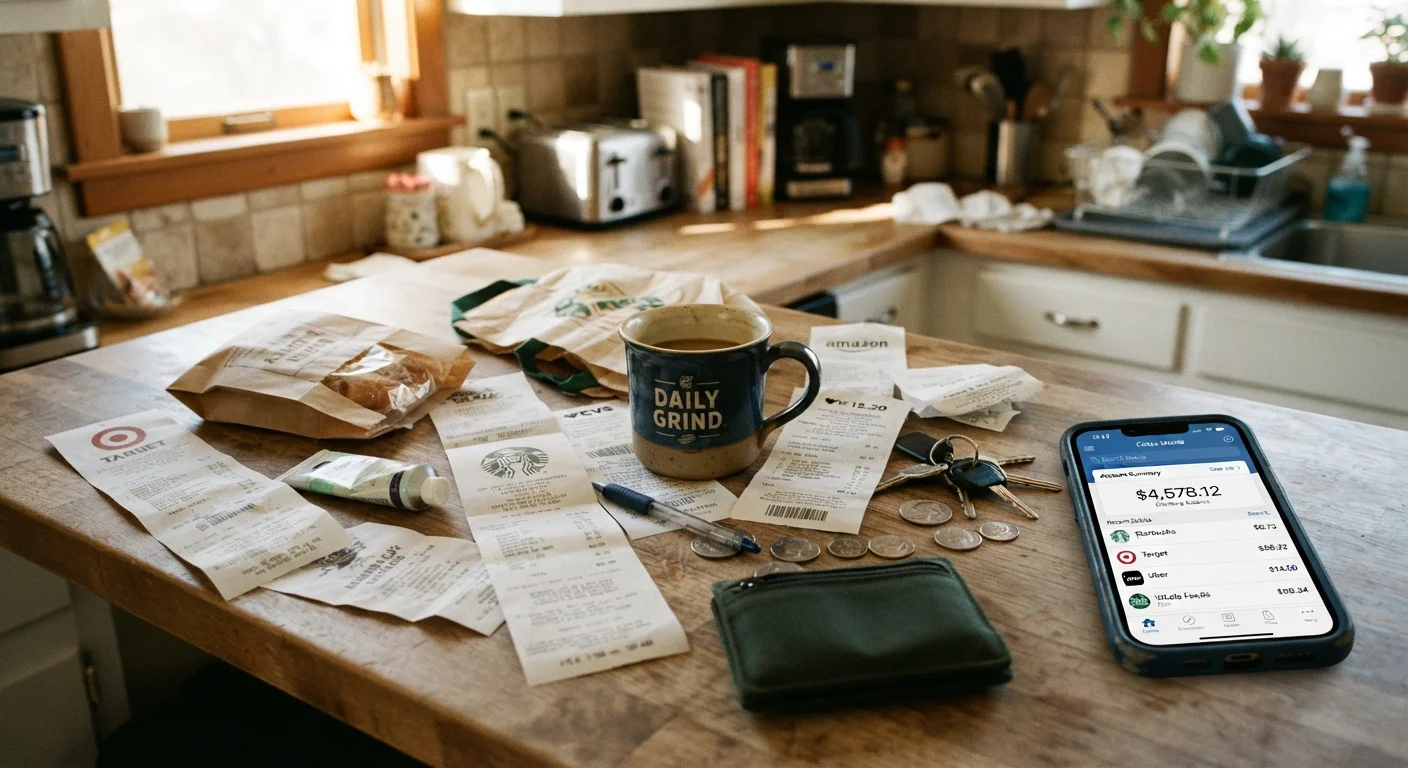
Most people scrutinize large expenditures - a new appliance, a flight, a car repair - but allow small, routine purchases to accumulate unchecked. This isn't carelessness; it's how human attention works. The brain assigns significance to dollar size, not frequency, which means a $6 daily habit registers as trivial while a single $300 purchase triggers careful consideration - even though the habit costs more over a year.
Understanding this cognitive gap is the starting point for any real budget improvement. If you've ever reached the end of the month wondering where your money went, the answer is almost always distributed across dozens of small decisions - not one large one. For a grounding in the terms and frameworks that make sense of these patterns, the spending tracker glossary is a useful reference.
$1,497
Average annual US household spend on food away from home per person
According to the U.S. Bureau of Labor Statistics Consumer Expenditure Survey, food-away-from-home costs represent one of the fastest-growing household expense categories.
4-6
Average number of paid subscriptions per US adult
Industry research from financial technology firms tracking linked accounts consistently shows most adults underestimate their active subscription count by at least two services.
The Spending Habits Most Likely to Quietly Drain Your Budget
The following mistakes are common across income levels and demographics. They persist not because people are irresponsible, but because the spending patterns are embedded in daily convenience - easy to start, easy to forget, and rarely examined until the damage shows up on a statement.
Paying for subscriptions you rarely or never use.
Why it happens: Sign-up friction is low, and cancellation requires deliberate effort - so inactive subscriptions persist on autopilot long after their usefulness ends.
Treating daily convenience purchases as too small to matter.
Why it happens: Individual purchases of $3-$8 don't register as meaningful expenditures in the moment, so they escape the mental accounting most people apply to larger spending decisions.
Shopping without a list and buying based on mood or in-store promotions.
Why it happens: Retailers are designed to encourage unplanned purchases - end-cap displays, limited-time signage, and bundled offers exploit decision fatigue, especially when shoppers are hungry or rushed.
Ignoring small fee accumulations - ATM fees, foreign transaction fees, late payment charges.
Why it happens: These charges are small, infrequent, and easy to overlook on a busy statement. They feel more like minor nuisances than legitimate budget categories.
Underestimating the cost of leisure and social spending.
Why it happens: Social occasions - dinners out, event tickets, gifts, spontaneous weekend plans - feel non-negotiable in the moment, making them resistant to pre-planned budget limits.
Small Amounts Add Up Fast
A $15-per-month subscription you forgot about costs $180 a year. Four of those cost $720 - roughly a car payment or a modest emergency fund contribution. The financial impact of ignored recurring charges is not trivial; it compounds silently across years. Audit every automatic charge on your accounts at least once a quarter.
One area that often compounds these patterns is home energy waste - a cost that operates exactly like a forgotten subscription. If your utility bills feel disconnected from your actual usage, sealing energy leaks in your home addresses a similar set of overlooked, fixable drains.
Turning Awareness Into Action
Spotting these habits is the first step; changing them requires a light structural intervention. Start with a single 20-minute statement review. Categorize every transaction from the past month - not to judge yourself, but to generate an honest baseline. Most people find at least two or three surprises in that exercise alone.
Convenience Costs More Than You Think
Food delivery apps, premium gas station stops, and impulse add-ons at checkout each feel insignificant individually. However, research on consumer spending consistently shows that unplanned convenience purchases are among the largest discretionary categories for American households. Treat convenience spending as a line item - not an invisible afterthought - in any working budget.
From there, the goal isn't deprivation - it's intentionality. Redirect even a modest portion of reclaimed spending toward a savings target or debt reduction. Small, consistent savings behaviors tend to outperform dramatic one-time efforts over time. And if you're evaluating whether cutting certain costs is actually worth it, understanding when frugality becomes false economy helps you avoid overcorrecting in ways that cost more later.
For a broader foundation, the Budgeting Basics hub and Saving & Debt hub offer practical frameworks to build on what you discover in that initial review.
This article provides general financial education and is not personalized financial advice. For guidance specific to your situation, consider consulting a qualified financial professional.