Why Prevention Approach Matters
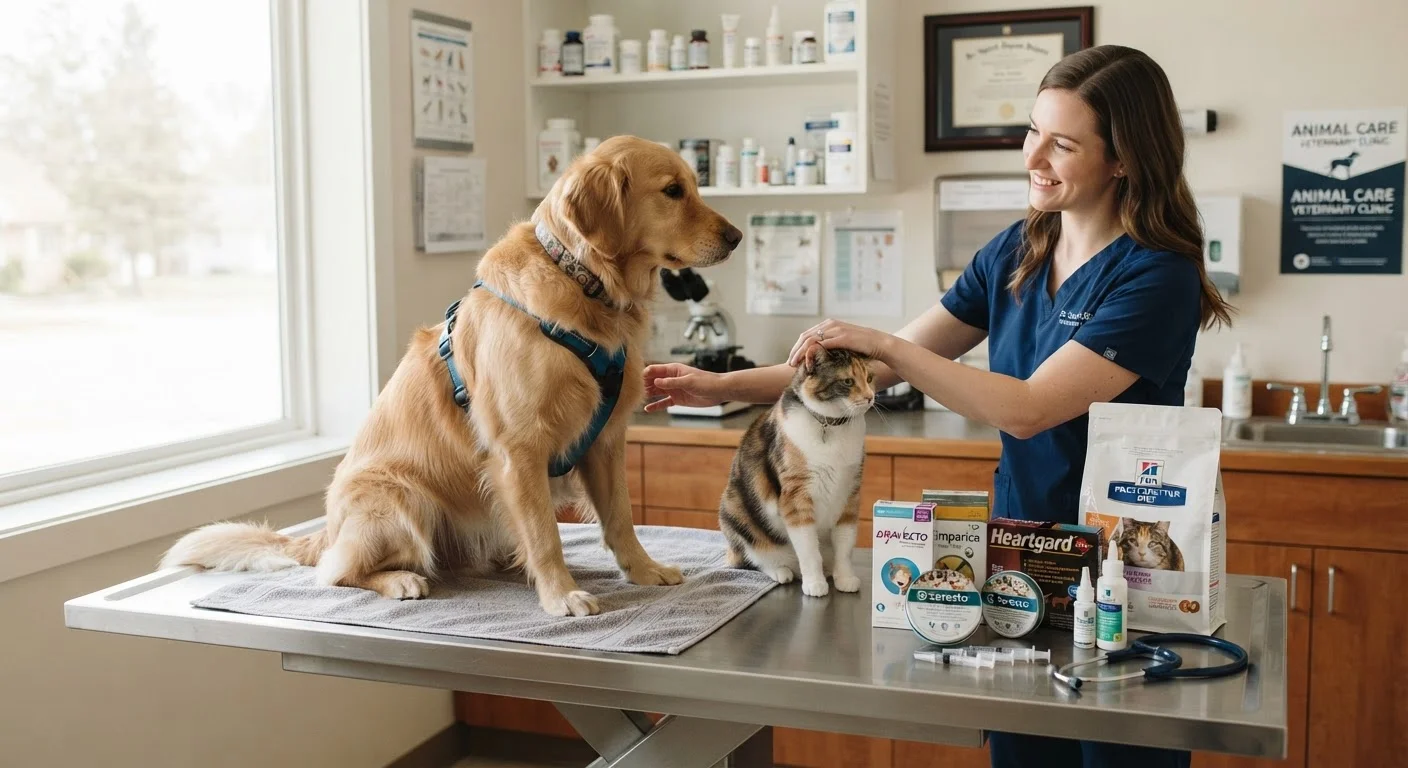
Flea infestations, tick-borne illnesses, and heartworm disease are among the most common - and preventable - health threats facing US pets. Yet not every prevention product works the same way, covers the same parasites, or suits every animal. Understanding the core differences between topical treatments, oral medications, and collars puts you in a far stronger position at your next vet visit.
This overview is general health education, not a substitute for personalized veterinary advice. Your vet will factor in your pet's age, weight, breed, existing conditions, and geographic risk when making a recommendation. For a broader look at how preventive spending pays off, see why preventive care is the most cost-effective investment in your pet's health.
Topical Treatments: Spot-On Applications
Topical (spot-on) treatments are liquid formulations applied directly to the skin, typically between the shoulder blades. They absorb into the skin's oil layer and distribute across the body's surface over time.
- Coverage: Most formulations target fleas and ticks; some also include coverage for mites or mosquito repellency.
- Duration: Typically effective for 30 days per application.
- Practical considerations: Pets should stay dry for 24-48 hours after application, which can be inconvenient for dogs who swim frequently. Small children should avoid petting the application site until it dries. Some cats are sensitive to certain active ingredients - always confirm a product is labeled for your species.
- Cost profile: Generally mid-range; available in both prescription and over-the-counter formulations, though prescription options tend to have more robust efficacy data.
Generic vs. brand-name pet medications can differ meaningfully in topicals - ask your vet whether a generic equivalent has been studied for your pet's parasite risk.
Check the Species Label Every Time
Some active ingredients safe for dogs can be toxic to cats, and vice versa. Before applying any topical product, confirm it is explicitly labeled for your pet's species and weight range. When in doubt, call your veterinarian's office - it only takes a minute and can prevent a serious adverse event.
Oral Medications: Chewables and Tablets
Oral preventives are administered by mouth, either as flavored chewables or plain tablets. They work systemically - meaning the active ingredient circulates in the bloodstream and acts when a parasite bites or feeds.
- Coverage: Varies widely by product. Some target fleas only; others cover fleas and ticks; heartworm preventives are typically oral and also cover certain intestinal parasites.
- Duration: Ranges from monthly to quarterly, depending on formulation.
- Practical considerations: No residue on the coat, making them suitable for households with young children or pets who swim or bathe frequently. However, they require the pet to ingest the full dose - pets who spit out tablets or vomit shortly after dosing may not receive complete protection.
- Heartworm-specific note: Heartworm preventives are prescription-only in the US. A pet must test negative for heartworm before starting a preventive, as administering prevention to a heartworm-positive animal can cause serious reactions. Never start or restart a lapsed heartworm prevention regimen without a veterinary blood test first.
Never Skip the Heartworm Test
Starting a heartworm preventive on a pet that already has an active heartworm infection can trigger a dangerous reaction. If your pet has missed doses or has never been on prevention, schedule a heartworm blood test before resuming or starting any heartworm preventive. This is a firm veterinary standard, not a precaution you can skip to save time or money.
Collars: Long-Duration, Wearable Protection
Preventive collars release active ingredients continuously through skin contact, offering extended protection - often six to eight months per collar - for fleas and ticks.
- Coverage: Primarily fleas and ticks; collars do not provide heartworm protection.
- Duration: Among the longest of any single product type.
- Practical considerations: Effectiveness may decrease if the collar gets wet frequently or if it does not fit snugly against the skin. Children should wash their hands after handling a treated collar. Not all collars are safe for cats - verify species labeling carefully.
- Cost profile: Higher upfront cost, but a longer duration can mean lower annualized cost in some cases. Factor in your pet's lifestyle: a heavy swimmer may see reduced efficacy.
Because collars alone do not address heartworm, most pets in regions with mosquito activity will need a separate oral or injectable heartworm preventive alongside collar use. Discuss how to combine products safely with your vet - never layer prevention products without professional guidance.
Comparing the Three Approaches
The table below summarizes how these three approaches compare across key practical criteria. Remember that individual products within each category vary - these are general patterns, not guarantees for any specific formulation.
| Topical (Spot-On) | Oral Medication | Collar | |
|---|---|---|---|
| Flea coverage | Yes | Yes (most formulations) | Yes |
| Tick coverage | Yes (most formulations) | Yes (select products) | Yes |
| Heartworm coverage | No | Yes (specific products) | No |
| Typical duration | 30 days | 30-90 days | 6-8 months |
| Residue on coat | Yes, until absorbed | None | Minimal, near collar area |
| Safe for swimmers | Reduced if bathed frequently | Yes | Reduced if frequently wet |
| Prescription required | Varies by product | Yes (heartworm) | Generally no |
For context on how prevention costs compare to treatment costs if parasites take hold, see preventive vet care vs. emergency vet bills. And if a new symptom arises after starting a preventive, knowing when to call the vet can help you decide whether to wait or act quickly.
This article is for general informational purposes only and does not constitute veterinary or medical advice. Always consult a licensed veterinarian before starting, changing, or combining parasite prevention products for your pet.