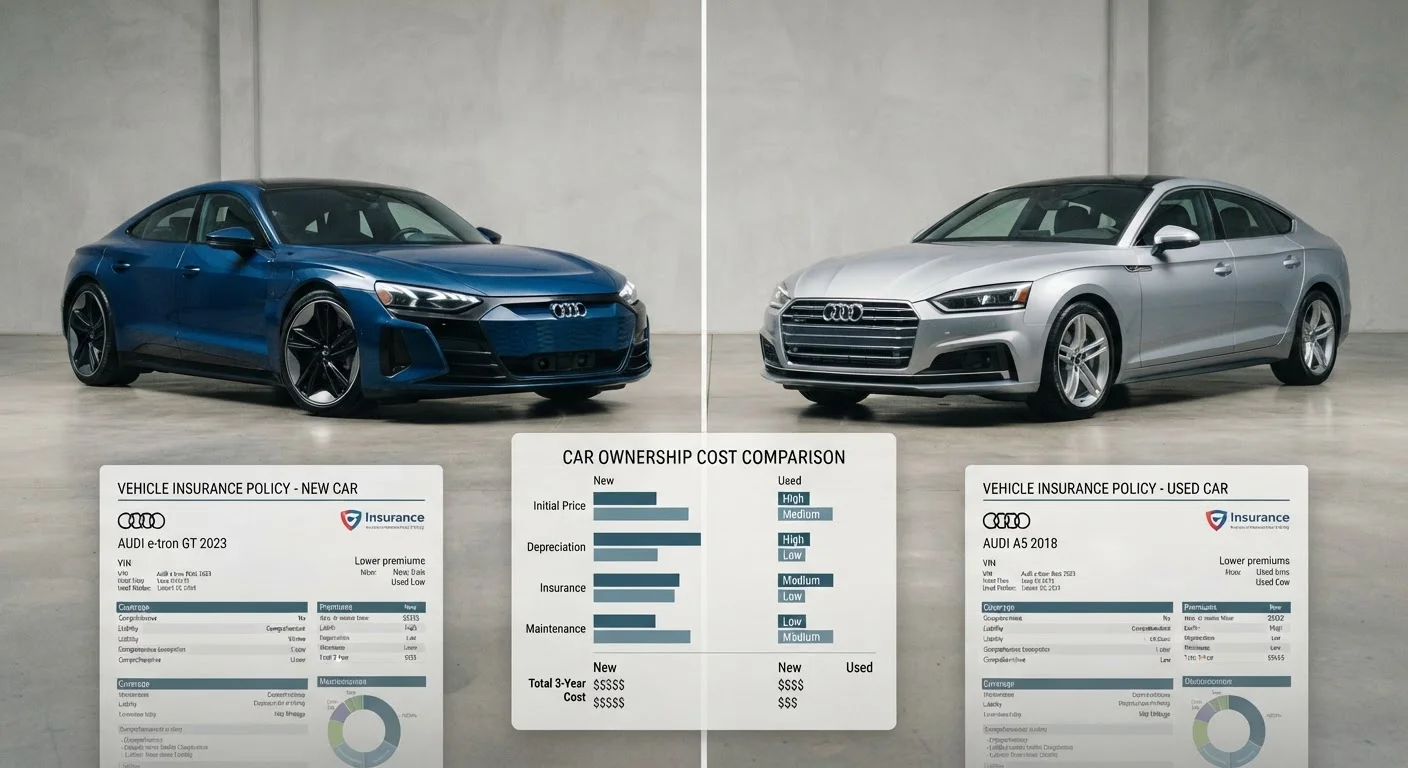
Why Vehicle Age Is Only Part of the Premium Equation
Many buyers assume a used car automatically means a cheaper insurance bill. The logic seems sound: older vehicle, lower value, lower premium. In practice, the relationship is more nuanced. Insurance premiums reflect a vehicle's replacement cost, repair complexity, theft exposure, and the driver's coverage obligations - not age alone.
A three-year-old luxury SUV with expensive sensors and rare parts can carry higher premiums than a brand-new compact sedan with straightforward repair costs. Understanding which factors actually move the needle helps you build a realistic insurance budget before you sign any purchase paperwork.
For a broader look at how insurance fits into total ownership expenses, see the real total cost of owning a new vs. used vehicle.
The Core Cost Drivers for New Vehicle Insurance
New vehicles generally cost more to insure for two interconnected reasons: their market value is higher and lenders almost always require comprehensive and collision coverage. Here's what that means in practice:
- Higher replacement cost: If a new vehicle is totaled, the insurer must pay closer to current market price. That elevated exposure is priced into your premium.
- Advanced repair costs: New models increasingly feature driver-assistance technology - cameras, radar units, proximity sensors - that are expensive to replace after even minor collisions.
- Lender requirements: Financing a new vehicle almost universally triggers a full-coverage requirement, which adds comprehensive and collision on top of state-mandated liability.
- Depreciation gap risk: New cars can lose 15-20% of their value in the first year. This creates a window where the loan balance exceeds the vehicle's insured value, making gap coverage a practical consideration.
15-20%
Typical new car value lost in year one
Industry data consistently shows new vehicles depreciate sharply in the first 12 months, creating a loan-to-value gap that makes gap insurance relevant for many buyers.
~$100+
Monthly gap between full and liability-only premiums
According to industry estimates, the difference between full coverage and liability-only policies on the same vehicle can exceed $100 per month depending on the vehicle and driver profile.
1 in 5
Drivers underestimate insurance before purchase
Consumer surveys in the auto buying space consistently find that a significant portion of buyers do not obtain insurance quotes before committing to a vehicle purchase.
See how financing terms interact with these insurance obligations in our article on financing a new car vs. a used car.
What Shapes Insurance Costs on a Used Vehicle
Used vehicle insurance costs are more variable - and potentially much lower - depending on how you structure your coverage. The key levers are:
- Actual cash value (ACV): Insurers pay out based on a vehicle's depreciated market value, not what you paid. As ACV declines, the ceiling on a comprehensive or collision payout drops - and so can your premium.
- Coverage flexibility: If you own a used vehicle outright and its ACV is low, you may have the option to drop collision or comprehensive coverage entirely, reducing your premium substantially.
- Parts availability: Older vehicles with discontinued or hard-to-source parts can actually be more expensive to repair, which may keep premiums elevated despite lower vehicle value.
- Safety rating history: Older models that predate modern safety standards may carry higher liability exposure due to inferior crash-test performance.
Get a Quote Before You Commit
Request an insurance quote on the specific year, make, model, and trim of any vehicle you're seriously considering - before signing a purchase agreement. Premium differences between similar vehicles can be substantial and should factor into your total monthly budget calculation alongside the loan payment.
For buyers considering certified pre-owned vehicles, the equation shifts slightly - CPO vehicles often carry higher market values than standard used cars, which affects both coverage requirements and premiums. Our new car vs. CPO pricing breakdown covers the pricing dynamics in detail.
Factors That Apply Equally to Both - And Often Get Overlooked
Beyond new-versus-used, several factors influence premiums regardless of vehicle age. Buyers often focus narrowly on the vehicle type while underestimating these variables:
- Vehicle make and model: Insurers rate individual models based on their historical claims data. Two vehicles of the same age and price can carry meaningfully different premiums if one has a worse claims history.
- Theft rates: A vehicle that appears frequently on stolen-vehicle lists - new or used - commands a higher comprehensive premium.
- Driver profile: Your driving record, credit-based insurance score (where permitted by state law), location, and annual mileage all feed into the final rate.
- Deductible selection: Raising your deductible lowers your premium but increases out-of-pocket exposure after a claim. This tradeoff applies to both new and used vehicle policies.
Before settling on a vehicle, it's worth getting insurance quotes for the specific make, model, and trim you're considering - not a rough estimate based on age category alone. This is one of the key questions to work through before choosing new or used.
This article provides general information about auto insurance cost factors and is not personalized insurance or financial advice. Consult a licensed insurance professional for guidance specific to your situation and state.