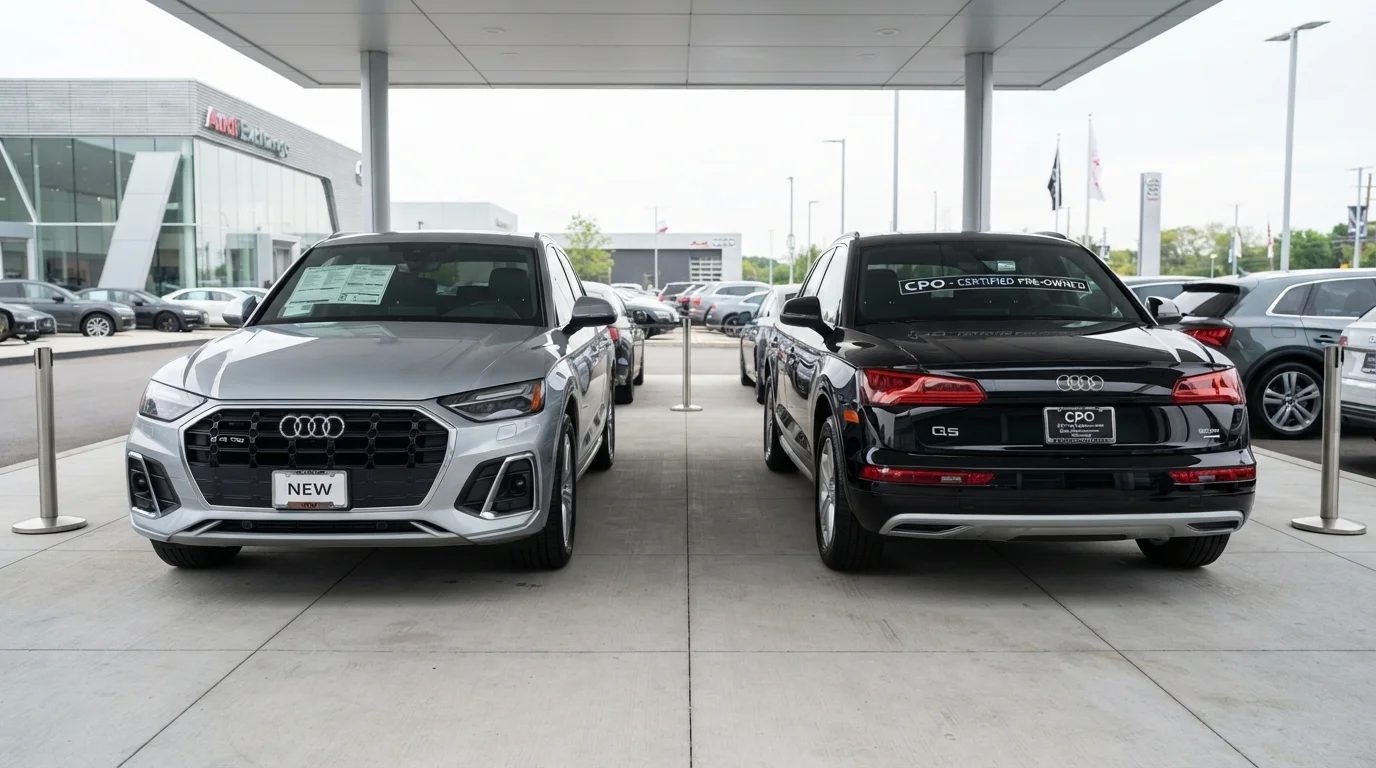
How New Car Pricing Actually Works
The sticker price on a new vehicle — the Manufacturer's Suggested Retail Price, or MSRP — is a starting point, not a fixed ceiling. Dealers receive vehicles at invoice price, which is typically several hundred to several thousand dollars below MSRP depending on the segment, and the spread between those two numbers is where negotiation lives.
Market conditions tighten or widen that spread considerably. During periods of high demand or constrained inventory, dealers may sell at or above MSRP. In slower markets or at model-year end, significant discounts below invoice are possible. Manufacturer incentives — cash-back offers, subsidized financing rates, or lease support — can add another layer of savings that isn't visible on the sticker but meaningfully lowers your effective cost.
One structural advantage of buying new is that pricing data is widely available. Resources like Edmunds and Kelley Blue Book publish dealer invoice data and average transaction prices by region, giving buyers a credible anchor before they walk into a dealership. See how depreciation affects new vehicle value for context on what happens to that purchase price the moment you drive off the lot.
| New Car | Certified Pre-Owned | |
|---|---|---|
| Starting price anchor | MSRP / dealer invoice | Market used price + CPO premium |
| Depreciation exposure | Full first-year drop on buyer | Already priced in by seller |
| Negotiation flexibility | Broader — invoice spread + incentives | Narrower — reconditioning costs limit room |
| Financing rates | Manufacturer subsidized rates possible | Standard used-car rates typically apply |
| Warranty coverage | Full factory warranty from day one | Remaining factory + CPO extension |
| Price transparency tools | Invoice data widely published | Comparable listings require manual search |
The CPO Pricing Premium — and What It Buys You
A certified pre-owned vehicle sits in a distinct pricing tier: above a standard used car of the same year and mileage, but below the new equivalent. That gap above standard used pricing — often $1,000 to $3,500 depending on the vehicle and program — reflects the cost of inspection, reconditioning, and the extended warranty coverage the manufacturer's CPO program attaches to the vehicle.
Whether that premium is worth it depends on what the CPO warranty actually covers. Manufacturer CPO programs (offered by the original automaker) generally provide stronger protections than dealer-branded certifications, which may be little more than a marketing label. Before treating the CPO badge as proof of value, review the specific warranty terms, mileage limits, and what inspection checklist was used. Our article on what CPO programs actually include breaks down those distinctions in detail.
On negotiation: CPO prices are generally less flexible than new car prices. Dealers have less room to move because the vehicle has already been reconditioned at a cost. That said, end-of-month timing, competing bids from other dealers, and market softness can still generate modest movement — typically in the range of a few hundred dollars rather than thousands.
~20%
Average new car value lost in first year
Industry data from sources including Edmunds and iSeeCars consistently estimates first-year depreciation at roughly 15–25% depending on vehicle segment.
$1,000–$3,500
Typical CPO premium over standard used
Automotive market analyses from Edmunds estimate the average CPO markup above comparable non-certified used vehicles falls in this range, varying by brand and program.
The Depreciation Factor Changes the Math
The single largest pricing advantage a CPO vehicle holds over a comparable new one is that early depreciation has already occurred. New vehicles can lose a meaningful share of their value in the first one to three years — the exact percentage varies by segment and market conditions, but the principle is consistent and well-documented across automotive data sources.
A buyer who purchases a CPO vehicle that is two to three years old effectively lets the original owner absorb that initial value drop. If the CPO vehicle is priced $5,000–$8,000 below its new equivalent (after accounting for the CPO premium), and you plan to sell or trade in within five years, the CPO option may represent a lower total cost even if its financing rate is slightly higher.
Financing rates are worth weighing carefully here. Manufacturers frequently offer below-market interest rates on new vehicles — sometimes at 0% for qualified buyers — that are not available on CPO purchases. A favorable new-car rate can partially or fully offset the depreciation disadvantage depending on loan size and term. For a fuller look at how rates compare across both categories, see how new and used auto loan financing differs.
Negotiation Strategies for Each Scenario
For new cars, your strongest leverage points are: knowing the dealer invoice price, understanding current manufacturer incentives, obtaining competing quotes from multiple dealers, and separating the vehicle purchase negotiation from trade-in and financing discussions. Bundling those conversations lets dealers shift value between columns invisibly. Keep them distinct. For more on that tactic, see why timing your trade-in separately matters.
For CPO vehicles, the most effective approaches are: benchmarking the asking price against comparable CPO listings in your market (not just new car prices), verifying the inspection report and remaining warranty terms before negotiating, and factoring in any additional dealer fees or add-ons that inflate the effective price above the listed one.
In both cases, total cost of ownership is the number to optimize — not just what you pay at signing. Insurance, expected maintenance, and resale trajectory all differ between a new and CPO purchase. For a full accounting of those downstream costs, the real total cost of owning new vs. used provides a structured framework.