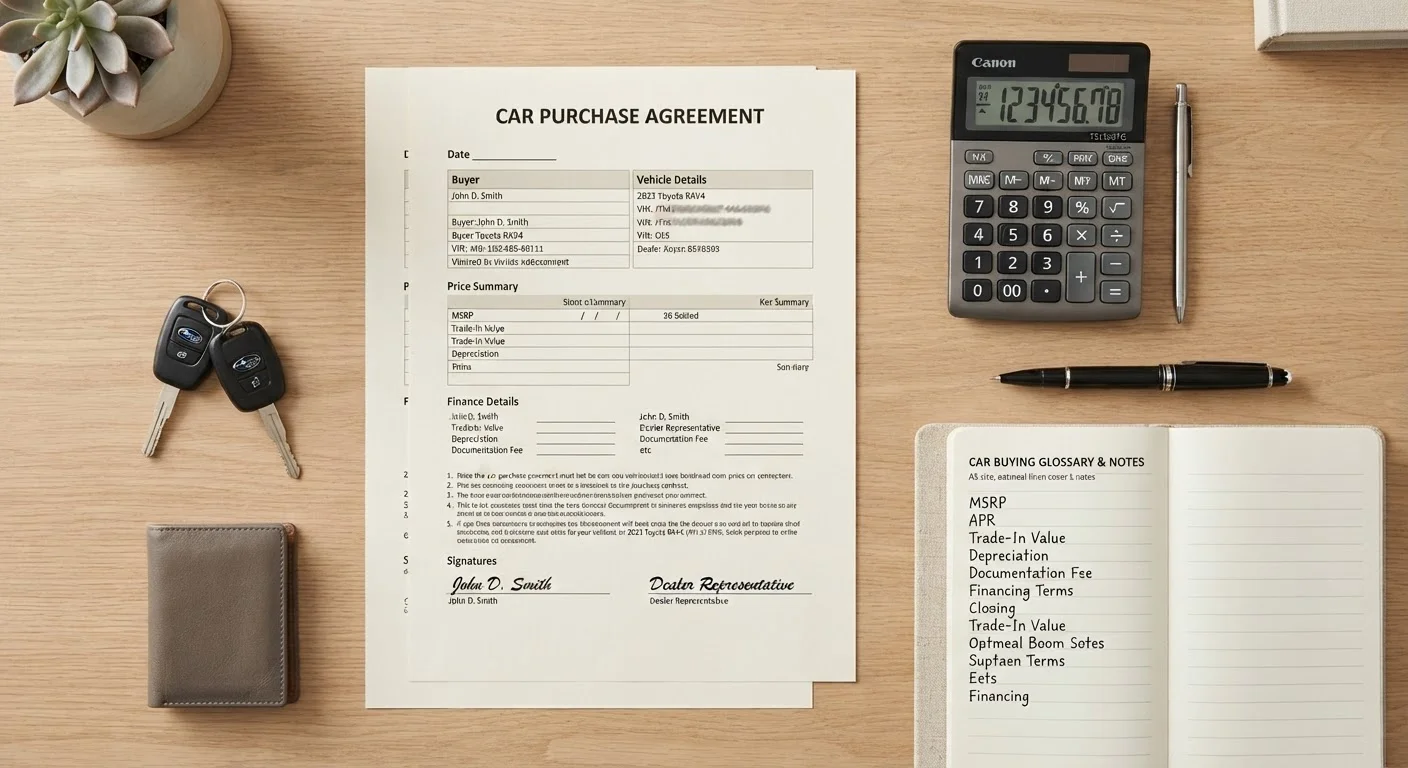
Why Pricing Vocabulary Matters Before You Compare
Shopping for a vehicle across new and used listings means encountering a mix of price figures that don't always measure the same thing. A new car's sticker price, a used car's asking price, and a certified pre-owned vehicle's sale price are each influenced by different market forces and fee structures. Without a shared vocabulary, comparing them is like comparing prices in different currencies.
This reference covers the core terms that appear in nearly every vehicle transaction. Bookmark it before you start requesting quotes or reviewing financing offers. For a deeper look at how these figures interact in practice, see our walkthrough of every pricing layer in a car deal.
| Primary pricing document for new cars | Monroney sticker (window sticker) (Required by the Automobile Information Disclosure Act) |
| Typical new-car depreciation in year one | 15%–25% of purchase price (General industry range; varies by make, model, and market conditions) |
| Doc fee range across U.S. states | Under $100 to over $900 (State-regulated or dealer-set; varies significantly by location) |
| New vs. used auto loan APR difference | Used loans typically carry higher rates (Federal Reserve consumer credit data; gap varies by lender and credit profile) |
| CPO vehicle eligibility | Usually under 6 years old, under 80,000 miles (Criteria vary by manufacturer program) |
The Core Pricing Terms Defined
The definitions below cover the terms most buyers encounter when comparing new and used vehicles. Each one shapes either what you pay, what the vehicle is worth, or both.
For a focused breakdown of how MSRP, invoice, and market value interact at the negotiating table, see our companion article on what each price figure actually means.
How These Terms Connect to New vs. Used Decisions
The same vehicle carries meaningfully different numbers depending on whether it's purchased new, used, or certified pre-owned — and understanding why requires applying the terms above together.
Depreciation and residual value are the primary reasons many buyers consider used vehicles. A car that has already absorbed its steepest depreciation years represents a different value proposition than one coming off the lot new. However, a lower purchase price doesn't automatically mean lower total cost — insurance, financing rates, and maintenance expenses can shift the picture significantly. Our article on the real total cost of owning a new versus used car works through those trade-offs in detail.
APR and loan terms also differ by vehicle type. Lenders generally offer lower interest rates on new vehicles than on used ones, which partially offsets the higher sticker price. The loan-to-value ratio matters more on older used vehicles, where lenders may cap how much they'll finance relative to the car's appraised worth. See how financing numbers differ between new and used auto loans for a side-by-side comparison.
These Terms Apply to Both New and Used Deals
While some terms like MSRP are more commonly associated with new vehicles, concepts like out-the-door price, APR, and market value are equally relevant when buying used. Understanding the full vocabulary before you step onto a lot — or open a listing — puts you in a stronger position regardless of which side of the new-vs-used line you're on. Consult a licensed financial professional before making loan or financing decisions based on your individual circumstances.
Out-the-door price is the only figure that allows a true apples-to-apples comparison between any two vehicles, regardless of how their asking prices are presented. Always request this number in writing before finalizing any deal, and cross-reference it against independent pricing data. Our guide to benchmarking a fair car price identifies publicly available tools that can help you do exactly that.
This article provides general educational information about automotive pricing terminology. It is not financial or legal advice. Consult a licensed financial professional for guidance specific to your situation.