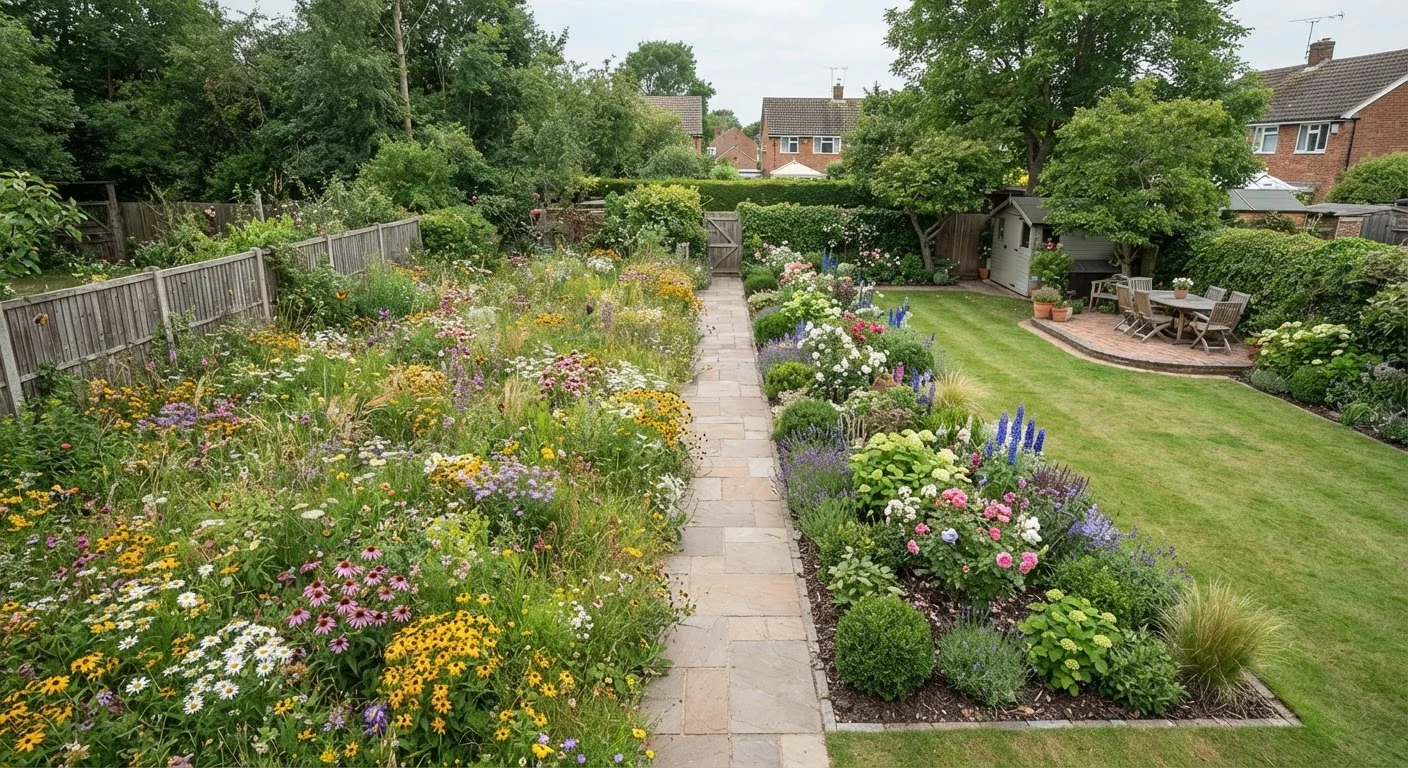
What Each Category Actually Means
A native plant is one that evolved in a specific region and established itself there without human introduction. What counts as "native" is geographically specific - a plant native to the Mid-Atlantic is not necessarily native to the Pacific Northwest. A non-native ornamental is any plant introduced from another region or country, typically selected for aesthetic qualities like bloom color, fragrance, or form. Non-native does not automatically mean invasive, but the two terms get conflated often enough to cause real confusion.
The practical stakes of this distinction show up in maintenance budgets, ecological outcomes, and garden performance over time. Neither category is inherently better; each involves genuine tradeoffs that play out differently depending on where you garden and what you want from your yard.
| Criterion | Native Plants | Non-Native Ornamentals |
|---|---|---|
| Establishment period | 1-2 seasons; needs consistent care | Often quick to perform initially |
| Long-term water needs | Low once established in native region | Moderate to high depending on species |
| Fertilizer requirements | Minimal in adapted soils | Often needed for sustained performance |
| Wildlife support | High - co-evolved with local fauna | Variable; generally lower |
| Invasiveness risk | Very low | Varies; some species are invasive |
| Design flexibility | Moderate; regional selection limits | High; wide color and form options |
| Recurring purchase cost | Low; most are perennial in native range | Higher if using annuals each season |
| Nursery availability | Growing but varies by region | Widely available at most garden centers |
Cost and Maintenance: Where the Numbers Diverge
Native plants typically have a higher establishment phase - meaning the first one to two growing seasons - during which they need consistent watering and monitoring. After that, plants well-matched to your local climate tend to need significantly less supplemental irrigation and little to no fertilizer. For budget-conscious gardeners, this long arc toward low inputs is one of the strongest arguments for going native.
Non-native ornamentals, by contrast, may look spectacular immediately after planting but often require more consistent watering, feeding, and pest management to maintain that performance. Some ornamentals are also bred for annual or biennial cycles, meaning you're purchasing new plants every season. That recurring cost adds up quickly. If you rely on mulching to keep ornamental beds healthy, see our practical guide to mulching garden beds for strategies that reduce moisture loss and suppress weeds around both plant types.
70%
Less irrigation needed by established natives
Research from university extension programs consistently finds that regionally native plants use substantially less supplemental water than non-adapted species once established.
4x
More native bee species supported by native plants
Studies published in ecological journals suggest native plantings can support multiple times more native bee species compared to ornamental monocultures of similar size.
42,000+
Non-native plant species established in the US
According to USDA estimates, tens of thousands of non-native plant species are present in the US landscape, with a subset classified as invasive in various states.
Ecological Effects: What the Research Generally Shows
Ecologists broadly agree that native plants support more local insect species than non-natives, which in turn supports birds and other wildlife higher up the food chain. This isn't a blanket rule - some non-native plants do support pollinators - but the depth of ecological relationships tends to be stronger with natives that co-evolved alongside local fauna.
The invasiveness question is where non-native ornamentals carry the most significant risk. A plant sold and planted legally can still spread aggressively beyond garden boundaries, outcompeting native vegetation in natural areas. Before planting any non-native, it's worth checking your state's invasive species list, which most state departments of agriculture or natural resources maintain publicly. This one step can prevent costly mistakes and ecological harm.
For gardeners interested in maximizing beneficial plant interactions, companion planting strategies with evidence behind them can be applied to both native and non-native plantings to improve pest resilience and pollination.
Making a Practical Decision for Your Yard
Most gardeners aren't choosing between a purely native landscape and an entirely ornamental one - they're navigating a spectrum. A practical approach for most yards is to anchor beds with native species that handle the ecological heavy lifting (pollinators, soil health, low water demand) while using well-behaved, non-invasive ornamentals for accent color or seasonal interest.
Your soil setup also matters. If you're gardening in heavily amended raised beds or containers, native plants adapted to local soils may not perform as expected. For context on how soil environment affects plant choice, our piece on container versus in-ground gardening walks through what each setup demands. And if you're building new beds from scratch, raised bed trade-offs worth knowing before you build covers hidden costs that affect plant selection too.
The clearest guidance is this: identify your primary goals - ecological function, lower maintenance costs, visual design, or some combination - and let those goals drive the balance you strike between native and non-native choices. There's no single right answer, but being deliberate about the tradeoffs puts you in a stronger position from the start.
"Native" Is Always Region-Specific
A plant labeled "native" at a national retailer may not be native to your specific region or even your state. Always verify nativity using regional resources such as your state's native plant society or the USDA PLANTS database. Planting a species native to one region in another can sometimes produce the same ecological gaps as using a non-native ornamental.