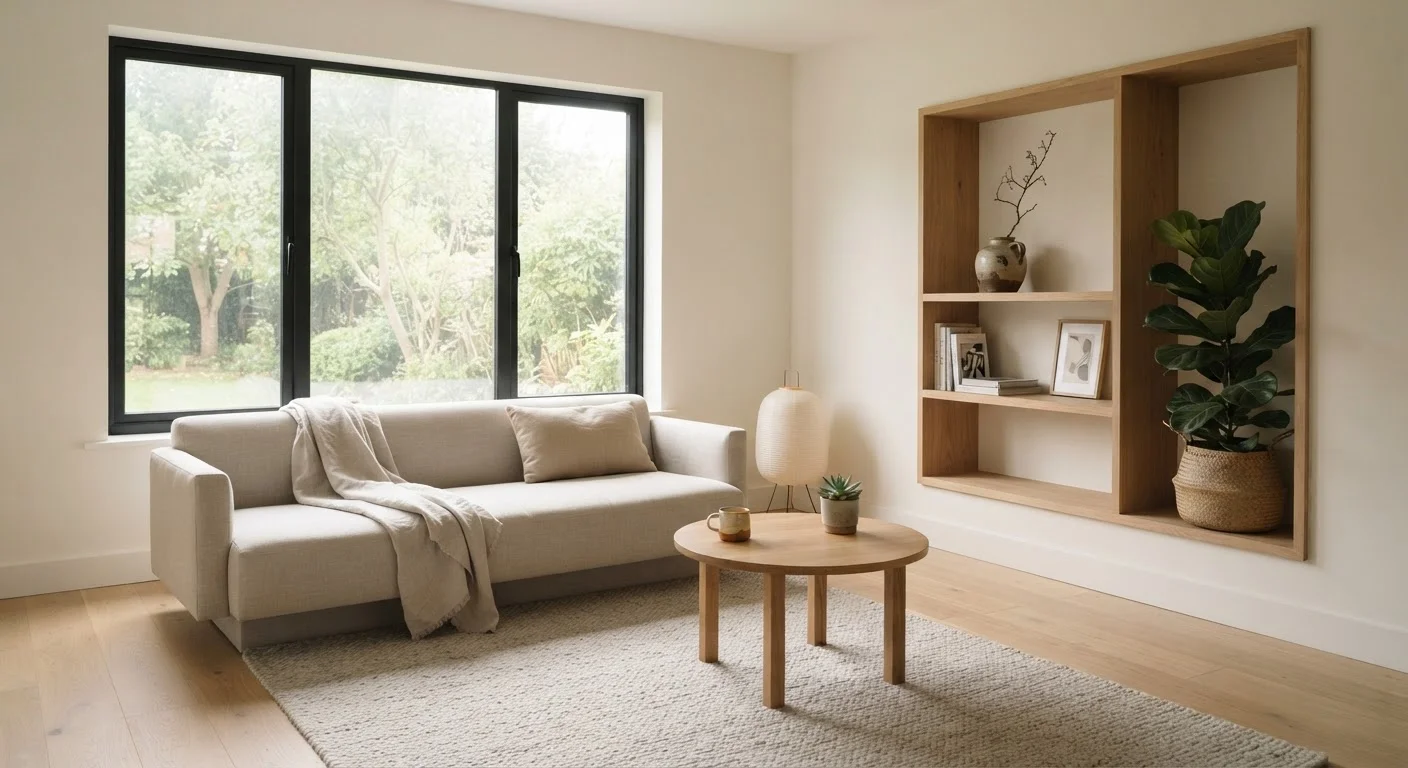
What Minimalist Organization Actually Means
Minimalist home organization is not simply about owning fewer things. At its core, it's a system built on the idea that every item in your home should earn its place - through regular use, clear purpose, or genuine meaning. Surfaces stay clear, storage is intentional, and the overall effect is a home that feels easier to move through and maintain.
This approach has grown in popularity partly because it addresses a real problem: the average American household contains a significant number of rarely used items that occupy space without adding much value. Minimalism offers a framework for making deliberate decisions about what stays. But like any organizational philosophy, it comes with genuine advantages and real costs worth understanding before committing. For an alternative framework that doesn't require paring down ownership, see The Zone Method.
The Real Advantages
When minimalist organization is applied thoughtfully, the benefits show up in practical, everyday ways rather than just in how a room looks.
Faster daily cleaning and tidying routines
Fewer items on surfaces and floors means less to move, wipe around, or reorganize. Many households report noticeably shorter cleaning sessions after a meaningful declutter.
Reduced spending on storage products
When you own less, you need fewer bins, shelves, and organizational accessories. The upfront cost of the transition is often offset by the elimination of ongoing storage purchases.
Easier to locate items when needed
A home with intentionally placed, fewer possessions makes it straightforward to know where things are. Searching for keys, documents, or tools takes less time.
Lower mental load from visual clutter
Research in environmental psychology suggests that cluttered spaces can increase cognitive load and stress. Cleared surfaces and orderly rooms tend to feel calmer and easier to think in.
Supports mindful purchasing habits
Once you've deliberately let go of things, you become more deliberate about what comes in. Many people find that minimalist organization naturally reduces impulse buying over time.
Reduced clutter means surfaces are easier to wipe down, floors are quicker to sweep, and lost items become far less common. That time saving compounds over weeks and months. Lower item counts also tend to reduce the need for storage hardware - fewer bins, fewer shelves, fewer organizers - which can translate directly to lower household spending. If you're thinking through how those savings fit into a broader financial picture, smart spending strategies can help frame the decision.
The Honest Disadvantages
Minimalist organization has a well-documented aspirational appeal, but the day-to-day reality involves trade-offs that often go unacknowledged in popular coverage of the topic.
Initial decluttering is time-consuming and emotionally taxing
Going through years of accumulated possessions requires sustained effort and involves difficult decisions about items with sentimental value. Rushing the process often leads to regret or quick re-accumulation.
Risk of discarding items you'll later need
Over-enthusiastic purging can mean repurchasing things you got rid of - an outcome that costs money and undermines the efficiency argument for minimalism.
Difficult to maintain in shared households
When household members have different clutter tolerances or storage needs, a strict minimalist system can create friction and feel imposed rather than collaborative.
May not suit households with children or active hobbies
Young children generate a steady volume of necessary gear, and hobby-intensive households often require specialized equipment that doesn't disappear just because a philosophy prefers it to.
Requires ongoing behavioral discipline to sustain
Unlike a one-time reorganization project, minimalism depends on consistent daily choices. Without supportive habits, clutter tends to return within weeks of the initial purge.
Aesthetic pressure can lead to impractical choices
The visual ideal of minimalism - completely bare surfaces, hidden everything - can push homeowners toward solutions that look good but make everyday life less functional.
Perhaps the most underestimated challenge is compatibility with other household members. If one person values a sparse kitchen counter and another needs ready access to frequently used tools, tension is almost inevitable. Organizing a home with multiple occupants explores how to navigate those differences without forcing a single system on everyone.
There's also the question of what happens when life changes - a new baby, a hobby shift, a work-from-home arrangement. Systems built around strict minimalism can buckle under changed circumstances, requiring a full re-evaluation rather than a simple adjustment.
The Hidden Costs of Getting Started
The initial transition to minimalist organization is rarely free or quick. Decluttering a full household requires time - often more than people expect - and emotionally difficult decisions about items tied to memory or identity. Donated, sold, or discarded items may need to be repurchased later if needs change, adding an ironic financial cost to a system often praised for saving money.
Starting Small Is a Legitimate Strategy
You don't have to declutter your entire home to benefit from minimalist organization principles. Choosing one room or even one category of items - say, kitchen gadgets or bathroom products - lets you test the approach without committing to a full household overhaul. If the system works for that space, you can expand it gradually. If it doesn't, you've lost very little. Starting from scratch in a small space follows a similar incremental logic.
For households with limited square footage, minimalism may also run up against a hard constraint: you can reduce what you own, but you still need functional storage for what remains. Using vertical space effectively can extend your options without requiring more floor space or more stuff.
Making It Work Without Going All-In
The most durable version of minimalist organization tends to be selective rather than absolute. Applying the principles to high-traffic areas - kitchen counters, entryways, bathroom surfaces - delivers most of the benefit without requiring a household-wide overhaul.
25%
Of garage space used for car storage
A U.S. Department of Energy study found that roughly one in four two-car garages has no room for a vehicle, largely due to accumulated household items.
~$10B
Annual U.S. self-storage industry revenue
The Self Storage Association has consistently reported the industry generating around $10 billion annually, suggesting many households are paying to store items they rarely use.
Pairing a minimalist approach with consistent daily habits is what makes the system self-sustaining. Habits, not hardware, are what prevent clutter from returning after an initial purge. Simple practices like a nightly reset routine or a one-in, one-out rule can reinforce minimalist organization without demanding a rigid lifestyle shift.